

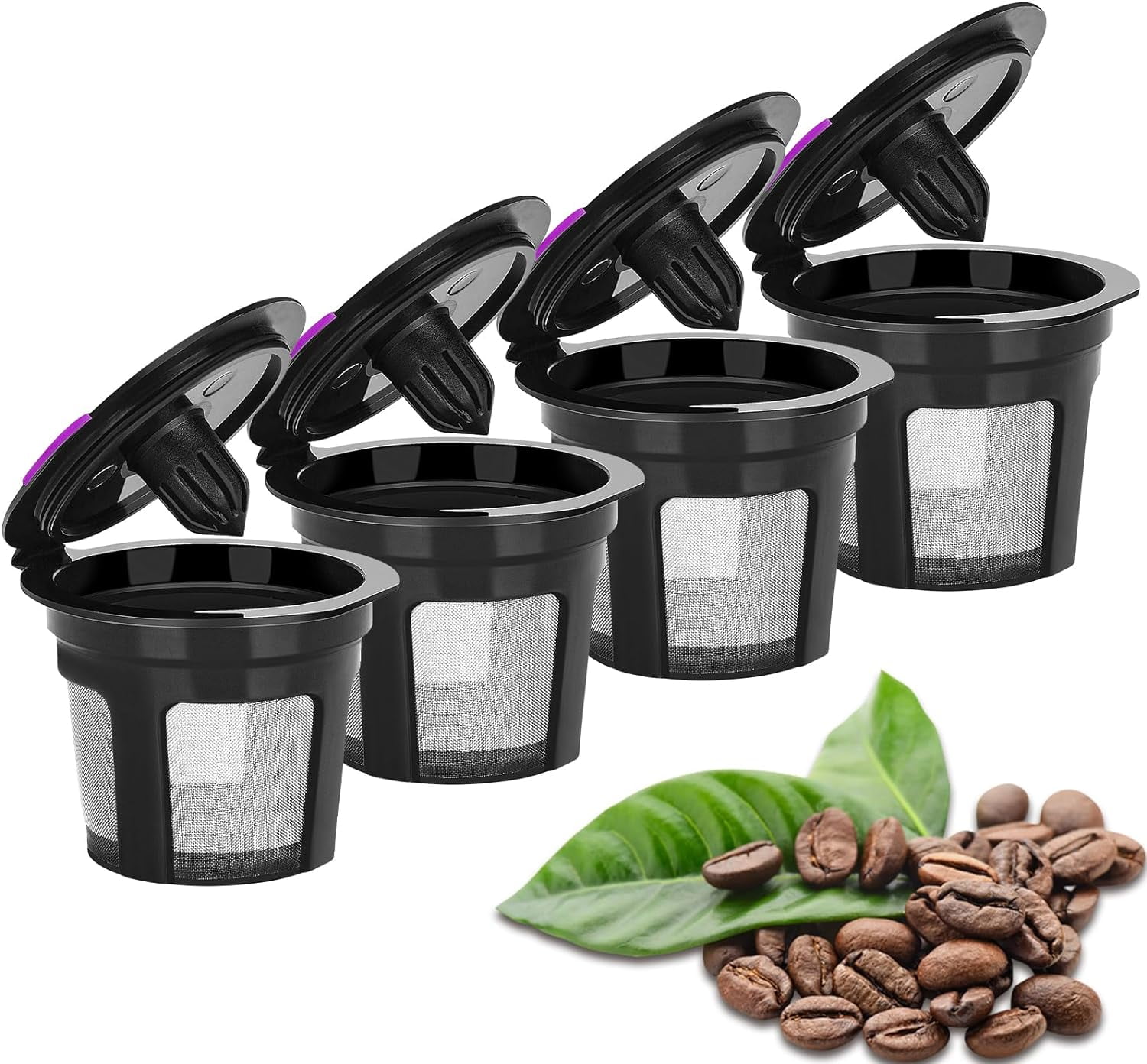
If you use a Keurig® brewer in a U.S. kitchen, a reusable K-Cup filter lets you brew your own ground coffee instead of using a disposable pod. Fill the filter with fresh coffee, place it in the brewer as directed, and choose a smaller cup size for a stronger brew.
The best results come from the right grind, a level fill, fresh water, and a reusable filter that fits your exact Keurig model. The steps below work for most Keurig-style brewers, but always check your brewer and filter instructions first.
Source: walmart.com
What You Need Before You Start
You need four basic items:
- A compatible reusable K-Cup filter
- Ground coffee
- Fresh drinking water
- A compatible Keurig brewer
Reusable filters are not all the same. Some replace the pod holder. Others fit inside the existing holder. Some have a built-in lid, while others need a separate cap.
Check the package for your brewer model. Keurig brewers can differ in size, pod holder design, needle position, and brew settings. A filter made for one model may not fit another.
Use coffee ground for a drip coffee maker or automatic coffee machine. A medium grind is a good starting point. Very fine coffee can slow the flow or clog the mesh. Very coarse coffee may produce a weak cup.

Source: amazon.ca
How to Use a Reusable K-Cup Filter
Follow these steps for a normal cup of coffee.
1. Remove the used pod
Open the brewer and remove any disposable K-Cup pod. Check that no foil lid or loose coffee remains in the pod holder.
If the brewer has a removable pod holder, take it out only if your reusable filter instructions say to do so. Some reusable filters replace the holder. Others sit inside it.
2. Add fresh water
Fill the brewer’s water reservoir with fresh, cold water. Do not fill above the marked maximum line.
Fresh water improves taste. It also helps prevent old water from sitting in the reservoir for long periods.
3. Fill the reusable filter
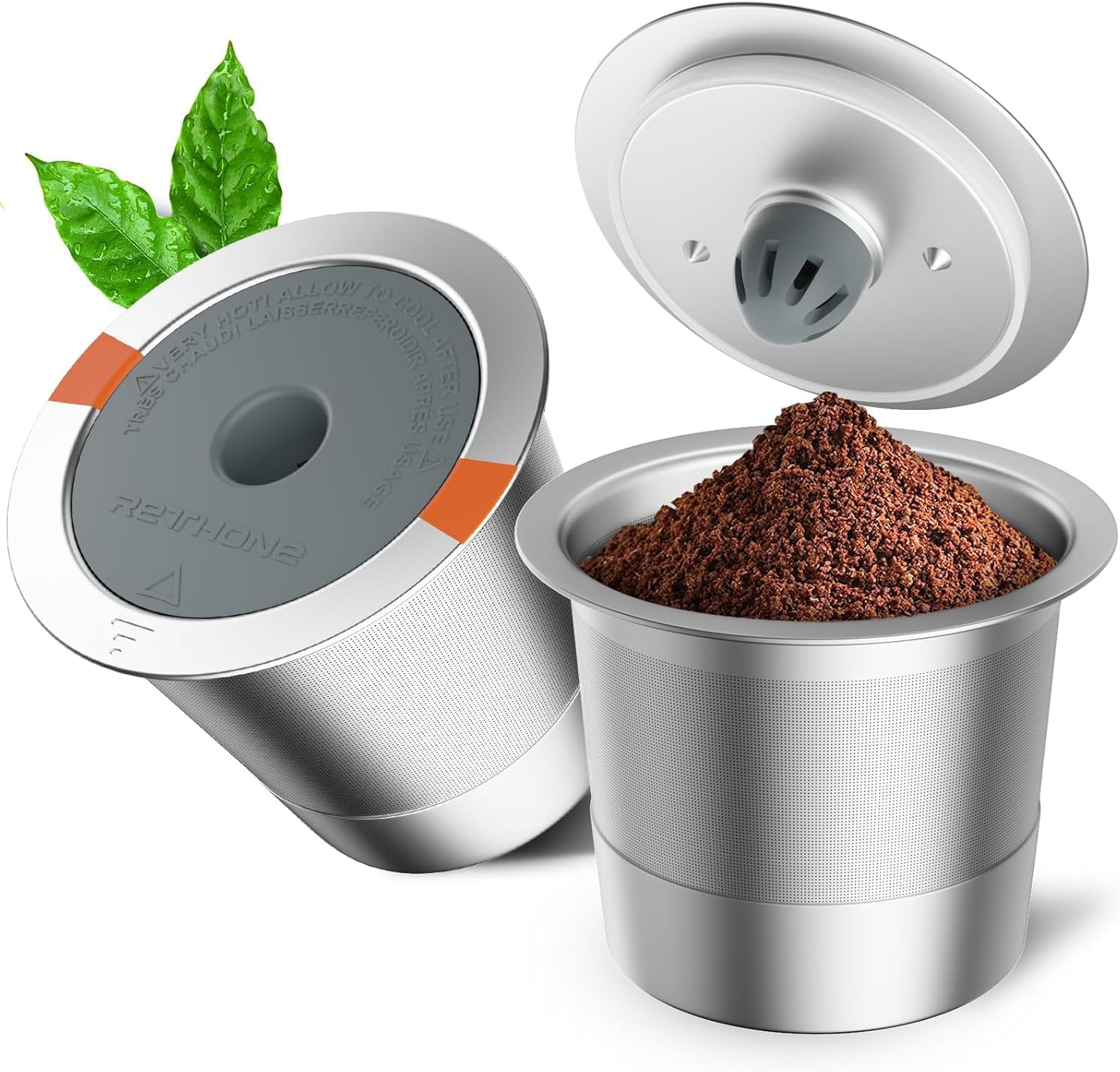
Open the filter and add ground coffee up to its fill line. If it has no fill line, leave space below the lid so the coffee does not touch the top or block the lid.
Do not pack the coffee down. A packed bed can restrict water flow and lead to a slow or messy brew.
A useful starting amount is:
- 1 tablespoon for a mild cup
- 1½ tablespoons for a balanced cup
- 2 tablespoons for a stronger cup
The exact amount depends on the filter size, coffee type, brew size, and personal taste. Never exceed the filter’s marked limit.
4. Close the filter
Secure the lid firmly. Make sure no coffee grounds are caught around the rim.
A loose lid can allow grounds into the cup. A lid that does not close may mean the filter is overfilled or not assembled correctly.
5. Place the filter in the brewer
Insert the reusable filter in the position shown by its instructions. Close the brewer lid fully.
Do not force the lid. If it will not close, remove the filter and check for excess coffee, a misplaced filter basket, or an incompatible part.
6. Choose a smaller brew size
Select a smaller cup setting than you might use with a commercial pod. For many brewers, 6 ounces to 8 ounces is a good starting point.
Larger settings send more water through the same amount of coffee. This can make the drink taste thin. If you want more coffee, brew a second cup or increase the grounds within the filter’s limit.
7. Start the brew cycle
Place a mug under the dispenser and press the brew button. Keep your hands away from the hot water and steam.
The coffee should flow in a steady stream. A few drops may appear first, but the flow should not stop for long periods.
8. Remove and empty the filter
Wait until the brew cycle ends. The reusable filter and coffee inside may be hot.
Remove the filter by its handle, if it has one. Empty the grounds into the trash or compost where accepted. Avoid rinsing a large amount of coffee into the sink, since grounds can collect in drains.

Source: bigamart.com
Choose the Right Coffee Grind, Amount, and Brew Size
The three main controls are grind size, coffee dose, and water volume.
| Variable | Good starting point | What happens if you change it |
|---|---|---|
| Grind | Medium | Fine may clog; coarse may taste weak |
| Coffee | 1 to 2 tablespoons | More coffee usually gives a stronger taste |
| Brew size | 6 to 8 ounces | Larger sizes often produce weaker coffee |
| Tamping | None | Packed grounds can slow the brew |
| Roast | Any roast | Dark roasts may taste stronger or more bitter |
These amounts are starting points, not fixed rules. The filter’s capacity is the main limit. A small filter may hold less than 2 tablespoons.
How much coffee should you use?
For a standard 8-ounce cup, start with about 1½ tablespoons of ground coffee. Adjust in small steps.
If the coffee tastes weak, try one of these changes:
- Use a smaller brew size.
- Add a little more coffee, without passing the fill line.
- Use a slightly finer grind.
- Choose a darker roast if you prefer a bolder flavor.
If the coffee tastes bitter or harsh, try:
- Using a little less coffee.
- Choosing a slightly coarser grind.
- Selecting a larger cup size.
- Cleaning the brewer and filter.
A larger cup setting does not create more coffee strength. It adds more water to the same coffee bed.
Should you use a paper filter inside the reusable K-Cup?
Usually, no. Use a paper insert only if the filter maker specifically designed it for that model.
Adding an unapproved paper filter may restrict water flow or prevent the lid from closing. It can also change how the filter sits near the brewer’s needles.
Troubleshooting Common Problems
Most problems come from an incorrect fit, too much coffee, a poor grind, or a dirty filter.
The coffee tastes weak
Possible causes include too much water, too few grounds, or a grind that is too coarse.
Try an 6-ounce or 8-ounce brew setting first. Then add a small amount of coffee if the filter still has room. Do not simply press the grounds down, since this may slow the brew without improving extraction.
The coffee tastes bitter
Bitter coffee may result from too much coffee, too fine a grind, or a brew that is too concentrated for your taste.
Use slightly less coffee or a coarser grind. You can also choose a larger cup setting. Clean mineral buildup from the brewer if the taste changed suddenly.
Grounds appear in the mug
Check that the reusable filter lid is closed and that the rim is free of grounds. Also check for a torn mesh screen or a damaged filter.
If the filter is overfilled, water can carry grounds over the top. Reduce the amount and leave clear space below the lid.
The brewer makes a loud sound or brews slowly
A slow brew may point to a clogged filter, fine coffee, packed grounds, or mineral buildup in the brewer.
First, stop using the filter if the flow is very slow. Let hot parts cool, then empty and rinse the filter. Try a medium grind and do not tamp the coffee.
If the problem continues with both a reusable filter and a regular pod, follow the brewer’s cleaning and descaling instructions.
The brewer will not start
The lid may not be fully closed, or the reusable filter may not be seated correctly.
Remove the filter and inspect the pod holder. Make sure the filter is made for your brewer. Do not bypass safety parts or force the lid.

Source: morningcoffeejournal.com
Clean the Reusable Filter After Every Use
Rinse the filter soon after brewing. Dried coffee oils and fine particles are harder to remove later.
Use these steps:
- Let the filter cool.
- Empty the grounds.
- Rinse the basket and lid under warm water.
- Use a soft brush to remove coffee from the mesh.
- Let the parts dry fully before storing them.
Do not use a sharp tool to scrape the mesh. It can damage the screen and create openings for coffee grounds.
Some filters are dishwasher safe, but not all are. Check the product instructions before placing one in a dishwasher.
Clean the brewer itself as directed in its manual. Mineral deposits can affect flow and flavor. The correct descaling method depends on the brewer, so use the product’s instructions rather than guessing about the solution or cycle.

Source: amazon.com
Check Compatibility and Safety
The reusable filter must fit the brewer correctly. A poor fit can cause leaks, grounds in the drink, or damage to the pod holder.
Before brewing, confirm that:
- The filter is made for your Keurig model.
- The filter lid closes without force.
- The filter sits level in the holder.
- The brewer lid closes fully.
- The filter is not cracked or damaged.
- The fill level stays below the marked line.
Hot water and steam can burn skin. Do not open the brewer during a brew cycle unless the manual allows it. Wait for the cycle to finish before removing the filter.
Never place loose coffee directly into the brewer. Use only the intended reusable filter or a compatible disposable pod.
If the filter causes repeated leaks, stops the brewer from closing, or leaves plastic or metal damage, stop using it. Replace the filter with a compatible part.
Source: amazon.ca
Key Takeaways
- Use a reusable filter made for your exact Keurig brewer.
- Start with medium-ground coffee.
- Add about 1 to 2 tablespoons, while staying below the fill line.
- Do not tamp or pack the grounds.
- Begin with a 6-ounce or 8-ounce brew size.
- Rinse the filter after every use.
- Use the brewer manual for compatibility, cleaning, and descaling instructions.
FAQs
Can I use regular ground coffee in a reusable K-Cup?
Yes. Regular ground coffee works well when it has a medium grind and fits below the filter’s fill line. Do not use whole beans unless you grind them first.
Can I use espresso grounds in a reusable K-Cup?
You can, but espresso grounds are often finer than the grind used for drip coffee. Fine grounds may slow the water flow or clog the filter. A medium-fine grind may work better, but avoid powder-like coffee.
Why is my reusable K-Cup weaker than a disposable pod?
The brew may be weak because the cup setting is too large, the filter contains too little coffee, or the grind is too coarse. Try a smaller brew size before adding much more coffee.
How many times can I reuse a reusable K-Cup filter?
A reusable filter can be used many times, but its life depends on the material, cleaning, and handling. Replace it when the mesh is damaged, the lid no longer fits, or grounds pass through during normal use.
Can I leave coffee grounds in the filter overnight?
It is better to empty and rinse the filter after brewing. Old wet grounds can develop odors and make the filter harder to clean.
Conclusion
Using a reusable K-Cup filter is simple: add medium-ground coffee, avoid packing it, brew a smaller cup, and clean the filter after use. Start with about 1½ tablespoons for 6 to 8 ounces, then adjust the coffee amount and grind to match your taste.
Your next step is to check the filter’s model compatibility, fill it to the marked line, and brew one small test cup.