

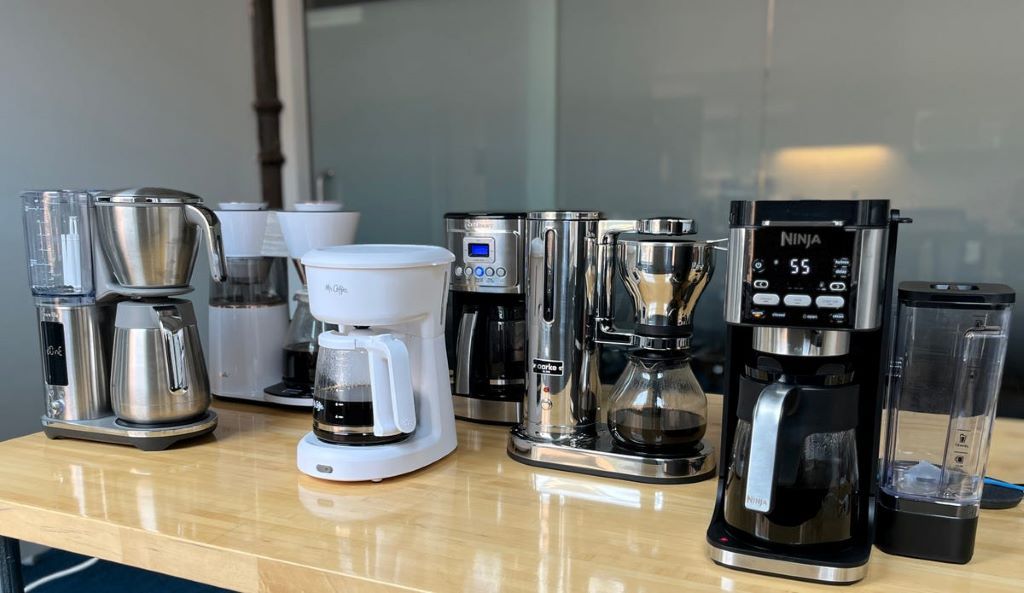
The best coffee maker for your kitchen depends on four things: how much coffee you make, how fast you need it, how much control you want, and how much counter space you have. A small drip machine often suits one or two people. A programmable 10- or 12-cup brewer fits many households. An espresso machine makes sense only if you want espresso drinks and are willing to learn more steps.
Start with your daily coffee habit, not the number of features on the box. The right machine should fit your kitchen, your routine, your coffee style, and your budget.
Source: firstgradeappliances.com
Start With Your Coffee Routine
Your daily routine is the best filter for coffee maker choices. Think about what you drink, when you drink it, and how much work you want to do.
Ask yourself these questions:
- Do you drink regular brewed coffee, espresso, cold brew, or several types?
- Do you make one mug or a full pot?
- Do you need coffee ready before work?
- Do you want to grind beans at home?
- Do you drink coffee all day?
- Will more than one person use the machine?
- Do you want simple controls or more control over taste?
A coffee maker is a kitchen tool. Like a toaster or a blender, its value comes from how well it matches your habits. A feature you never use only adds cost, cleaning, and possible repair points.
Match the machine to your household
Use this simple guide:
| Your habit | Coffee maker type to consider |
|---|---|
| One cup with little cleanup | Single-serve brewer |
| Two to four cups each morning | Small drip brewer or pour-over |
| Several cups for a family | 10- to 12-cup drip coffee maker |
| Strong control over taste | Manual pour-over or French press |
| Espresso, lattes, and cappuccinos | Espresso machine |
| Coffee ready at a set time | Programmable drip brewer |
| Fresh beans with few extra tools | Grind-and-brew machine |
| Coffee that stays warm for hours | Thermal carafe brewer |
In the United States, coffee maker “cups” are often smaller than a typical mug. Many manufacturers count one cup as about 5 ounces, while a common American mug holds 10 to 16 ounces. Check the manual or product label before you compare capacity.
For example, a machine labeled 12 cups may produce about 60 fluid ounces under that convention. That equals roughly five 12-ounce mugs, not twelve large mugs.

Source: toptenreviews.com
Choose the Right Type of Coffee Maker
Each type of coffee maker solves a different problem. The main trade-off is usually convenience versus control.
Drip coffee makers: the best fit for many kitchens
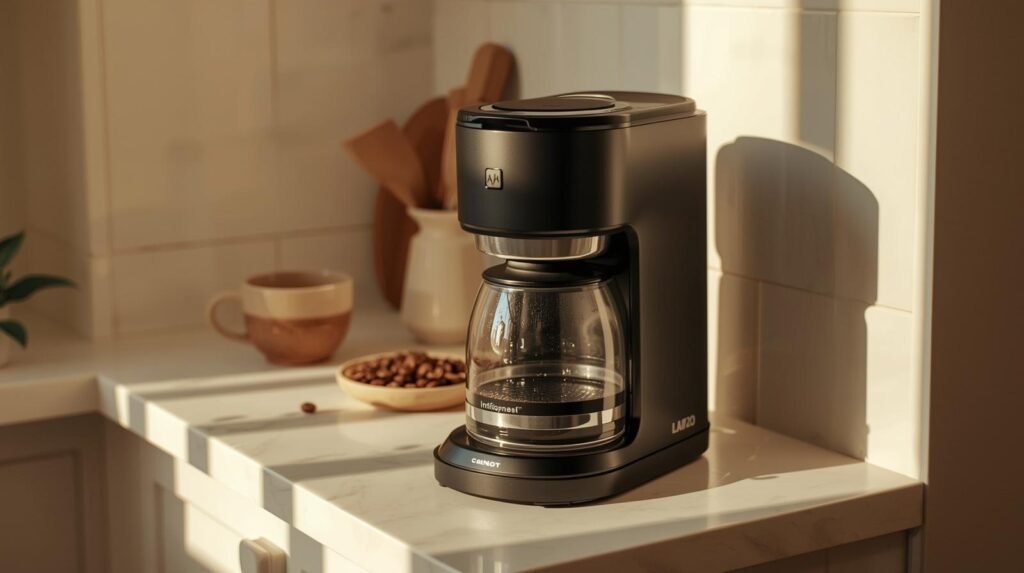
A drip coffee maker heats water and sends it over ground coffee in a filter basket. The brewed coffee then flows into a glass carafe or thermal carafe.
Choose a drip coffee maker if you want:
- Several cups at once
- Simple daily use
- A programmable start time
- Easy access to common ground coffee
- A familiar brewing method
Look for a model with a removable filter basket, clear controls, and a carafe that pours without dripping. A thermal carafe can keep coffee hot without a warming plate. A glass carafe lets you see the coffee level but may leave coffee on a hot plate, which can change the flavor over time.
The Specialty Coffee Association maintains standards for some certified home brewers. Certification can be a useful sign that a model meets defined brewing requirements, but it does not mean the machine will taste best with every coffee or suit every kitchen.
Single-serve pod machines: fast and simple
Single-serve machines brew one serving at a time. Many use sealed pods or capsules, while some accept loose grounds through a reusable filter.
They work well when:
- People in the home want different drinks
- You usually make one cup
- Speed and easy cleanup matter
- You do not want to measure grounds
Their limits are just as important. Pods can cost more per serving than ground coffee. They also create packaging waste, and not every pod system uses the same pod size. Check compatibility before buying.
If you choose a pod machine, confirm:
- The pod type
- Cup sizes
- Whether it accepts reusable filters
- Water reservoir size
- Descaling instructions
- Whether the machine needs a separate milk frother
Do not assume that a “reusable pod” works in every model. The shape, lid, and water path must match the brewer.
Espresso machines: for concentrated coffee and milk drinks
Espresso machines force hot water through finely ground coffee at pressure. They require more precise grinding, dosing, tamping, and cleaning than a drip machine.
Choose one if you regularly want:
- Espresso shots
- Americanos
- Cappuccinos
- Lattes
- Flat whites
There are three broad choices:
- Manual machines: Offer the most control and require the most skill.
- Semi-automatic machines: Use a separate grinder and let you control the shot.
- Superautomatic machines: Grind, brew, and often steam milk with fewer manual steps.
A pod espresso machine is easier but gives you less control over coffee dose and grind. A full espresso setup may also need a burr grinder, tamper, scale, milk pitcher, and cleaning tools. Include these costs in your budget.
Pour-over, French press, and other manual brewers
Manual brewers cost little and take up little space. They can also produce excellent coffee when you use fresh grounds, suitable water, and a steady method.
A pour-over brewer suits someone who enjoys a slower routine and careful control. A French press produces a fuller body because it uses a metal or nylon filter instead of a paper filter. An AeroPress-style brewer is compact and flexible, but it makes one or two servings at a time.
Manual brewing is not always the cheapest choice over time if you need coffee ready for a group. It also depends more on your technique.

Source: luxury-kitchen.com
Decide How Much Coffee You Need
Capacity should match your real serving size, not the number printed on the box.
To estimate the size you need:
- Count the number of people who drink coffee.
- Estimate each person’s actual mug size.
- Add a small amount for a second cup or guests.
- Convert the total to the maker’s listed cup size.
Example calculation
Suppose two people each drink one 12-ounce mug:
- 2 people × 12 ounces = 24 ounces
- 24 ounces ÷ 5 ounces per listed cup = about 5 listed cups
A 5- or 6-cup brewer may fit this routine. A 12-cup brewer gives more room, but it also uses more counter space and may encourage wasted coffee.
A larger machine does not always brew a better cup. If you often make only one mug, check whether the brewer has a small-batch setting. Some large brewers can adjust water flow for smaller amounts. Others may not perform as well with a very small batch.
Also check the minimum and maximum fill lines. Never operate a coffee maker below the manufacturer’s minimum amount unless the manual says it is safe.

Source: realorigin.org
Check the Features That Affect Daily Use
The most useful features remove a real task. They should not merely make the control panel look impressive.
Programmable brewing
A programmable timer can make morning coffee easier. Check whether the clock keeps its settings after a power outage. Some models also offer auto-start, adjustable brew strength, or a temporary pause feature.
Do not leave wet coffee grounds in the machine overnight if the manual warns against it. Moist grounds can develop odors and make the filter basket harder to clean.
Thermal or glass carafe
Choose a thermal carafe if you sip coffee over several hours. It can hold heat without a warming plate.
Choose a glass carafe if you drink coffee soon after brewing, want to see the level, or prefer a lower replacement cost.
A thermal carafe may be harder to clean because its narrow opening can trap coffee oils. A glass carafe may be easier to wash but can break if dropped.
Brew-strength controls
A strength setting may change brew time or water flow. It does not turn poor coffee into great coffee. Coffee freshness, grind size, water quality, and the coffee-to-water ratio still matter.
Treat “strong” as a brewing preference, not proof of higher caffeine. Caffeine depends on the coffee, serving size, dose, and brewing method.
Built-in grinder
A built-in grinder saves counter space and can help you use whole beans. Look for a burr grinder rather than a basic blade grinder when the manufacturer clearly identifies the grinder type.
A built-in grinder also adds noise, moving parts, and cleaning work. If the grinder breaks, the brewing side may be affected too. A separate grinder gives you more flexibility and may be easier to replace.
Water reservoir
A removable reservoir is easier to fill and clean than a fixed tank. Check:
- Reservoir location
- Handle shape
- Fill markings
- Opening size
- Whether it fits beneath your cabinets
- Whether you can remove it without moving the machine
A large reservoir reduces refills but may hold old water if you do not use the machine often. Fresh water is usually the better choice for flavor.
Milk systems
If you want milk drinks, decide whether you prefer a steam wand, automatic milk system, or separate frother.
A steam wand gives more control but needs practice and cleaning after every use. Automatic milk systems are easier but may require more parts to rinse and sanitize. Milk residue can spoil and block narrow tubes.
Smart controls
Wi-Fi and app controls may let you schedule brewing or change settings. Before paying more, check:
- Whether the machine works without the app
- Required phone operating system
- Account requirements
- Wi-Fi band compatibility
- Privacy settings
- What happens if the service stops
A connected machine should still be safe and usable if your phone or internet connection is unavailable.

Source: luxury-kitchen.com
Evaluate Coffee Quality Without Falling for Big Claims
Good coffee depends on the entire brewing system, not one headline feature.
Important variables include:
- Coffee freshness
- Grind size
- Coffee dose
- Water temperature
- Contact time
- Water quality
- Filter type
- Even water distribution
A coffee maker with a wide showerhead may spread water more evenly over the grounds. A machine with temperature control may offer more consistency. These features can help, but manufacturer claims are not the same as independent testing.
For a fair comparison, look for documented information about:
- Brewing temperature or temperature range
- Brew time
- Filter size and shape
- Small-batch performance
- Warranty terms
- Replacement parts
- Cleaning instructions
Avoid choosing a machine only because it says “bold,” “barista,” or “professional.” These words often describe marketing positions rather than a measured result.
Use the right grind
Grounds that are too fine can slow water flow and create bitter coffee. Grounds that are too coarse can allow water to pass too quickly and create weak coffee.
As a starting point:
- Drip coffee: medium grind
- Pour-over: medium to medium-fine grind
- French press: coarse grind
- Espresso: fine grind
Change one variable at a time. If the coffee tastes weak, first check the dose and grind. If it tastes harsh or bitter, check whether the grind is too fine or the brew time is too long.
Consider your water
Water makes up most of a brewed cup, so local water can affect taste and scale buildup. Hard water contains minerals that can collect inside the heating system.
If tap water tastes good, it may work well. If it smells strongly of chlorine or leaves heavy scale, try filtered water. Do not use distilled water unless the manufacturer allows it. Some coffee makers rely on minerals in water for proper sensor operation, and manuals may give specific guidance.

Source: coffeecherish.com
Measure Counter Space and Electrical Needs
Measure the space before you buy. Include room for opening the lid, removing the reservoir, lifting the filter basket, and pouring the carafe.
Record these measurements:
- Maximum width
- Maximum depth
- Height under cabinets
- Clearance above the machine
- Space beside the machine for the carafe
- Distance to the outlet
A machine may fit when closed but fail when you open its top. This is a common problem with tall brewers placed beneath upper cabinets.
For a U.S. kitchen, verify that the machine is designed for the local electrical system. Most household outlets provide about 120 volts, but the product label and manual should confirm the required voltage and frequency.
Use these safety rules:
- Plug the machine into a suitable grounded outlet when required.
- Keep the cord away from hot surfaces.
- Do not place the machine where splashed water can reach the outlet.
- Do not use a damaged cord or cracked carafe.
- Unplug the machine before cleaning the exterior or moving it.
- Follow the manual for extension cord use; avoid using one unless the instructions permit it.
The U.S. Consumer Product Safety Commission provides general appliance safety information. A recognized safety certification can be useful, but check the actual label and product documentation rather than relying on a vague claim.

Source: luxury-kitchen.com
Compare Total Cost, Not Just the Purchase Price
The purchase price is only part of the cost of owning a coffee maker.
Include:
- Coffee beans or grounds
- Pods or capsules
- Paper filters
- Water filters
- Descaling solution
- Replacement carafes
- Milk products
- Grinder or frother costs
- Electricity
- Possible repair or replacement
Hypothetical serving-cost example
Suppose a pod costs $0.60 per serving and ground coffee costs $0.25 per serving. At one serving each day, the difference is:
- $0.35 × 365 days = $127.75 per year
This is only an example. Actual prices vary by brand, roast, package size, and where you shop.
A pod machine may still be worth the higher serving cost if it prevents waste or saves time. A drip brewer may cost less per cup but require more cleanup and a larger batch. The best value depends on how you use it.
Check warranty length and replacement-part access. A cheap machine may be less useful if the carafe cannot be replaced or the filter basket is hard to find.

Source: luxury-kitchen.com
Plan for Cleaning and Maintenance
Choose a coffee maker you will realistically clean. A machine that is difficult to maintain may produce worse coffee and fail sooner.
After each use
For most drip machines:
- Remove and discard the used grounds.
- Rinse the filter basket.
- Empty leftover coffee.
- Rinse the carafe.
- Leave removable parts open to dry.
For espresso machines, follow the manual for flushing the group head, cleaning the portafilter, and wiping the steam wand immediately after use.
Regular deep cleaning
Coffee oils can create stale flavors. Mineral scale can restrict water flow and reduce heating performance.
Follow the maker’s instructions for:
- Descaling
- Water-filter replacement
- Cleaning tablets
- Removable tubing
- Milk-system cleaning
- Dishwasher-safe parts
Do not mix cleaning chemicals. Do not use vinegar unless the manual permits it. Some manufacturers warn that vinegar can leave odor, affect seals, or fail to remove certain deposits.
Signs that a machine needs attention include:
- Slower brewing
- Lower water flow
- Unusual noise
- Bitter or stale flavor
- Visible scale
- Leaking
- A persistent odor
If the machine leaks near the electrical base, smells like burning plastic, trips a breaker, or shows damaged wiring, stop using it. Unplug it and contact the manufacturer or a qualified appliance technician.
Source: progadgetworld.com
Use a Simple Buying Checklist
Before you buy, confirm each item below.
Coffee style
- Drip coffee
- Single-serve coffee
- Espresso
- Manual brewing
- Whole-bean grinding
Capacity
- Actual mug size
- Number of daily drinkers
- Small-batch option
- Reservoir size
- Carafe size
Kitchen fit
- Counter width and depth
- Cabinet clearance
- Reservoir access
- Outlet location
- Cord length
Ease of use
- Removable filter basket
- Easy-to-read controls
- Programmable timer
- Simple water filling
- Clear cleaning instructions
Long-term ownership
- Filter cost
- Pod cost
- Descaling needs
- Replacement carafe availability
- Warranty
- Repair support
Coffee quality
- Suitable grind
- Even water distribution
- Brew-strength control
- Thermal or glass carafe
- Water-filter compatibility
If two machines meet the same needs, choose the one with fewer unnecessary features, clearer maintenance steps, and better access to replacement parts.

Source: luxury-kitchen.com
Common Coffee Maker Buying Mistakes
Buying the largest machine
A large carafe sounds useful, but it can waste coffee and space. Buy for your normal serving size, with a little room for guests.
Choosing by brand name alone
A trusted brand does not make every model right for every kitchen. Compare the exact model, warranty, dimensions, controls, and replacement parts.
Ignoring the carafe
A poor carafe can drip, spill, or become difficult to clean. Read the manual and inspect the lid, handle, opening, and replacement options.
Paying for features you will not use
A grinder, app, milk system, or complex menu may add cost without improving your routine. Choose features that remove a task you actually have.
Forgetting cleaning
Coffee oils and mineral scale build up in normal use. If cleaning feels too difficult before purchase, it will probably feel worse later.
Treating “cups” as full mugs
Use ounces when comparing capacity. The word “cup” is not consistent with the size of most American mugs.
Using the wrong coffee grind
The machine cannot correct every grind problem. Use a suitable grind and change the dose or grind size gradually.
Source: mykitchenreview.com
Frequently Asked Questions
Is a drip coffee maker better than a single-serve machine?
Neither is always better. A drip machine usually fits households that make several cups and want lower coffee costs. A single-serve machine fits people who make one cup, want different flavors, or value speed and less leftover coffee.
How many cups should a coffee maker make?
Estimate your real mug volume first. For two 12-ounce mugs, about 24 ounces of brewed coffee may be enough. Since many U.S. coffee makers define a cup as about 5 ounces, a 5- or 6-cup model may fit that need.
Is a thermal carafe worth it?
A thermal carafe is useful if coffee sits for more than a short time. It avoids a hot plate and may preserve flavor better during extended holding. A glass carafe may be easier to inspect, clean, and replace.
Should I buy a coffee maker with a built-in grinder?
Buy one if you want fresh-ground coffee but have limited counter space. Choose a separate grinder if you want easier upgrades, more grind control, or simpler repairs.
How often should I descale a coffee maker?
Follow the manufacturer’s schedule first. The right interval depends on water hardness, use, and whether you use a water filter. Descale sooner if brewing slows, flow drops, or mineral deposits appear.
Can I use distilled water in a coffee maker?
Only if the manufacturer permits it. Some machines require water with minerals for proper operation. The manual is the safest source for this decision.
What is the best coffee maker for a small kitchen?
A compact drip brewer, single-serve machine, pour-over setup, or French press may work well. Measure cabinet clearance and storage space before choosing. A smaller machine is not useful if its reservoir is hard to fill.
Key Takeaways
- Choose the coffee maker that matches your daily drink and serving size.
- Compare capacity in ounces, not only listed cups.
- Pick drip for shared pots, single-serve for individual cups, and espresso for espresso-based drinks.
- Measure counter space, cabinet clearance, and reservoir access.
- Treat cleaning, filters, pods, and replacement parts as part of the cost.
- Prefer useful features over a long feature list.
- Follow the manual for water, descaling, electrical use, and milk-system care.
Conclusion
To choose a coffee maker for your kitchen, begin with your routine. Decide whether you need one cup or a full pot, simple brewing or espresso control, a glass carafe or a thermal one. Then check capacity, counter space, maintenance, safety, and long-term cost.
The best choice is usually the machine you can use easily every day and clean without putting it off. If you are unsure, a programmable drip coffee maker with a removable reservoir, clear controls, and a thermal carafe is a practical starting point for many U.S. households.
Sources and further reading
- Specialty Coffee Association: Coffee Standards
- U.S. Consumer Product Safety Commission: Home Safety
- U.S. Food and Drug Administration: Food Safety at Home
- The owner’s manual for the exact coffee maker model remains the primary source for voltage, cleaning, water, filter, and operating requirements.