

In a U.S. kitchen, a coffee maker that turns on but does not move water can fail for several simple reasons. The water tank may not sit correctly, an air lock may block the line, or mineral scale may have narrowed the water path. A worn pump or failed control part is also possible.
Start with the safe checks first. Unplug the coffee maker before moving it, cleaning it, or checking parts. Do not open the housing unless you have the correct service instructions and electrical skills.
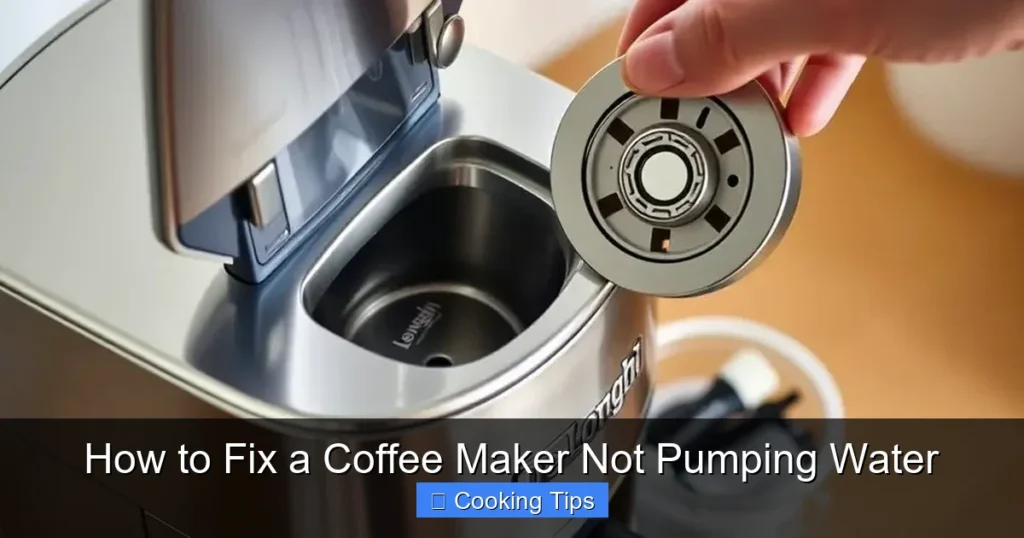
Source: cookrm.com
Quick answer: why your coffee maker is not pumping water
The most common causes are:
- An empty or poorly seated water reservoir
- A blocked reservoir valve or intake screen
- An air lock in the water line
- Mineral scale inside the heater tube or pump
- A clogged needle, outlet, filter basket, or brew valve
- A failed water pump
- A faulty switch, sensor, control board, or thermal fuse
If the machine makes a hum but no water comes out, check for a blockage, air lock, or scale buildup. If it stays silent after you press brew, the problem may involve the power switch, control board, pump, or a safety sensor.
The right fix depends on the coffee maker type. A drip coffee maker, single-serve brewer, espresso machine, and pod machine do not use the same water path or controls.
First, identify the symptom
The sound and behavior of the machine can narrow the problem before you take anything apart.
| What the coffee maker does | Likely cause | Best first check |
|---|---|---|
| No lights or sound | Outlet, cord, switch, fuse, or control failure | Test the outlet and power cord |
| Lights work, but the machine is silent | Control, sensor, switch, or pump issue | Confirm the brew cycle starts |
| Pump hums, but no water moves | Air lock, scale, blocked intake, or failed pump | Reseat the tank and run a cleaning cycle |
| Water leaks from the tank area | Loose tank, damaged seal, or stuck valve | Remove and reseat the reservoir |
| Water enters the machine but does not reach the carafe | Clogged outlet, brew valve, or showerhead | Clean the outlet and brew basket |
| Water flows slowly | Scale, fine grounds, or partial blockage | Clean the filter path and descale |
| The machine stops after a few seconds | Low-water sensor, overheating, or control fault | Let it cool and check the reservoir |
A low hum usually means the coffee maker is trying to run the pump. It does not prove that the pump is healthy. A pump can make noise while its impeller is blocked, worn, or unable to move water.
Drip coffee makers
Drip machines often use a small pump or a heat-driven water system. Water moves from the reservoir through an intake path, then through a heater tube and onto the coffee grounds.
A clogged intake, mineral buildup, or blocked spray head can stop the flow. Some simple drip machines do not use a separate electric pump. They rely on heated water and steam pressure instead.
Single-serve and pod coffee makers
Single-serve machines often have a reservoir valve, a pump, a heater, an inlet needle, and an outlet needle. A blocked needle can stop water even when the pump still runs.
Coffee grounds can also enter the needle area. This is more likely when a reusable pod filter is overfilled or packed too tightly.
Espresso machines
Espresso machines use a pump that must build pressure. A lack of water may come from an empty tank, a closed tank valve, scale, a blocked group head, or a pump problem.
Do not treat an espresso machine like a drip brewer. Follow the manual for priming, backflushing, and descaling.

Source: kitchflair.com
Safe checks to do before cleaning
Unplug the coffee maker before you inspect it. Let a hot unit cool for at least 30 minutes, and empty any hot water from the reservoir or carafe.
Then check these basic points:
- Test the wall outlet. Plug in a lamp or another small appliance. Avoid using a damaged extension cord.
- Check the water level. Fill the reservoir above the minimum line but below the maximum line.
- Reseat the reservoir. Remove it and place it back firmly. The tank valve must press against the machine’s intake valve.
- Check the lid and carafe. Some brewers will not start unless the lid, brew basket, or carafe is in the correct position.
- Look for a water-lock lever. A stuck reservoir valve can prevent water from leaving the tank.
- Inspect the filter basket. Remove excess grounds, a collapsed paper filter, or a filter that is not seated correctly.
- Check for leaks. Water under the machine can point to a loose tank, cracked hose, or damaged seal.
Never place the main body of a coffee maker in water. Never use a metal tool inside a powered machine. Do not bypass a float, lid switch, thermal fuse, or other safety device.
If the cord is frayed, the plug is hot, or you smell burning plastic, stop using the machine. Replace it or have it checked by a qualified appliance repair technician.

Source: kitchenseer.com
How to fix a coffee maker that hums but does not pump water
A humming sound with no water flow often points to an air lock, scale, or a blocked water path. Try the following sequence.
1. Reseat and refill the reservoir
Remove the reservoir and check the small valve on its base. Press it gently over a sink. Water should flow when the valve opens.
If no water comes out, the valve may be stuck. Clean around it with a soft cloth. Do not force it with a knife or sharp object.
Put the tank back in place. Make sure it sits flat and fully engages the machine’s intake port.
2. Prime the water path
An air lock can stop a small pump from drawing water. To help prime the machine:
- Fill the reservoir with fresh water.
- Install it firmly.
- Remove coffee grounds, pods, or the filter basket.
- Place a large cup or bowl under the outlet.
- Start the largest or longest water-only cycle.
- Stop the cycle if the pump runs dry or the machine becomes unusually hot.
- Repeat only as directed by the manual.
Some coffee makers require a specific priming process. A single-serve brewer may need several water-only cycles. An espresso machine may require opening the hot-water or steam valve during priming.
Do not run a pump without water for long periods. A dry pump can overheat or suffer damage.
3. Clean the outlet and intake area
Unplug the machine before cleaning. Remove the basket, pod holder, and any removable screen.
Use a soft brush or cloth to remove coffee oils and loose grounds. For a pod brewer, clean the puncture needles only as the manual allows. Some manufacturers provide a cleaning tool for this job.
Do not push debris deeper into a needle. Do not use a paper clip unless the manufacturer specifically permits it.
4. Descale the coffee maker
Mineral scale forms when dissolved minerals in water collect inside the heater and water passages. It can reduce flow or block a narrow tube.
Use the manufacturer’s descaling product or method. Some manuals allow diluted white vinegar, while others warn against it because it can leave odor, affect seals, or fail to remove all deposits.
A safe general process is:
- Remove coffee grounds and the filter.
- Mix the approved descaling solution according to the manual.
- Run the cleaning cycle.
- Pause if the manual calls for a soak.
- Rinse with fresh water for the required number of cycles.
- Check that the water flows normally.
Do not mix vinegar with bleach or any other cleaner. Do not use concentrated acid or a commercial bathroom descaler.
5. Try a water-only cycle
After cleaning, run a full cycle with fresh water. Watch for steady flow, unusual noise, leaks, or a burning smell.
If water flows again, the problem was likely a temporary blockage, air lock, or scale restriction. If the pump still hums but no water moves, the pump or an internal hose may need service.
Source: cafenfood.com
How to fix a coffee maker that is completely silent
If the machine has power but makes no pump sound, the problem may not be the water path.
Check these items:
- The brew button or selector is fully engaged.
- The lid, carafe, and brew basket are correctly positioned.
- The reservoir is seated and above the minimum level.
- A delay timer or cleaning mode is not active.
- The machine has cooled after a previous overheating event.
- The outlet supplies power under load.
Some coffee makers will not operate when a water-level float is stuck. Clean the reservoir and inspect the float if the manual identifies one. A float can collect coffee residue or scale and falsely report an empty tank.
If the display works but the pump does not start, possible causes include a failed pump, relay, control board, door switch, or thermal protection part. These parts are inside the appliance and may connect to household voltage.
Do not remove the bottom cover unless you know how to disconnect power and safely test appliance circuits. Unplugging a machine reduces risk, but internal capacitors and wiring can still present hazards in some designs.

Source: espressorivo.com
How to tell whether the pump has failed
A failed pump is more likely when:
- The reservoir and water path are clean.
- The machine is correctly assembled.
- A water-only cycle does not restore flow.
- The pump makes a harsh, grinding, or irregular sound.
- Water leaks inside the machine.
- The machine previously ran dry for a long time.
- The pump receives power but cannot move water.
A pump may also fail without making any sound. However, you usually cannot confirm that without electrical testing or access to the service manual.
Before replacing a pump, check the warranty. Many newer coffee makers contain sealed assemblies or model-specific parts. A replacement pump that looks similar may have the wrong voltage, pressure, flow rate, or connector.
For a low-cost basic brewer, replacement may be more practical than repair. For an expensive espresso machine, built-in grinder, or commercial-style unit, professional repair may be worthwhile.

Source: smarthelperguides.com
Common mistakes that can stop water flow
Several user actions can create or worsen a blockage.
Overfilling the coffee basket
Too many grounds can expand and block the filter. The basket may also overflow into the outlet path.
Use the amount listed in the manual. A coarse grind usually allows water to pass more easily than an extremely fine grind.
Using the wrong filter
A paper filter that is too large, too small, or folded incorrectly can block the outlet. A reusable filter with very fine holes can also slow drainage.
Running the machine with an empty tank
A brief empty cycle may not cause damage, but repeated dry running can overheat a pump or heater. Always check the water level before starting a brew cycle.
Ignoring the minimum water line
Some machines use a float or sensor. If the water level is below the minimum mark, the brewer may refuse to start or stop early.
Using untreated hard water
Hard water can leave scale faster than filtered or softened water. A water filter may reduce some impurities, but it does not remove every mineral in every model.
Follow the manual’s cleaning schedule rather than waiting for a complete blockage.

Source: youtube.com
When should you stop troubleshooting?
Stop and seek professional help when:
- The coffee maker trips a circuit breaker.
- You see sparks, smoke, or melted plastic.
- The plug or cord becomes hot.
- The machine leaks near electrical parts.
- You smell a strong burning odor.
- The housing is cracked.
- The machine has been submerged.
- Cleaning does not restore flow and the unit is under warranty.
Contact the manufacturer before using a third-party part. The model number is usually printed on the bottom, back, or side of the machine.
If a qualified technician confirms a failed pump, compare the repair cost with the price of a replacement brewer. Repair makes more sense when the machine is otherwise in good condition and the part is available.

Source: lifeboostcoffee.com
Prevention: keep water moving normally
Regular care can prevent many pumping problems.
- Empty the reservoir when the machine will sit unused for several days.
- Rinse removable parts after each use.
- Do not leave coffee grounds in the basket overnight.
- Use the water type recommended by the manufacturer.
- Descale when the manual recommends it or when flow becomes slow.
- Clean pod needles and spray heads as directed.
- Never force a stuck valve with a sharp tool.
- Store the machine in a dry place.
- Avoid moving it while the reservoir is full.
The best maintenance schedule depends on water hardness and use. A household that brews several pots each day may need more frequent cleaning than a household that brews one cup each morning.

Source: coffeecherish.com
Frequently asked questions
Why is my coffee maker making noise but not dispensing water?
The pump may be blocked by scale, grounds, or an air lock. Reseat the reservoir, run a water-only cycle, clean the approved water path, and descale according to the manual. If the pump still hums without moving water, it may be worn or damaged.
Why does my coffee maker pump water slowly?
Slow flow often comes from mineral scale, a clogged filter, a fine grind, or a partly blocked needle or spray head. Clean the removable parts first. If the problem affects every cycle, descale the machine.
Can I use vinegar to unclog my coffee maker?
Only if the manufacturer allows vinegar. Some brands recommend a specific descaler instead. Vinegar can leave an odor and may not be suitable for every seal, sensor, or internal material.
Why does my single-serve coffee maker not pump water after descaling?
The machine may still have air in the line, a blocked needle, or a reservoir that is not engaging its valve. Run the manufacturer’s rinse or priming process. If water remains inside the tank and no flow occurs, stop repeated cycles and contact the manufacturer.
Is it worth repairing a coffee maker that will not pump?
Repair may be worthwhile for a costly espresso machine or a brewer under warranty. For a basic drip coffee maker, replacement may cost less than labor and parts. Get the model-specific pump price and repair estimate before deciding.
Key takeaways
A coffee maker that will not pump water usually has a seating problem, air lock, blockage, mineral scale, or failed pump.
Start by checking the outlet, water level, reservoir valve, carafe, lid, and filter basket. Then clean the water path and use the correct descaling method. Do not run the pump dry or open the machine when you are not trained to work on electrical appliances.
If the machine smells hot, leaks near wiring, trips a breaker, or remains silent after basic checks, stop using it and seek manufacturer or professional service.
Conclusion
The safest repair path is simple: check the reservoir, remove obvious blockages, prime the water path, and descale with an approved method. These steps solve many no-flow problems without opening the coffee maker.
If they do not work, the fault may be inside the pump, heater, hose, sensor, or control system. At that point, use the model manual and warranty information rather than forcing the machine to run.