

For a typical U.S. home, a drip coffee maker lasts about 5 to 10 years. A basic model may fail sooner, while a well-made machine that is cleaned and descaled can last longer.
There is no fixed expiration date for a coffee maker. Its real life depends on build quality, daily use, water hardness, cleaning, heat damage, and the condition of key parts. A coffee maker that brews slowly, leaks, smells like burned plastic, or trips a circuit may be ready for replacement.
Use this guide to judge your machine by its condition—not just its age.
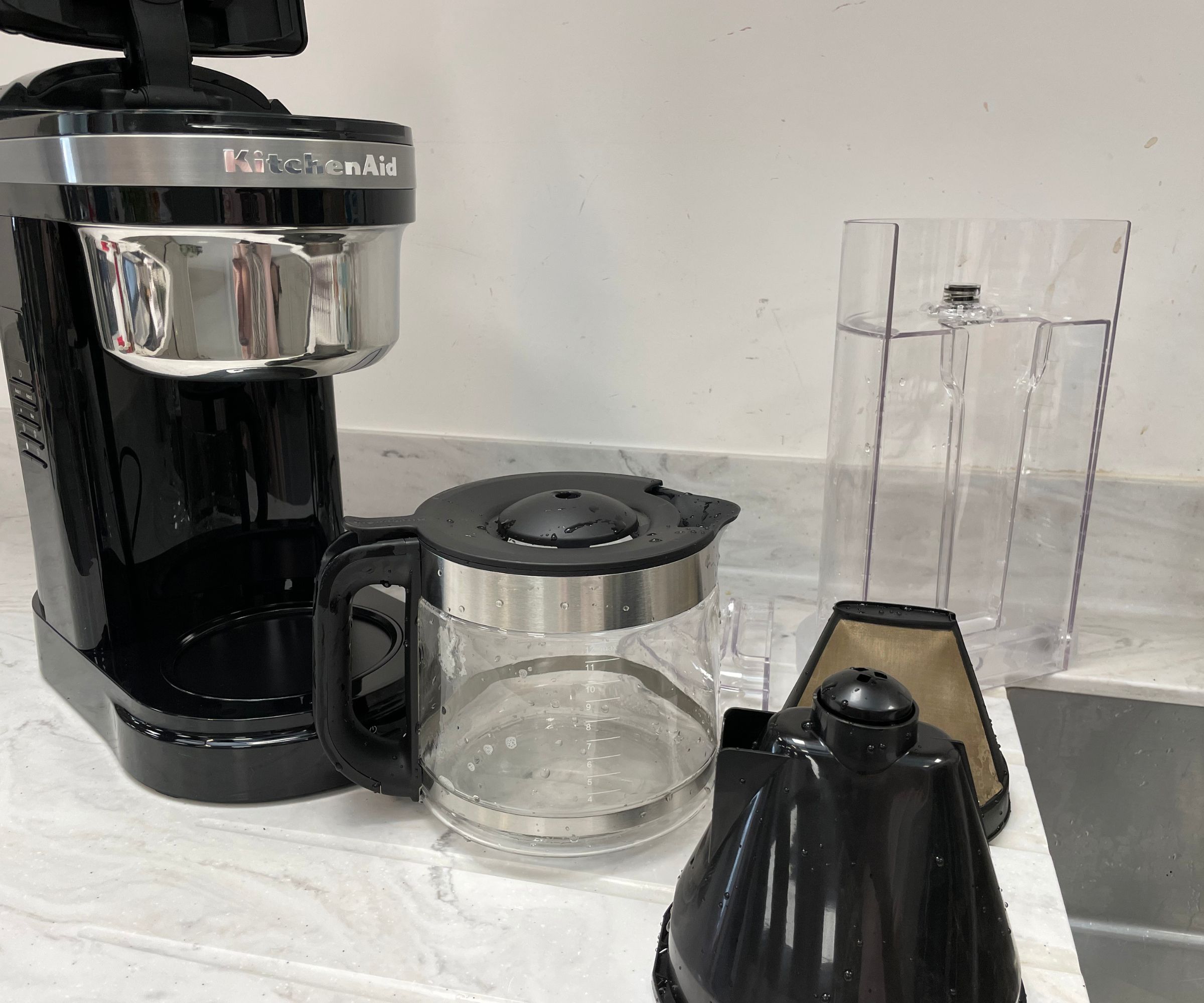
Source: homesandgardens.com
How long does a drip coffee maker usually last?
Most drip coffee makers last around five years with regular use. Better-built models may work for seven to ten years or more, but this is a practical estimate, not a guaranteed service life.
Manufacturers often provide warranties of one to three years. A warranty period is not the same as the expected life of the appliance. It tells you how long the company covers certain defects under stated terms.
A coffee maker used once each morning faces less stress than one used several times a day in a busy office. Mineral-rich water can also shorten its life by blocking the water path and making the heater work harder.
Typical life by use
| Use pattern | Practical life estimate | What changes the result |
|---|---|---|
| Occasional home use | 5–10 years | Less heat and water flow through the parts |
| Daily home use | 4–8 years | Cleaning and water quality matter |
| Heavy daily use | 3–6 years | More cycles wear the pump and heater |
| Small office or shared kitchen | 2–5 years | High use and poor cleaning are common |
| Well-maintained premium model | 7–10+ years | Parts and repairs may still limit value |
These ranges are planning guides, not laboratory findings. There is no widely used U.S. database that tracks the average failure age of all household drip coffee makers.
What usually wears out first?
A drip coffee maker has several parts that age at different rates:
- Heating element: Warms the water and keeps the carafe plate hot.
- Thermostat or thermal fuse: Controls temperature and protects the appliance from overheating.
- Pump or water valve: Moves water from the reservoir toward the filter basket.
- Tubing: Carries heated water through the machine.
- Control board: Runs timers, displays, buttons, and automatic brew functions.
- Carafe and lid: May crack, chip, or lose a good seal before the machine itself fails.
- Hot plate coating: Can peel or corrode after years of heat and spilled coffee.
A carafe is often cheaper to replace than the whole machine. If the brewer works well and the manufacturer still sells a matching carafe, that may extend its useful life.
What affects the life of a coffee maker?
The biggest factors are use, water, heat, cleaning, and storage. Two identical coffee makers can last very different lengths of time in different homes.
1. Water hardness and mineral scale
Hard water contains minerals such as calcium and magnesium. When water is heated, some of these minerals can form scale inside the water path.
Scale may cause:
- Slower brewing
- Lower water flow
- Incomplete extraction
- More noise during brewing
- A smaller amount of coffee
- A mineral taste
- Extra stress on the heating system
If you use well water or live in an area with hard water, you may need to descale more often than the manual suggests. Follow the manufacturer’s instructions for the cleaner, amount, and rinse process.
A water filter may reduce taste and odor problems, but it does not remove every mineral in every situation. Do not assume that a charcoal filter eliminates the need to descale.
2. How often you use it
Daily brewing creates more heat cycles and more contact with water. Heavy use can wear the pump, thermostat, and control parts sooner.
This does not mean daily use will ruin a coffee maker. Regular cleaning often matters more than occasional heavy use. A machine that brews two pots a day and receives proper care may outlast one that brews one pot a day but stays wet and dirty.
3. Cleaning habits
Old coffee oils can collect in the filter basket, showerhead, and carafe. These oils may make coffee taste stale or bitter. They can also create a sticky film that is harder to remove over time.
Rinse the removable parts after each use. Wash them with warm water and dish soap as allowed by the manual. Wipe the warming plate when it is cool.
Do not immerse the electrical base in water. Do not use abrasive tools on coated surfaces unless the manual allows them.
4. Heat and empty operation
A warming plate left on for hours can damage the carafe, plate coating, or nearby plastic. Some machines shut off automatically, but the shutoff time varies.
Do not run a coffee maker without enough water in the reservoir unless the manual specifically permits the function. Avoid repeatedly turning the machine on and off during a brew cycle. These habits can add stress to the heater and controls.
5. Storage and handling
A cracked water reservoir, loose lid, or damaged power cord can make a coffee maker unsafe even if it still brews.
Keep the machine on a level, dry surface. Do not pull the plug by the cord. Let the unit cool before moving it, especially if the hot plate or carafe contains hot liquid.

Source: homesandgardens.com
Signs your coffee maker needs repair or replacement
A slow brew alone does not always mean the machine is finished. It may need cleaning or descaling. The right next step depends on the symptom.
Slow brewing or weak flow
Likely causes:
- Mineral scale
- A clogged showerhead
- A blocked valve
- A dirty filter basket
- A failing pump
First, clean the removable parts and run the manufacturer-approved descaling process. Run the required fresh-water rinse cycles afterward.
If the machine remains slow after cleaning, the pump or internal water path may be failing. On a low-cost coffee maker, replacement is often more practical than paid repair.
Coffee that is not hot enough
Warm coffee may result from an incorrect brew setting, a cold carafe, a dirty system, or a failing heater.
Check the manual for the model’s intended temperature and settings. Do not judge temperature from a single cup poured into a cold mug. A cold mug can lower the drink temperature quickly.
If coffee is consistently lukewarm after proper cleaning and the machine cannot reach its normal performance, the heating system may be worn out. Do not open the base unless you are trained to work safely with electrical appliances.
Leaking water
Water under the machine can come from several places:
- An overfilled reservoir
- A misaligned filter basket
- A cracked carafe
- A loose reservoir seal
- A blocked overflow path
- A damaged internal tube
Unplug the coffee maker before checking for leaks. If water reaches the electrical base or comes from inside the housing, stop using it.
A replacement carafe or gasket may solve an external leak. An internal leak usually supports replacement unless the machine is expensive and a qualified repair service can fix it at a reasonable cost.
Strange smells, smoke, or electrical problems
Stop using the coffee maker immediately if you notice:
- Burning plastic or electrical smells
- Smoke
- Sparks
- A damaged or hot power cord
- Repeated circuit breaker trips
- A plug that becomes unusually hot
- Water entering the control area
Unplug the unit if you can do so safely. Do not keep testing it. Do not bypass a fuse, remove a safety switch, or use a damaged extension cord.
Check the U.S. Consumer Product Safety Commission’s recall database for the model. A recall notice may provide repair, replacement, or refund instructions.
A cracked glass carafe
A cracked glass carafe should be replaced at once. Hot coffee can cause the glass to break and spill.
Do not use a carafe with a chipped rim, damaged handle, or visible crack. Use the exact replacement recommended for the coffee maker. A carafe with the wrong shape may not sit under the drip stop correctly.
Should you repair or replace a drip coffee maker?
Repair the coffee maker when the problem is simple, the part is available, and the machine is otherwise in good condition. Replace it when the fault involves safety, several parts are failing, or repair costs approach the price of a new unit.
Repair may make sense when:
- The carafe is cracked but the brewer works normally.
- The filter basket or lid needs replacement.
- The machine needs cleaning or descaling.
- A removable seal is available.
- The unit is still under warranty.
- The model is expensive and replacement parts are easy to find.
Replacement is usually wiser when:
- The cord, plug, or electrical base is damaged.
- The machine smokes or trips the breaker.
- It leaks from inside the housing.
- It remains slow after descaling.
- It produces repeated error codes.
- The hot plate or plastic body is badly damaged.
- A repair quote is more than about half the cost of a suitable replacement.
- The model is old and parts are no longer sold.
The “half the replacement cost” rule is a budgeting tool, not a safety rule. A low repair price does not make an unsafe appliance safe. Electrical faults require more caution than cosmetic problems.
A simple repair calculation
Suppose a new coffee maker that meets your needs costs $80. A repair quote is $45, and the machine is eight years old with a worn hot plate.
The repair equals more than half the replacement cost. The old machine may also develop another fault soon. In that case, replacement may offer better value.
If the same $80 machine only needs a $12 replacement carafe, repair is the more sensible choice.
How to make a drip coffee maker last longer
Good care can reduce scale, protect the hot plate, and keep coffee tasting clean. It cannot prevent every electrical or mechanical failure, but it may delay avoidable wear.
After every brew
- Turn off the machine when the cycle is complete, unless you need the warming plate briefly.
- Remove the used paper filter and grounds.
- Empty leftover water from the reservoir if the manual recommends it.
- Rinse the filter basket and carafe.
- Leave removable parts open so they can dry.
- Wipe coffee from the warming plate after it cools.
Weekly
Wash the carafe, lid, filter basket, and reusable filter with warm water and dish soap. Check the showerhead for blocked holes or coffee residue.
If the manual permits dishwasher cleaning, follow its instructions. Some plastic parts can warp or become cloudy in high heat.
Every one to three months
Descale the machine based on the manual, use level, and water hardness. A home with hard water may need more frequent descaling than a home with soft water.
Use the cleaner named or approved by the manufacturer. Some manuals allow a vinegar solution, while others recommend a branded descaler. Do not combine cleaning chemicals.
After descaling, run the full number of fresh-water rinse cycles listed by the manufacturer. If the coffee still smells like cleaner, run another rinse cycle and do not drink the brew.
Before long storage
Empty and dry the reservoir. Clean the basket and carafe. Store the unit in a dry place with the lid or reservoir open enough to prevent trapped moisture, if the design allows it.
Do not store a machine with water sitting inside for weeks. Stagnant moisture can create odors and buildup.
A practical replacement checklist
Replace your drip coffee maker if one or more of these statements is true:
- It creates an electrical safety risk.
- It leaks inside the base.
- It smokes, sparks, or smells burned.
- It cannot brew at its normal speed after cleaning.
- It no longer heats coffee properly.
- A required part is unavailable.
- The repair cost is too close to the price of a new machine.
- The coffee maker has several problems at once.
Keep using it, with normal care, when:
- It brews at its usual speed.
- Coffee reaches the expected temperature.
- There are no leaks or electrical signs.
- The carafe and cord are intact.
- Cleaning restores taste and flow.
- Replacement parts remain available.
Age matters, but condition matters more. A ten-year-old machine with no safety problems may be a better choice than a two-year-old machine with a damaged cord.
How to choose a replacement coffee maker
Choose the replacement by your real needs, not by the largest capacity or longest feature list.
Consider:
- Batch size: A 5-cup model may suit one person, while a 10- or 12-cup model may fit a family.
- Carafe type: Glass allows you to see the coffee level. Thermal carafes can reduce time on a hot plate.
- Automatic shutoff: Check how long the warming plate stays on.
- Cleaning access: Removable baskets and accessible showerheads are easier to maintain.
- Water filter system: Check the cost and availability of replacement filters.
- Parts support: Look for replacement carafes, baskets, lids, and seals.
- Warranty: Read what the warranty covers and whether shipping or labor is excluded.
- Controls: Simple buttons may be easier to keep working than a complex display, but this depends on the model.
- Brew size limits: Some machines do not brew small amounts well.
- Electrical rating: Use a model made for the U.S. electrical system and follow the manual’s cord instructions.
Avoid choosing a new machine only because it claims to last a certain number of years. Product life depends on use and care, and manufacturers may not publish independent durability testing.
Frequently asked questions
Can a coffee maker last 20 years?
It is possible, but uncommon enough that you should not plan on it. A lightly used, well-maintained machine may last far beyond the typical five-to-ten-year range. The condition of the cord, heater, water path, seals, and controls matters more than the calendar age.
How often should I replace my coffee maker?
Replace it when it becomes unsafe, unreliable, hard to clean, or too expensive to repair. If it works normally and has no damaged parts, age alone is not a reason to discard it.
Does vinegar ruin a coffee maker?
Vinegar may be allowed by some manufacturers and discouraged by others. It can leave an odor and may not remove every type of buildup. Check the manual first. Use only the amount and process approved for your model, then rinse the machine fully.
Why is my coffee maker taking so long to brew?
Mineral scale is a common cause, but a clogged basket, blocked showerhead, or failing pump can cause the same symptom. Clean the removable parts and follow the descaling instructions first. Replace the machine if the slow flow continues or if it also leaks or overheats.
Is it safe to use a coffee maker with a cracked carafe?
No. A cracked or chipped glass carafe can break when exposed to hot coffee. Replace it with the correct model-specific carafe, or replace the coffee maker if the part is unavailable.
Do expensive coffee makers last longer?
A higher price does not guarantee a longer life. Some premium machines offer better parts support, warranties, or service options, which may improve long-term value. Compare those documented benefits rather than assuming price equals durability.
Key takeaways
- A typical U.S. drip coffee maker lasts about 5 to 10 years.
- Daily use, hard water, heat, and poor cleaning can shorten its life.
- Descale the machine according to its manual and local water conditions.
- Replace it immediately for smoke, sparks, burning smells, damaged cords, or internal leaks.
- Repair simple problems such as a cracked carafe when parts are available.
- Choose replacement based on safety, repair cost, parts support, and actual brewing needs.
Conclusion
A drip coffee maker does not need replacement simply because it reaches a certain birthday. If it brews well, stays dry, heats properly, and has an intact cord, regular cleaning and descaling may keep it useful for years.
Replace it when safety problems appear or when cleaning no longer fixes slow brewing, poor heat, leaks, or bad taste. Before buying a new one, check the manual, look for replacement parts, and compare the repair cost with the price of a suitable U.S. replacement.
Sources and further reading
- U.S. Consumer Product Safety Commission recalls
- U.S. Consumer Product Safety Commission electrical safety information
- Consumer appliance care guidance from ENERGY STAR
- The owner’s manual and support page for the exact coffee maker model, especially for descaling chemicals, dishwasher use, automatic shutoff, and replacement parts