

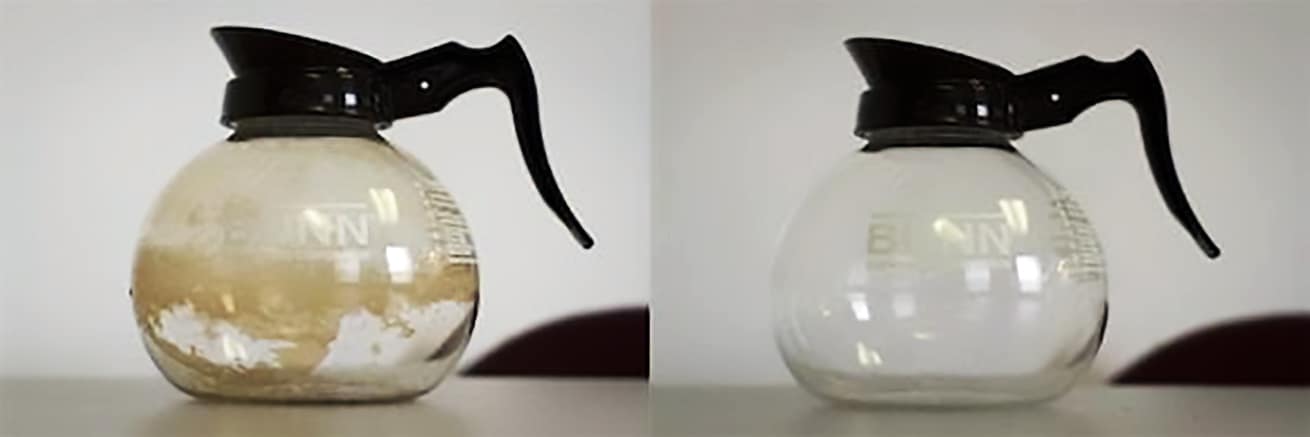
A burnt glass coffee pot usually needs heat, soap, and a mild scrub—not harsh chemicals. Let the pot cool fully, fill it with hot water and dish soap, soak it, then use baking soda to lift the dark coffee film. For a thick, baked-on layer, add a small amount of white vinegar or use a coffee-machine cleaning tablet. Never pour cold water into a hot glass carafe.
A glass coffee pot, also called a carafe, can look ruined after coffee dries on the bottom. In many cases, the glass is still safe to use. The stain is often a mix of coffee oils, sugars, and residue that hardened after the pot sat on a hot warming plate.

Source: youtube.com
What You Need Before You Start
Gather these supplies:
- Dish soap
- Baking soda
- A soft sponge or nylon bottle brush
- A clean dish towel
- White vinegar, optional
- A non-scratch scrub pad, optional
- Hot tap water
- Rubber gloves, if your skin is sensitive
Check the carafe before cleaning. Stop using it if you see:
- A crack or chip
- A sharp edge
- A long scratch near the handle or base
- A loose or damaged handle
- Glass that has separated from a plastic or metal base
A damaged carafe may break during washing or heating. Cleaning cannot repair weakened glass.
Do not use steel wool, a metal knife, or a sharp scraper. These tools can scratch the glass. Scratches may become weak points, especially when the pot is heated.
The most important safety rule
Avoid sudden temperature changes. Do not place a hot glass coffee pot in cold water, and do not pour boiling water into a cold carafe. Thermal shock can crack or shatter glass.
Let the pot reach room temperature first. Then use warm or hot water.
The Best Basic Method for a Burnt Glass Coffee Pot
This method works for most brown stains and light to medium burnt coffee marks.
1. Let the pot cool completely
Remove the pot from the warming plate. Set it on a dry towel or heat-safe surface. Wait until the glass feels cool to the touch.
This step may seem slow, but it lowers the risk of cracking the carafe.
2. Remove loose residue
Rinse the inside with warm water. Pour the water out and wipe away any soft coffee residue with a sponge.
Do not scrape hard spots with a knife. Let soaking do the work.
3. Add hot water and dish soap
Fill the carafe with hot tap water. Leave a little space at the top. Add about 1 teaspoon of liquid dish soap.
Swirl the water gently. Let the carafe soak for 30 minutes to 1 hour.
Dish soap helps loosen coffee oils. Hot water softens the baked residue. Together, they often remove a stain without strong chemicals.
4. Add baking soda
Drain most of the soapy water. Leave enough moisture to make a paste. Add 2 to 3 tablespoons of baking soda.
Coat the burnt area with the paste. Let it sit for 15 to 30 minutes.
Baking soda is a mild abrasive. It can help lift residue without the harsh scratching caused by metal tools.
5. Scrub with a soft tool
use a soft sponge or nylon bottle brush. Work in small circles over the stained area.
A bottle brush helps when the stain sits at the bottom or around the curve of the carafe. Use light pressure. Several short passes are safer than one hard scrape.
6. Rinse and inspect
Rinse the pot well with warm water. Hold it under a bright light and check the bottom and sides.
Repeat the baking soda step if you still see a thin brown film. A second mild treatment is safer than using a rough abrasive.

Source: storage.googleapis.com
How to Remove Thick, Baked-On Coffee
If the basic method fails, use a longer soak. Thick black residue often needs time to soften.
Option 1: Baking soda and hot water
Use this method for a heavy stain when you want to avoid vinegar.
- Add 2 to 4 tablespoons of baking soda.
- Fill the carafe with hot tap water.
- Stir with a wooden or silicone utensil.
- Let the mixture sit for 2 to 8 hours.
- Scrub with a soft sponge or nylon brush.
- Rinse several times.
Do not leave a metal spoon inside the carafe. It may strike or scratch the glass.
Option 2: Baking soda and white vinegar
Vinegar can help break down mineral deposits and some coffee residue. It is not a magic solvent for thick carbonized material, but it can help loosen a stubborn film.
Use this method carefully:
- Put 2 tablespoons of baking soda in the cool carafe.
- Add 1 cup of white vinegar slowly.
- Let the bubbling stop.
- Add hot tap water until the stained area is covered.
- Wait 30 minutes.
- Scrub with a soft brush.
- Wash with dish soap and rinse well.
The bubbling comes from an acid-base reaction. It looks active, but the bubbles alone do not remove all burnt material. The soak and gentle scrubbing do most of the work.
Never seal the carafe while the mixture is bubbling. Pressure can build if gas cannot escape.
Option 3: A coffee-machine cleaning tablet
A cleaning tablet made for coffee equipment may help with heavy coffee oils. Follow the label instructions. Use only a product that is approved for the type of carafe or coffee maker you have.
Do not assume that a dishwasher tablet, oven cleaner, drain cleaner, or laundry product is safe for a coffee pot. These products may leave harmful residue or damage plastic parts.
Wash the carafe with dish soap after using a cleaning tablet. Rinse it until no smell or slippery film remains.
Source: buybestkitchenware.com
Which Cleaning Method Should You Choose?
Use the mildest method that matches the stain.
| Stain or problem | Best first method | Typical soak time |
|---|---|---|
| Fresh coffee film | Dish soap and hot water | 30 minutes |
| Brown oil stain | Baking soda paste | 15–30 minutes |
| Thick, dry residue | Baking soda and hot water | 2–8 hours |
| Mineral scale or cloudy marks | Diluted white vinegar | 15–30 minutes |
| Strong coffee odor | Dish soap, then baking soda | 30–60 minutes |
| Heavy coffee buildup | Coffee-machine cleaning tablet | Follow label |
This table is a guide, not a guarantee. A stain may contain both coffee oils and mineral scale. In that case, clean with dish soap first, rinse, and then use a separate vinegar soak.
Do not mix different cleaning products in the same step. In particular, never mix vinegar with bleach. Mixing bleach with acids can release dangerous chlorine gas.
How to Clean the Outside and Bottom
The outside of the carafe may also have a dark ring from the warming plate.
First, unplug the coffee maker and let every part cool. Remove the carafe if the design allows it. Wipe the outside with warm, soapy water and a soft cloth.
For a baked-on mark on the glass bottom, apply a thin baking soda paste. Wait 10 to 15 minutes, then wipe gently.
Do not soak the electrical base of the coffee maker. Do not pour water over switches, cords, heating elements, or control panels.
If the stain is on the warming plate rather than the glass, follow the coffee maker’s manual. Some plates have a coating that harsh cleaners can damage.

Source: pinterest.com
Can You Put a Glass Coffee Pot in the Dishwasher?
Only use a dishwasher if the manufacturer says the carafe is dishwasher-safe.
Look for instructions on:
- The coffee maker manual
- The product label
- The manufacturer’s care page
- A symbol on the carafe or packaging
Even when a carafe is dishwasher-safe, hand washing may help it last longer. A dishwasher can expose glass and plastic parts to strong detergent, hot water, and movement. Place the carafe securely so it cannot hit other dishes.
Do not put a glass carafe on a high-heat drying cycle unless the instructions allow it. Remove loose lids, seals, or small parts only when the manufacturer says they can be removed.

Source: youtube.com
Why the Burnt Mark May Keep Coming Back
A stain that returns quickly may have more than one cause.
Coffee is sitting on the warming plate too long
Heat keeps drying the coffee oils onto the glass. Turn off the warming plate when the coffee is no longer needed.
The carafe is not washed after each use
A quick rinse may not remove coffee oils. Wash the carafe with dish soap after every use, especially around the bottom.
The warming plate is dirty
Residue on the plate can transfer back to the glass. Clean the unplugged, cool plate according to the coffee maker’s instructions.
The coffee maker is brewing poorly
Coffee grounds, mineral scale, or a blocked filter basket can affect brewing. Clean the filter basket and reusable filter. If the machine has a cleaning cycle, use it as directed.
The stain is not coffee
White or gray marks may be mineral scale. A vinegar soak may work better than baking soda. Tiny cracks or cloudy areas inside the glass are different from stains and cannot be cleaned away.

Source: storage.googleapis.com
Common Mistakes to Avoid
Pouring cold water into a hot carafe
This is the most serious mistake. The fast temperature change can break the glass.
Using an abrasive pad
A rough pad may remove the stain but leave scratches. Choose nylon, plastic, silicone, or a soft sponge.
Boiling the cleaning mixture in the carafe
Do not place a standard coffee carafe directly on a stove. Unless the manufacturer specifically rates it for stovetop use, direct heat can cause failure.
Using bleach
Bleach is not needed for normal coffee stains. It can leave residue and becomes dangerous when mixed with vinegar or other acids.
Scrubbing before soaking
Hard scrubbing can damage the glass and usually saves little time. Soak first. Then use gentle pressure.
Ignoring chips and cracks
A clean carafe can still be unsafe if its glass is damaged. Replace it when you find a crack, chip, or sharp edge.
What to Do If the Stain Will Not Come Off
Try one more long soak with baking soda and hot tap water. Use a soft brush and rinse well.
If the mark remains, inspect it closely:
- A brown or black film is likely residue.
- A white, chalky layer may be mineral scale.
- A cloudy patch may be glass damage or etching.
- A fine line that catches on a fingernail may be a crack or scratch.
If the glass is cracked, chipped, or sharply scratched, replace the carafe. Do not keep heating it to test whether it will hold.
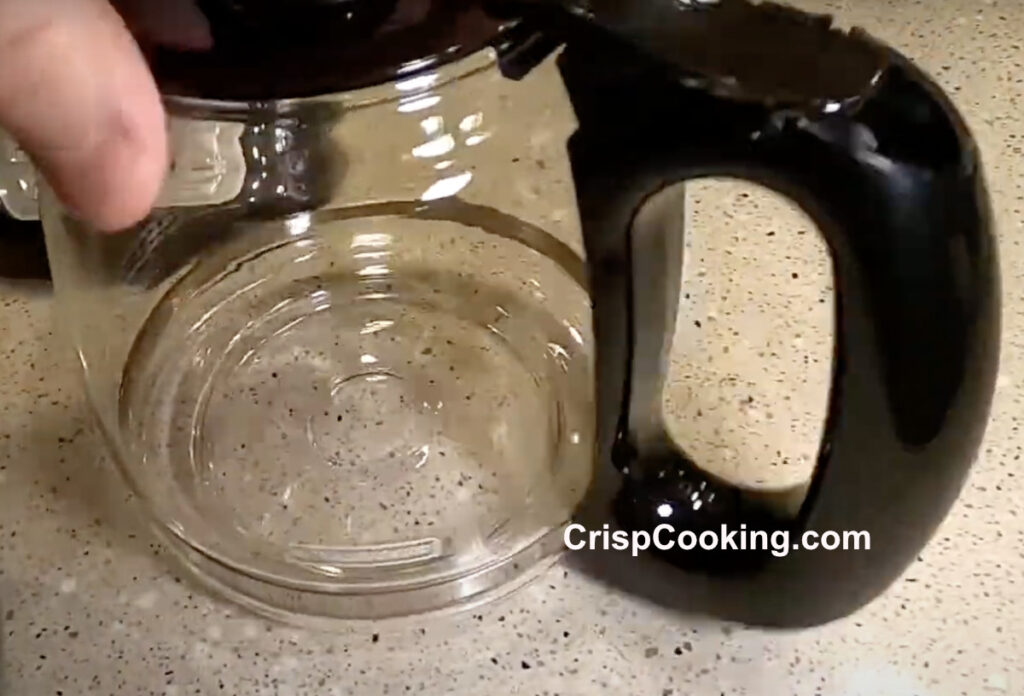
A permanent stain does not always mean the pot is unsafe. The deciding issue is the condition of the glass, not its color. When you cannot tell whether a line is a stain or a crack, replacement is the safer choice.
Source: crispcooking.com
How to Prevent Burnt Coffee Stains
Prevention takes less time than deep cleaning.
- Empty the carafe after serving.
- Rinse it with warm water right away.
- Wash it with dish soap after each use.
- Turn off the warming plate when coffee is no longer needed.
- Clean the warming plate when it is cool.
- Run the coffee maker’s cleaning cycle as directed.
- Descale the machine when the manual recommends it.
- Do not leave coffee in the carafe overnight.
- Avoid stacking hard objects inside the glass pot.
A simple daily rinse prevents fresh coffee oil from drying into a hard, dark layer.

Source: youtube.com
Frequently Asked Questions
Can I use lemon juice instead of vinegar?
Yes. Lemon juice is acidic and may help with light mineral deposits or odor. It is usually less economical than white vinegar and may not work better on thick burnt coffee.
How long should baking soda sit in a coffee pot?
Leave a baking soda paste on the stain for 15 to 30 minutes. For thick residue, let baking soda mixed with hot water sit for 2 to 8 hours.
Can I use a magic eraser on a glass carafe?
It may remove some marks, but use it lightly and rinse well. Do not use it on plastic lids, printed markings, or coated surfaces unless the manufacturer allows it.
Is a burnt coffee pot ruined?
Not always. A dark film is often removable. A crack, chip, sharp scratch, or damaged handle means the carafe should be replaced.
Can I clean a burnt coffee pot with dishwasher detergent?
Only use dishwasher detergent if the carafe or coffee maker instructions allow it. Dish soap, baking soda, and a soft brush are safer general choices.
Key Takeaways
- Let the glass coffee pot cool before cleaning.
- Start with hot water, dish soap, and a long soak.
- Use baking soda for dark coffee residue.
- Use vinegar mainly for mineral scale and some odor.
- Avoid steel wool, knives, bleach, and sudden temperature changes.
- Replace any carafe with a crack, chip, or sharp edge.
- Wash the carafe after each use to prevent burnt stains.
Conclusion
The safest way to clean a burnt glass coffee pot is to soak it before scrubbing. Begin with hot tap water and dish soap, then use a baking soda paste for the remaining stain. For mineral scale, use a separate diluted vinegar treatment.
If the glass shows a crack, chip, or deep scratch, do not keep using it. A new carafe is safer than trying to save damaged glass.