

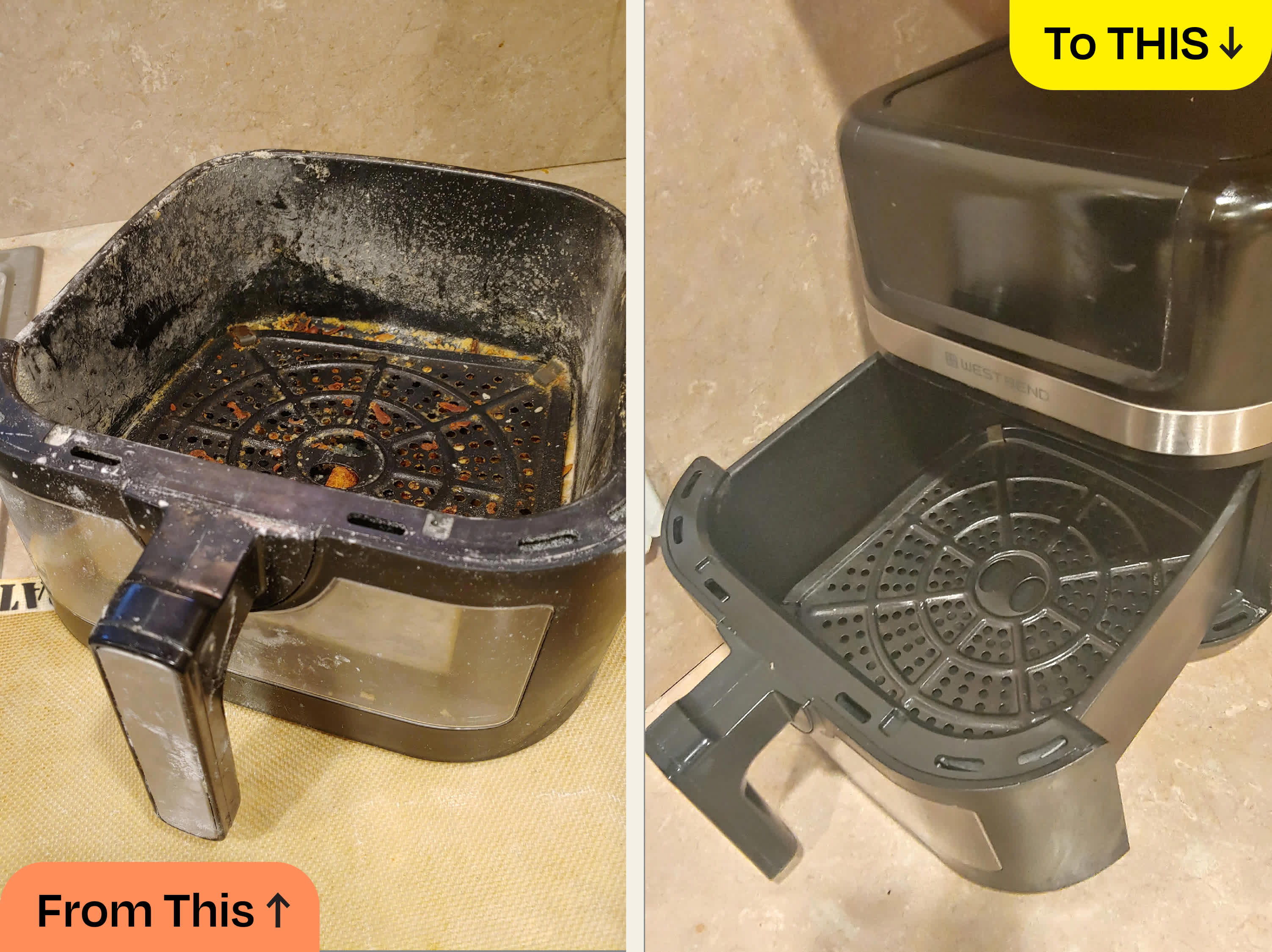
A basket-style air fryer needs more than a quick wipe after cooking. To deep clean it, unplug the cooled unit, remove the basket and pan, wash the removable parts with warm soapy water, clean the heating area with a damp cloth and soft brush, then dry every part fully before reassembly.
Always check your air fryer’s manual first. Some baskets and trays are dishwasher-safe, while others can lose their coating or discolor in a dishwasher.
What You Need Before You Start
Gather these items:
- Dish soap
- Warm water
- Soft sponge or microfiber cloth
- Soft-bristle toothbrush or small cleaning brush
- Baking soda
- White vinegar
- Nonabrasive scrub pad
- Dry towel
- Wooden or plastic skewer
- Clean bowl or sink
Do not use steel wool, harsh oven cleaner, metal scrapers, or bleach. These can scratch the nonstick coating or leave harmful residue.
Before cleaning
- Turn off the air fryer.
- Unplug it from the wall.
- Let it cool fully.
- Move it away from the sink.
- Remove the basket, crisper plate, and inner pan.
Never clean a hot air fryer. Hot grease can burn your skin, and cold water may damage hot parts.

Source: storage.googleapis.com
How to Deep Clean a Basket-Style Air Fryer
Follow the steps below in order. Start with the removable parts, then clean the inside and outside of the air fryer.
1. Remove loose crumbs and grease
Shake the basket and pan over a trash can. Use a dry paper towel or soft brush to remove loose crumbs.
Do not push crumbs into the heating area. They can collect near the fan or heating coil and may create smoke during the next use.
If grease has hardened, do not scrape it with a knife. Soak the removable parts instead.
2. Soak the basket and pan
Fill a sink or basin with warm water and a small amount of dish soap. Place the basket and pan in the water.
Let them soak for 10 to 15 minutes. This loosens baked-on oil and food without harsh scrubbing.
Keep the main air fryer unit out of the water. The electrical body should never be submerged.
3. Scrub the removable parts gently
Use a soft sponge or nonabrasive pad to clean the basket, pan, and crisper plate.
Pay close attention to:
- Holes in the crisper plate
- Corners of the pan
- The space beneath the basket
- Ridges that hold food oil
- The handle and basket release area
Use a soft toothbrush for small holes and seams. Work gently, especially if the parts have a nonstick coating.
Rinse until no soap remains. Soap left behind can cause a smell or taste when the air fryer heats.
4. Treat stubborn baked-on food
For food that still will not come off, make a soft paste with:
- 2 tablespoons of baking soda
- Enough water to make a thick paste
Spread the paste on the stuck food. Let it sit for 10 to 15 minutes. Then scrub with a soft sponge and rinse well.
Do not mix baking soda with bleach or other cleaners. Do not pour boiling water onto a cool, coated part. Sudden heat can stress some materials.
5. Clean the heating element
turn the air fryer upside down only if the manual allows it and you can hold it safely. Many units are easier to clean while upright.
Use a barely damp microfiber cloth to wipe the heating element and the area around it. A soft, dry toothbrush can help loosen crumbs.
Do not spray cleaner into the air fryer. Do not pour water inside. Keep moisture away from the fan, controls, vents, and electrical parts.
If grease is stuck to the heating coil, place a damp cloth over the area for a few minutes. This can soften the grease. Then wipe it away without bending the coil.
6. Clean the inside walls
Wipe the inside chamber with a damp cloth and a small amount of dish soap.
Clean the top, side walls, rails, and the area above the basket. Grease often builds up on the top because hot air carries oil droplets upward.
Use a soft brush around vents and seams. Do not push the brush deep into the fan opening.
Finish with a clean, damp cloth to remove soap. Then wipe the chamber dry.
7. Clean the outside and control panel
Wipe the outside with a damp microfiber cloth. Use a small amount of dish soap for greasy spots.
For a touch screen or control panel, use a nearly dry cloth. Do not spray liquid directly onto buttons or the display.
Clean the air vents from the outside. Blocked vents can reduce airflow and may make the unit run hotter or longer.
8. Dry all parts fully
Dry the basket, pan, and crisper plate with a clean towel. Leave them out until fully air-dry.
Water trapped under a crisper plate or in the basket handle can create an odor during the next cooking cycle. It can also cause splatter when the unit heats.
Do not run the air fryer to “dry” wet parts unless the manual gives that instruction.
9. Reassemble and check the air fryer
Put the pan and basket back in place only when all parts are dry.
Check that:
- The basket slides in fully
- The pan sits level
- No food blocks the vents
- The heating element is free of loose crumbs
- The cord and plug are dry
- The coating is not peeling or badly scratched
If the basket does not fit well, stop using the unit until you find the cause.

Source: livingfaqs.com
How to Remove Smoke, Grease, and Bad Odors
A bad smell often comes from old grease on the heating element, food trapped under the crisper plate, or residue in the upper chamber. Cleaning only the basket may not solve the problem.
Use this order:
- Clean the basket and pan.
- Wipe the heating area.
- Clean the upper inside wall.
- Wipe the outside vents.
- Let every part dry.
- Run the empty unit only if the manual permits it.
For a mild odor, wipe the inside with a damp cloth after washing the removable parts. You can also place a small bowl of warm water with a little lemon juice near the air fryer while it sits unplugged, but never run the appliance with a bowl or liquid inside unless the manual specifically allows it.
Do not use an air fryer that produces thick smoke after cleaning. Unplug it and let it cool. Check for leftover grease, food, plastic, or a damaged part. If the smoke continues, contact the manufacturer or a qualified repair service.
What smoke color can suggest
| Symptom | Possible cause | Safe first check |
|---|---|---|
| Light smoke after fatty food | Grease residue | Clean the pan, basket, and heating area |
| Smoke from the top | Grease near the heating element | Unplug, cool, and wipe the upper chamber |
| Burning plastic smell | Plastic touching a hot part or an electrical fault | Stop use and inspect the unit |
| Thick smoke or sparks | Electrical or serious grease problem | Unplug if safe and stop using the appliance |
| Smoke only with very oily food | Excess fat or food drippings | Reduce added oil and clean the pan |
Never pour water onto an electrical appliance or a grease fire. If a grease fire starts, turn off the heat if you can do so safely, keep the basket or drawer closed, and call 911 if the fire does not stop at once. Do not use water on a grease fire.
Source: kitchmag.com
Can You Put an Air Fryer Basket in the Dishwasher?
Some air fryer baskets and pans are dishwasher-safe. Others are not. The answer depends on the model and the coating.
Look for a dishwasher symbol in the manual or on the manufacturer’s support page. If the manual says the parts are dishwasher-safe, place them where the spray can reach them and avoid harsh cycles when possible.
Hand-washing is often the gentler choice for coated parts. High heat, strong detergent, and repeated dishwasher cycles may shorten the life of some coatings, even when the manufacturer permits dishwasher use.
Never put the main air fryer body in a dishwasher. It contains electrical parts, controls, a fan, and a heating system.
How Often Should You Deep Clean an Air Fryer?
Clean the basket and pan after every use. A full deep clean is usually needed every few weeks, but the right schedule depends on use.
Deep clean sooner if you:
- Cook bacon, sausage, or fatty meat
- Use oil sprays often
- Cook foods with wet batter
- Notice smoke
- Smell old grease
- See sticky residue
- Cook several times each week
A simple schedule can help:
| Cleaning task | Suggested timing |
|---|---|
| Remove crumbs | After each use |
| Wash basket and pan | After each use |
| Wipe the inside | Several times each week |
| Clean the heating area | Every 2 to 4 weeks, or as needed |
| Inspect the cord and coating | Monthly |
These are practical starting points, not fixed rules. Heavy grease needs faster cleaning.
What Not to Do When Cleaning an Air Fryer
Avoid these common mistakes:
Do not submerge the main unit
Water can reach the motor, fan, controls, or wiring. Clean the electrical body with a damp cloth only.
Do not use metal tools
Knives, forks, and metal scrapers can damage the coating. Scratches may make food stick and may cause the coating to peel over time.
Do not spray cleaner into the unit
Spray can reach the heating element, fan, or control panel. Apply a small amount of cleaner to a cloth instead.
Do not block the vents
The vents help move hot air and release heat. Blocked vents can affect cooking and may increase the risk of overheating.
Do not ignore peeling coating
A small mark may not stop the air fryer from working, but a basket with widespread peeling, flaking, or exposed metal should be replaced. Contact the manufacturer for the correct part.
Do not clean a warm unit with cold water
Let the unit cool first. A sudden temperature change may damage some parts and creates a burn risk.

Source: offsitekitchen.net
What to Do If Cleaning Does Not Fix the Problem
A deep clean should remove grease, crumbs, and most food odors. If a problem remains, use this check:
The air fryer still smells
Check the heating element, upper chamber, pan underside, vents, and basket handle. Grease can hide in narrow seams.
If the smell is chemical, electrical, or like melting plastic, stop using the air fryer and contact the manufacturer.
Food still sticks
Check for:
- A damaged coating
- Too much food in the basket
- Wet food placed directly on the basket
- Inadequate preheating, if the recipe calls for it
- Old grease on the crisper plate
Do not add more oil simply to cover damaged coating. Replace the part if the surface is peeling.
The air fryer still smokes
Remove all food and inspect the heating area after the unit cools. Make sure no parchment paper, plastic, or loose crumb is near the heating coil.
If smoke returns during an empty test run, unplug the unit and stop using it. Persistent smoke may point to a damaged component.
The basket will not slide in
Check whether the pan is upside down, overloaded, or out of its track. Look for food or grease in the rails.
Never force the basket into place. A poor fit can affect airflow and may prevent the safety switch from working correctly.
The air fryer has water inside
Unplug it at once if it is safe to do so. Do not turn it on. Let it dry in a well-ventilated area and contact the manufacturer if water reached the controls, fan, or electrical body.

Source: storage.googleapis.com
A Simple Maintenance Routine
A short routine prevents most deep-cleaning problems:
- Empty crumbs after cooking.
- Wash the basket and pan once they are cool.
- Wipe visible grease from the inside.
- Leave the parts open to dry.
- Check the heating area every few uses.
- Remove heavy grease before it hardens.
- Replace damaged coated parts.
Think of the air fryer as a small oven with a fast fan. Grease does not stay only in the basket. It can travel upward and collect near the heating element, so a complete cleaning must include the upper chamber.
Evidence and Model Limits
Air fryer designs differ. Some use a removable crisper plate, while others use a fixed rack. Some have dishwasher-safe parts, and some do not. Cleaning instructions from the model’s manual take priority over general advice.
The U.S. Department of Agriculture recommends cleaning food-contact surfaces and removing grease and food residue as part of safe kitchen care. The agency’s general cleaning guidance is available through its food safety cleaning and sanitizing guidance.
For exact part care, use the manual or support page for your model. Manufacturer instructions are the best source for dishwasher use, coating care, disassembly, and warranty limits.

Source: youtube.com
Key Takeaways
- Unplug the air fryer and let it cool before cleaning.
- Wash the basket, pan, and crisper plate with warm soapy water.
- Clean the heating area with a damp cloth and soft brush.
- Never submerge the main unit or spray liquid into it.
- Use baking soda paste for stubborn food, not metal tools.
- Dry every part fully before reassembly.
- Stop using the air fryer if it sparks, smells like burning plastic, or produces heavy smoke.
- Follow your model’s manual for dishwasher use and part replacement.
Frequently Asked Questions
Can I use vinegar to clean an air fryer?
You can use a small amount of diluted vinegar on a cloth for some exterior or odor-related cleaning, but dish soap and warm water are usually enough for grease. Do not pour vinegar into the air fryer or use it with bleach.
Can I use oven cleaner on an air fryer basket?
No. Oven cleaner may damage the basket’s coating and can leave residue on a food-contact surface. Use warm water, dish soap, soaking, and a baking soda paste instead.
How do I clean under the heating element?
Unplug the air fryer, let it cool, and follow the manual’s instructions for positioning the unit. Use a soft brush and damp cloth. Do not force the heating element down or pour water into the upper chamber.
Why does my clean air fryer still smell?
Old grease may remain above the basket, around the heating coil, in the vents, or under the crisper plate. If the smell is electrical or like melting plastic, stop using the appliance rather than trying to clean it again.
When should I replace an air fryer basket?
Replace the basket or crisper plate when the coating is peeling, flaking, deeply scratched, warped, or no longer fits correctly. Use an original or model-compatible replacement listed by the manufacturer.
Conclusion
Deep cleaning a basket-style air fryer is a careful wash-and-wipe job, not a full soak. Clean the removable parts, remove grease from the heating area, protect the coating, and keep water away from the electrical body. Once the parts are dry and the unit passes a visual check, it is ready for the next meal.