

A burnt grease smell in an air fryer usually comes from old oil, food crumbs, or grease trapped in the basket, tray, heating area, or air vents. In most U.S. homes, you can remove the odor with a full cool-down, careful cleaning, and fresh ventilation. If the smell is electrical or comes with smoke, sparks, or a damaged cord, stop using the air fryer.
The safest approach is simple: unplug the appliance, wash every removable part, clean the inside without soaking the main unit, and inspect the heating element. Do not cover the smell with air freshener. Remove the residue that causes it.

Source: foodandkitchenappliances.com
Why does an air fryer smell like burnt grease?
A burnt grease smell means that oil or food residue has likely overheated. Grease can collect under the basket, around the tray, near the heating element, or inside the air vents. Small crumbs can also burn each time the air fryer heats.
Common causes include:
- Grease left in the basket or pan
- Old oil baked onto the cooking surface
- Food crumbs under the tray
- Fat splatter on the heating element
- Overfilled baskets that push grease upward
- A dirty or blocked air inlet or outlet
- A new appliance releasing a manufacturing odor
- A damaged cord, plug, motor, or electrical part
A food-based odor is often sharp, smoky, or oily. An electrical odor may smell like melting plastic, hot wiring, or burning insulation. That difference matters because cleaning may solve the first problem, but not the second.
Source: tomsguide.com
What to do before cleaning the air fryer
Unplug the air fryer and let it cool completely before you clean it. A hot basket can cause burns, and water near a powered appliance can create an electrical hazard.
Before you begin, gather:
- Dish soap
- Warm water
- A soft sponge or microfiber cloth
- A soft toothbrush or small nylon brush
- Baking soda
- A clean, dry towel
- A flashlight, if needed
Read the cleaning section of your air fryer manual first. Models differ. Some baskets are dishwasher-safe, while others have coatings that may wear faster with harsh detergents or abrasive pads.
Never place the main air fryer body in water. The body contains electrical parts, a motor, and the heating system. Clean it with a damp cloth instead.

Source: youtube.com
How to clean an air fryer to remove burnt grease odor
Follow these steps in order. Start with the parts that hold the most grease, then move to the heating area and vents.
1. Remove and wash the basket and tray
Take out the basket, crisper plate, and drip tray. Pour away any liquid grease after it has cooled. Do not pour grease down the kitchen sink because it can harden in the drain.
Soak the removable parts in warm water with a small amount of dish soap. Let them sit for about 10 to 15 minutes if grease is stuck on. Then wash them with a soft sponge.
Use a nylon brush for the corners, holes, and grooves. Avoid steel wool, knives, and rough scouring pads. These tools can damage a nonstick coating and create more places for grease to collect.
Rinse well and dry each part fully. A damp basket can create extra steam and may cause a new odor when the air fryer runs.
2. Clean the inside of the air fryer
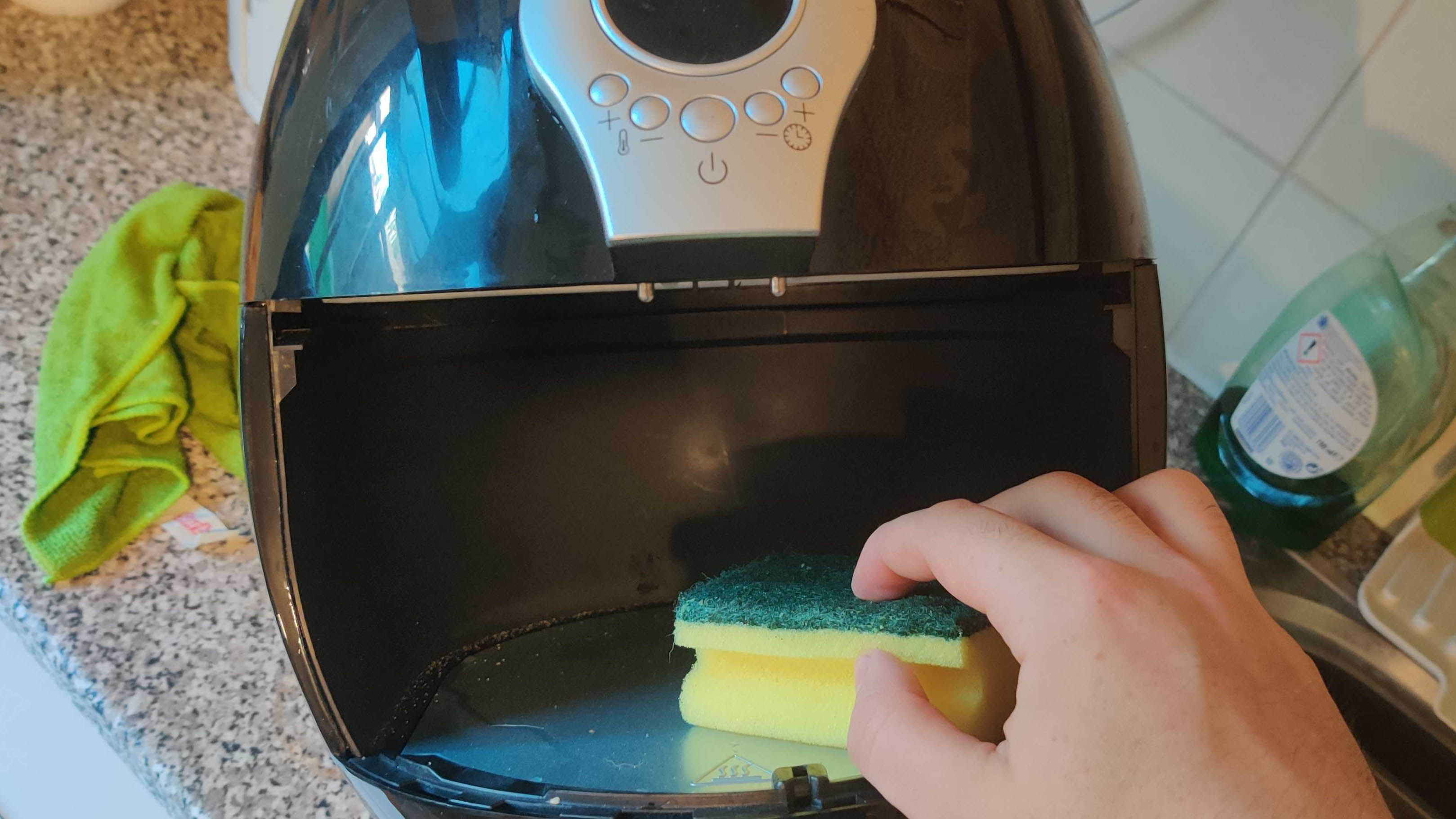
wipe the inside cavity with a damp microfiber cloth and a drop of dish soap. Focus on the floor, side walls, and area beneath the basket.
For baked-on grease, make a soft paste with baking soda and a little water. Apply a thin layer to the dirty area. Let it sit for 10 minutes, then wipe it away with a damp cloth.
Do not scrape hard. The goal is to loosen the grease, not remove the finish. Keep the paste away from the fan, control panel, and electrical openings.
3. Check and clean the heating element
Turn the cooled air fryer upside down only if the manual allows it and you can do so safely. Some models are not designed to be turned over.
Use a flashlight to look at the heating coil. Check for:
- Grease spots
- Burnt crumbs
- Black residue
- Food stuck near the coil
- Signs of melted plastic
- Damaged or loose parts
Wipe the heating element gently with a barely damp cloth. You can use a soft, dry brush to loosen crumbs. Do not bend the coil, pull on it, or spray cleaner directly onto it.
Let the area dry fully before reconnecting the appliance.
4. Wipe the air vents
Grease odor can remain in the air inlet or exhaust vent. Use a dry or slightly damp cloth on the outside vents. A soft brush can help remove dry crumbs and dust.
Do not push debris deeper into the vents. Do not spray water, degreaser, or disinfectant into them.
5. Wash the outside
Wipe the control panel, handle, and outer shell with a damp cloth. Grease on the outside can continue to smell when the appliance warms up.
Dry the outside before use. Keep the power cord and plug dry.
6. Let the air fryer air out
Leave the clean, unplugged air fryer open in a well-ventilated area for several hours. Place the basket and tray nearby after drying them.
Open a window or run the kitchen exhaust fan. Do not use perfume, air freshener, or scented oils inside the appliance. These products can leave flammable or irritating residue.
How to remove a stubborn burnt grease smell
If the odor remains after cleaning, repeat the inspection before trying stronger methods. A smell that survives washing often comes from hidden grease, a dirty heating element, or residue behind the basket support.
Use this order:
- Check beneath the removable tray.
- Inspect the heating element again.
- Look for grease around the basket rails and side walls.
- Clean the air vents.
- Wash the removable parts a second time.
- Let everything dry and air out overnight.
Some people place a bowl of vinegar or lemon water in an air fryer and heat it. This is not a universal solution. It may create steam, spill, or expose the appliance to liquid in a way the manufacturer does not allow. Only use a water-heating deodorizing method if your model’s manual specifically permits it.
Do not mix vinegar with bleach, ammonia, or other cleaners. Mixing household chemicals can produce harmful vapors.
If the manual allows an empty test cycle, run the clean, dry appliance in a well-ventilated space for a short period at the lowest useful temperature. Stay nearby. Stop immediately if the smell becomes stronger, smoke appears, or the odor changes to burning plastic or wiring.
Burnt grease smell versus electrical burning smell
The source of the smell determines whether cleaning is appropriate.
| Smell or symptom | Likely source | Recommended action |
|---|---|---|
| Oily, smoky odor after cooking fatty food | Grease or food residue | Unplug, cool, and clean |
| Burnt food smell with visible crumbs | Crumbs near the basket or heater | Clean the basket, cavity, and heating area |
| Melting plastic smell | Plastic touching a hot surface or an electrical fault | Stop using the appliance and inspect for damage |
| Hot wiring or chemical odor | Cord, plug, motor, or internal part | Unplug and seek manufacturer support |
| Smoke from the body or control panel | Electrical or internal failure | Stop use immediately |
| Sparks, crackling, or repeated tripping of the breaker | Electrical fault | Do not use; contact the manufacturer or a qualified repair service |
Do not keep testing an appliance that produces smoke, sparks, or a strong electrical odor. Unplug it if you can do so safely. If the plug or outlet is hot, damaged, or discolored, do not touch it until power is safely disconnected.
For a kitchen appliance that catches fire, do not throw water on it. Turn off power if you can do so without risk, keep the appliance closed if appropriate, leave the area, and call 911 for an active fire.
How to prevent burnt grease smells in the future
Cleaning after each use is the best way to prevent the odor from returning. You do not need a deep clean every time, but you should remove grease and crumbs while they are fresh.
Use these habits:
- Empty grease after the air fryer cools.
- Wipe the basket and tray after each use.
- Clean the cavity when you see splatter.
- Remove loose crumbs before the next cooking cycle.
- Do not fill the basket above the model’s recommended level.
- Keep fatty foods from touching the heating element.
- Use only accessories that fit and are approved for the appliance.
- Keep air vents clear.
- Avoid cooking greasy foods at a higher temperature than needed.
- Dry all washed parts before putting them back.
A liner can reduce cleanup, but it does not remove the need to clean the basket and cavity. Never use loose parchment paper by itself during preheating. The fan can lift it toward the heating element. Use parchment only as directed by the air fryer and parchment manufacturer, and keep it held down by food.
Common cleaning mistakes to avoid
Some odor-removal attempts can damage the air fryer or create a safety risk.
Do not immerse the main unit
Water can reach the heating system, fan, or controls. Clean the main body with a damp cloth only unless the manual gives different instructions.
Do not use oven cleaner without approval
Oven cleaner can be too harsh for nonstick coatings, plastic parts, seals, and electrical components. It may also leave fumes when heated.
Do not scrape with metal tools
Knives and metal scrubbers can scratch the basket. Scratches may make future cleaning harder and can damage a coated surface.
Do not block the vents
Do not place the air fryer against a wall, under a cabinet, or directly beside items that can melt. Follow the clearance instructions in the manual.
Do not run the appliance while it is wet
Dry the basket, tray, cavity, and any cleaned area before plugging the air fryer back in.
Do not ignore repeated smoke
A small amount of smoke from old grease may stop after cleaning. Smoke that returns during normal use needs attention. Stop using the air fryer and contact the manufacturer if cleaning does not solve it.
When should you replace or repair the air fryer?
Repair or replacement may be safer than continued cleaning when the appliance has an electrical smell, melted plastic, damaged insulation, exposed wiring, a loose heating element, or repeated smoke.
Contact the manufacturer with the model number and purchase details. Ask whether the appliance has a recall, approved replacement part, or service option. In the United States, you can also check the U.S. Consumer Product Safety Commission’s recall database for the product.
Do not open the main housing unless you are qualified and the manufacturer permits it. Opening the appliance can create shock hazards and may cancel warranty coverage.
If the air fryer only smells like old food and the odor disappears after a full cleaning and dry-out period, replacement may not be necessary.
Key takeaways
- Unplug the air fryer and let it cool before cleaning.
- Wash the basket, tray, and crisper plate with warm water and dish soap.
- Wipe the cavity, heating area, vents, and outer shell without soaking the main unit.
- Use baking soda and water for stuck grease, but avoid harsh chemicals and metal tools.
- Do not heat vinegar, lemon water, or other liquids unless the manual allows it.
- Stop using the air fryer if it smells like burning plastic or wiring, sparks, smokes, or trips the breaker.
FAQs
How long does burnt grease smell last in an air fryer?
A mild food or grease odor may fade after one thorough cleaning and several hours of ventilation. A strong odor that remains after repeated cleaning may come from hidden residue or an internal problem.
Can baking soda remove burnt grease smell from an air fryer?
Baking soda can help loosen greasy residue when mixed with water into a soft paste. It removes the source of the odor rather than simply covering it. Use it gently and keep it away from electrical openings.
Can I put vinegar in my air fryer to remove the smell?
Do not assume that vinegar is safe to heat in every air fryer. Liquid can spill, create steam, or reach electrical parts. Check the manual first. Never mix vinegar with bleach or ammonia.
Why does my new air fryer smell burnt?
A new air fryer may have a temporary manufacturing or packaging odor during its first uses. Wash the removable parts, wipe the cavity, and follow the manual’s first-use instructions. If it smells like burning plastic, produces smoke, or the odor becomes stronger, stop using it and contact the manufacturer.
Why does my air fryer still smell after I clean it?
Grease may remain under the tray, around the basket rails, on the heating element, or in the vents. Recheck those areas after the appliance is cold. If the odor is electrical or comes with smoke, sparks, or a hot plug, cleaning is not the right fix.
Conclusion
The best way to get rid of a burnt grease smell in an air fryer is to remove the grease that causes it. Unplug the appliance, wash the removable parts, wipe the cavity and heating area, clean the vents, and let everything dry in fresh air.
If the smell is more like burning plastic, wiring, or chemicals, stop using the air fryer. A persistent electrical odor is a repair or replacement issue, not a cleaning issue.