

A small cloud of white vapor from an air fryer in a U.S. kitchen is often steam, not smoke. It can come from wet food, frozen food, or water released during cooking. True white smoke, however, may point to grease, food residue, plastic, or an electrical problem.
Stop the air fryer if the smell is sharp, chemical, or burnt. Unplug it only if you can do so safely. Keep the basket closed if you suspect a grease fire, and never pour water into the appliance.

Source: airfrycalc.com
Quick answer: Why is my air fryer smoking white smoke?
Your air fryer may release white smoke because of one of these causes:
- Water vapor from wet or frozen food
- Excess oil or grease
- Grease left in the drawer or heating area
- Food crumbs touching the heating element
- Soap or cleaner residue
- New-appliance packaging or manufacturing residue
- Plastic, parchment paper, or another item touching the heater
- A damaged heating element, cord, or internal part
White vapor that fades quickly is usually less concerning. Smoke that continues, smells like chemicals or burning plastic, or appears when the air fryer is empty needs immediate attention.
First, decide whether it is steam or smoke
The color alone cannot prove what is happening. Steam often looks like a soft white cloud and has little smell. Smoke usually has a burnt, oily, chemical, or electrical odor.
Use this quick check:
| Sign | More likely steam | More likely smoke |
|---|---|---|
| Smell | Little or no smell | Burnt, oily, plastic, or electrical smell |
| Source | Food or basket vents | Heating element, drawer, cord, or base |
| Duration | Stops as food dries | Continues or grows |
| Food | Wet or frozen food | Greasy food, crumbs, or residue |
| After cooking | Fades soon | Leaves a burnt smell or film |
| Empty test | Usually does not occur | May still happen |
Some foods release much more water than others. Frozen vegetables, frozen meat, fish, bacon, and foods with wet marinades can create a large amount of vapor.
A small amount of steam during cooking is usually normal. A steady plume with a harsh smell is not something to ignore.

Source: forktospoon.com
What to do if your air fryer is smoking
Safety comes first. Do not keep cooking to see whether the smoke stops.
- Press Stop or Cancel.
- Unplug the air fryer if you can reach the plug safely.
- Keep the basket and drawer in place if grease may be burning.
- Turn on a range hood or open a window when safe.
- Keep children and pets away.
- Do not add water. Water can spread burning oil and may cause a dangerous burst of steam.
- Call 911 if flames spread, smoke becomes heavy, or you cannot control the fire.
If a small grease fire starts inside the basket, keep the drawer closed and disconnect power if you can do so without reaching through flames. The National Fire Protection Association advises using the correct type of fire extinguisher and leaving the home if the fire grows. A home fire extinguisher should be used only when the fire is small, you have a clear exit, and you know how to use it.
Do not touch the basket or heating element until the unit is fully cool. Metal parts can stay hot long after the cooking cycle ends.

Source: airfryerchickenbreast.com
Common reasons an air fryer produces white smoke
1. Wet or frozen food is making steam
This is the most common harmless cause. Hot air turns water on or inside food into vapor. The vapor leaves through the air fryer vents and may look like smoke.
You may see this with:
- Frozen fries or vegetables
- Frozen chicken
- Fish
- Foods with a wet coating
- Meat with a high water content
- Food that was rinsed but not dried
- A crowded basket that traps moisture
The cloud should lessen as the food cooks. To reduce it, pat food dry when the recipe allows. Cook frozen food in a single layer and avoid adding extra water unless the manual or recipe calls for it.
2. Oil or fat is smoking
Some foods release fat as they cook. Bacon, sausage, burgers, chicken skin, and fatty cuts of meat can leave hot grease in the drawer. The grease may smoke when it reaches a high temperature.
This is more likely when:
- The drawer contains old grease.
- You add too much oil.
- Fat splashes onto the heating element.
- The food is very fatty.
- The air fryer is set to a high temperature.
Do not assume that a small amount of oil is always better. Air fryers need little oil, and excess oil can pool below the basket. Follow the recipe and the appliance manual.
3. Food crumbs are burning
Small crumbs can pass through the basket. They may collect in the bottom drawer or stick near the heating element. When the air fryer heats again, those crumbs can burn and create smoke.
This often happens after cooking:
- Breaded chicken
- Onion rings
- Mozzarella sticks
- Toasted foods
- Pastries
- Crumb-coated frozen foods
Let the air fryer cool. Remove the basket and wash the removable parts as directed by the manufacturer. Wipe the inside with a soft, damp cloth. Never poke the heating element with a knife or metal tool.
4. Soap or cleaner residue is heating
A strong white cloud or chemical smell may come from cleaner left on the basket or drawer. This can happen if the part was not rinsed well after washing.
Stop using the air fryer. Once cool, rinse removable parts with clean water and dry them fully. Do not spray cleaner into the main unit. Check the manual before placing any part in a dishwasher, since heat and detergent rules vary by model.
5. A new air fryer is clearing factory residue
A new appliance may have a mild odor during its first use. Some manufacturers advise washing removable parts and running an empty cycle before cooking. The exact process differs by brand and model.
Read the manual for your air fryer. Remove all cardboard, foam, plastic film, stickers, and packing material first. Do not use the appliance if plastic packaging remains near the heater.
A mild first-use smell should fade. Persistent smoke, melting plastic, sparks, or a strong chemical odor is not normal. Stop using the appliance and contact the manufacturer.
6. Parchment paper or foil is blocking airflow
Parchment paper can burn if it rises into the heating element. Foil can also block airflow or touch parts that become hot. Never place loose paper in a running air fryer without food holding it down.
Use only accessories approved for your model. Follow the manual for parchment, foil, liners, and racks. If you see paper lifting, scorching, or curling toward the heater, stop the appliance and remove it only after it cools.
7. The air fryer is too full
Overfilling can trap moisture and cause uneven cooking. It may also push food closer to the heating element. A crowded basket can create more steam, more splatter, and more residue.
Keep food below the recommended fill line, if the unit has one. Avoid pressing food against the top of the basket. For best airflow, cook in batches when needed.
8. The heating element or electrical parts may be damaged
Smoke from the top of the appliance, control panel, cord, or plug is a serious warning. So are:
- Sparks
- A popping sound
- Flickering power
- A melted plug
- A hot or discolored outlet
- Smoke when the basket is empty
- A burning plastic or electrical smell
Unplug the unit and do not use it again until the manufacturer or a qualified appliance technician checks it. Do not open the housing yourself. Internal parts can hold dangerous electrical charge, and opening the unit may affect warranty coverage.
How to troubleshoot white smoke safely
Try these checks only after the appliance is cool and no active fire is present.
Step 1: Check the food
Ask whether the food is wet, frozen, greasy, or heavily breaded. If yes, steam or food fat may explain the cloud.
For the next cycle, dry the surface when suitable, use less oil, and avoid overfilling the basket.
Step 2: Inspect the drawer and basket
Look for:
- Pooled grease
- Burnt crumbs
- Loose coating
- Melted plastic
- Stuck food
- Cleaner residue
Wash removable parts according to the manual. Dry them completely before use.
Step 3: Inspect the heating area
With the air fryer unplugged and cold, look upward toward the heating element. Do not bend, scrape, or remove it. If you see food stuck near it, follow the cleaning instructions for your model.
If you cannot clean the area without taking the unit apart, stop and contact the manufacturer.
Step 4: Check accessories
Remove unapproved liners, foil, racks, silicone items, and other accessories. Confirm that nothing can move into the heating element during cooking.
Step 5: Run a short empty test only when appropriate
Do not run an empty test if the unit produced electrical smoke, sparks, melting, or a chemical smell. In those cases, seek service.
If the appliance is clean, dry, and free from damage, a brief empty cycle at the manual’s recommended setting can help show whether the food caused the issue. Stay nearby. Stop immediately if smoke or a strong odor returns.
Step 6: Decide whether to keep using it
You can usually continue using the air fryer if the vapor came from wet food, the unit is clean, and no unusual odor or damage remains.
Do not keep using it if smoke returns while empty, comes from the cord or base, or has a plastic or electrical smell.
Source: instantpoteats.com
How to prevent an air fryer from smoking
Regular cleaning prevents many smoke problems.
- Empty grease after each use once the drawer is safe to handle.
- Remove crumbs from the drawer and basket.
- Clean the heating area as the manual directs.
- Do not spray cleaner into the air fryer.
- Dry washed parts before reinstalling them.
- Use only the amount of oil the recipe needs.
- Do not fill the basket above its safe limit.
- Keep food and accessories away from the heating element.
- Use approved parchment or liners correctly.
- Check the cord and plug for heat or damage.
- Keep the air fryer on a stable, heat-safe surface.
- Leave the recommended space around the vents.
- Do not leave the appliance unattended while cooking.
Clean more often after cooking fatty or breaded foods. Grease and crumbs can build up even when the basket looks clean.
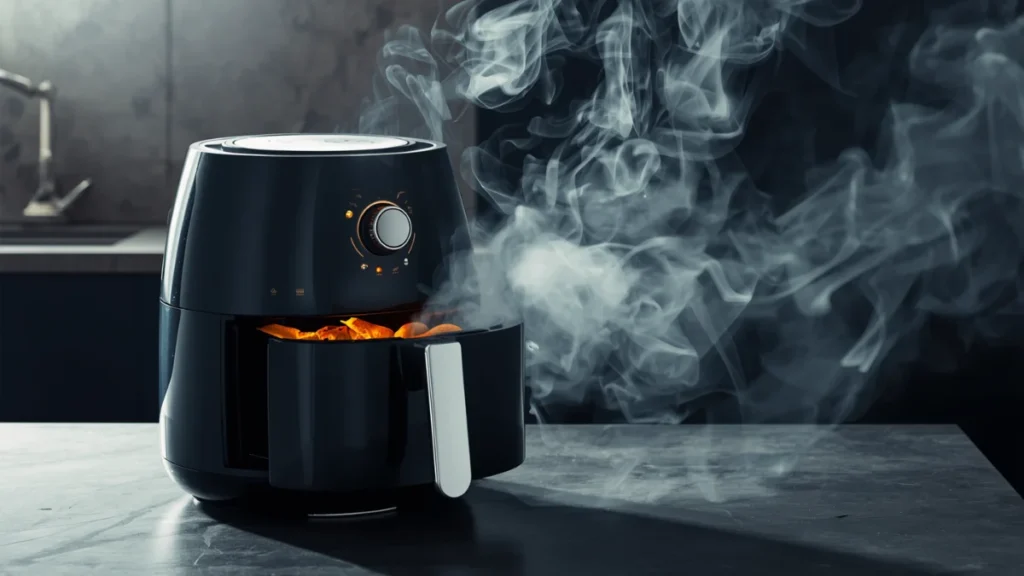
Source: kitchenapex.com
Can you use an air fryer after it smokes?
You may use it again only when the cause was clear and harmless, such as steam from wet food, and the appliance passes a careful inspection.
Do not use it again when:
- Smoke came from the cord, plug, or base.
- The odor smelled like melting plastic or burnt wires.
- The unit sparked or made a popping sound.
- The basket or housing is melted.
- Smoke appears during an empty cycle.
- The smoke continues after cleaning.
- The air fryer trips a circuit breaker.
- The heating element looks damaged.
Check the product manual and contact the manufacturer. In the United States, you can also search the U.S. Consumer Product Safety Commission’s recall database for your model. Have the model number and purchase information ready.
Do not bypass a damaged safety switch or repair internal wiring without proper training.

Source: bestelectronicshub.com
Key takeaways
- White vapor from wet or frozen food is often steam.
- White smoke with a burnt, chemical, or electrical smell needs attention.
- Grease, crumbs, cleaner, and plastic can all create smoke.
- Stop the air fryer before investigating.
- Never pour water into a grease fire.
- Do not reuse an appliance that smokes while empty or shows electrical damage.
- Clean the basket, drawer, and heating area as the manual directs.
Frequently asked questions
Is white smoke from an air fryer dangerous?
It depends on the source. Steam from wet food is usually not dangerous, but smoke from grease, plastic, cleaner, or electrical parts can be. Stop the appliance if you cannot identify the cause or if the smell is strong.
Why does my air fryer smoke when cooking bacon?
Bacon releases hot fat. The fat can collect in the drawer and smoke as it heats. Cook less bacon at a time, avoid excess oil, and remove grease after the appliance cools. If grease reaches the heating element or flames appear, stop using the air fryer.
Why is my air fryer smoking with frozen food?
Frozen food contains surface ice and water. That water turns into steam during cooking. Frozen foods can also contain oil or breading that creates smoke. Cook in a suitable layer and clean crumbs and grease after each use.
Should I put water in my air fryer to stop white smoke?
No. Water may spread hot grease and create a burst of steam. It can also damage electrical parts. Stop the appliance, keep the drawer closed if grease may be burning, and follow fire-safety guidance.
Why does my air fryer smoke when it is empty?
An empty air fryer should not produce ongoing smoke. Residue near the heating element may be burning, but smoke from an empty unit can also signal a damaged part. Unplug it, let it cool, inspect it without opening the housing, and contact the manufacturer if the problem returns.
Conclusion: Find the source before cooking again
Your air fryer is likely releasing steam if the cloud is brief, odorless, and linked to wet or frozen food. Persistent white smoke is different. Grease, crumbs, cleaner, plastic, or electrical damage may be involved.
Stop the appliance, let it cool, clean it as directed, and inspect the accessories. If smoke returns when the air fryer is empty—or if you notice sparks, melting, or an electrical smell—do not use it until it has been checked or replaced.