

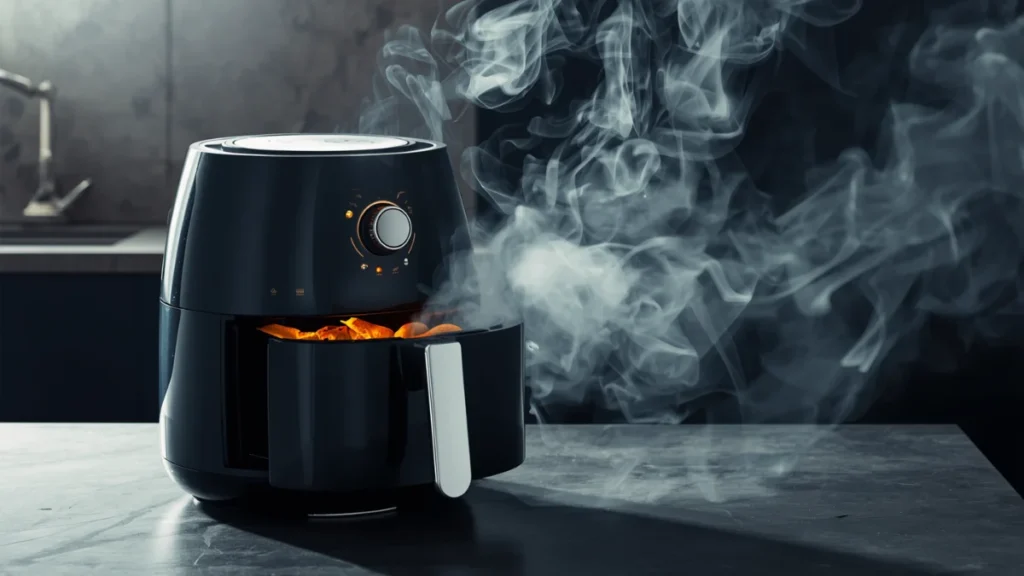
Dark black smoke from an air fryer usually means that food, grease, plastic, or an electrical part is burning. Turn the air fryer off at once. Unplug it only if you can do so safely, keep the basket closed, and never pour water into the appliance.
If you see flames, smell burning wires, or the smoke keeps growing, leave the area and call 911 from a safe place. Do not move a smoking air fryer while it is hot.
This guide explains the most common causes of black smoke, how to respond safely, and when the air fryer should be replaced or checked by a qualified repair professional.

Source: dreamstime.com
What black smoke from an air fryer means
Black smoke is a warning sign, not normal cooking steam. It often shows that carbon-rich material is burning. The source may be old grease, trapped food, melted plastic, a damaged coating, or an overheated electrical part.
A small amount of white vapor can be normal. It may come from water leaving moist food. Thick gray or black smoke is different and needs immediate attention.
Common causes include:
- Grease or oil burning in the bottom pan
- Food crumbs stuck near the heating element
- Excess fat from bacon, sausage, chicken, or burgers
- Food touching the heating element
- A plastic item left inside the cooking chamber
- Packaging, tape, or a protective film that was not removed
- A damaged power cord, plug, fan, or heating element
- A basket or tray with a damaged nonstick coating
- An air fryer placed too close to a wall or another heat source
The smoke may look black even when the cause is a thin layer of old oil. When oil reaches its smoke point, it breaks down and produces visible smoke. If it stays hot, it can ignite.
What to do right now
Follow these steps in order. Safety comes before cleaning or diagnosis.
- Press the power button or switch.
- Unplug the air fryer if the plug and cord are safe to reach. Do not touch a damaged, wet, or sparking cord.
- Keep the basket or drawer closed. Opening it can add oxygen and make a grease fire worse.
- Move people and pets away from the kitchen.
- Do not pour water into the air fryer. Water can spread burning oil and may cause an electrical shock.
- Call 911 if you see flames, hear popping, smell burning wiring, or cannot control the smoke.
- Use a suitable fire extinguisher only if the fire is small, you have a clear exit, and you know how to use it.
Do not carry the air fryer outdoors. A hot drawer or pan can spill burning grease. Also, do not restart the appliance to “see if it works.” A fault may become worse after the air fryer cools.
If the smoke stops and there was no fire, let the air fryer cool completely before inspecting it. This may take an hour or more.
Source: kitchenapex.com
The most likely causes of dark black smoke
1. Burned grease in the bottom pan
This is one of the most common causes. Fat can drip from meat and collect under the basket. The air stream then carries hot grease toward the heating element.
Foods that can release a lot of fat include:
- Bacon
- sausage
– Ground beef patties - Chicken wings and thighs
- Pork belly
- Frozen foods with an oily coating
A thin layer of grease may smoke before it catches fire. A thick layer can ignite.
After the air fryer is cold, remove the basket and check the pan. Look for sticky brown, black, or hardened grease. Wash removable parts with warm water and dish soap, following the appliance manual. Do not scrape the heating element with a knife or metal tool.
2. Food crumbs are burning near the heating element
Small crumbs can rise through the basket. They may stick to the upper heating area and burn during the next cooking cycle.
This often happens after cooking breaded foods, chips, onion rings, or battered items. The smoke may start several minutes after the air fryer begins heating.
With the appliance unplugged and cold, check the top interior. Use a soft, dry brush or a damp cloth that is only slightly wet. Never soak the main unit. Keep water away from the fan, controls, heating element connections, and power cord.
3. Too much oil or cooking spray
Air fryers need little added oil. A heavy coating can run through the basket and burn in the pan. Some aerosol cooking sprays may also damage certain nonstick surfaces over time, depending on their ingredients and the manufacturer’s instructions.
Use a small amount of oil brushed or tossed onto the food. Follow the manual for approved sprays and cleaning products. Do not fill the drawer with oil as you would with a deep fryer.
4. Food is touching the heating element
Food that is too large or piled too high can rise into the heating element. The top may char and release black smoke.
Check the maximum fill line in the manual. Do not pack food above the basket edge unless the manufacturer specifically allows it. Large pieces should be trimmed so they have space below the upper heater.
5. Plastic, packaging, or a protective film is burning
New appliances may have cardboard, tape, foam, stickers, or plastic film around parts of the unit. If any of this remains inside the cooking chamber, it can melt or burn.
Unplug the air fryer and wait until it is cold. Look for:
- Melted plastic
- Shiny residue
- Warped parts
- Loose labels
- Brown or black marks
- A chemical or plastic smell
Do not use the air fryer if plastic has melted onto the heating element or cooking surface. Contact the manufacturer for instructions. Do not scrape melted plastic while the unit is hot.
6. An electrical part is overheating
A sharp electrical smell, crackling, buzzing, sparks, or smoke from the rear of the unit points to a possible electrical fault. The problem could involve the cord, plug, motor, fan, thermostat, wiring, or heating element.
Stop using the air fryer. Do not open the housing or attempt an internal repair. Small countertop appliances can retain heat and may contain parts that are unsafe for untrained repair.
Replace the appliance or ask the manufacturer about service. If the plug, outlet, or wall plate is discolored or hot, stop using that outlet and have a qualified electrician inspect it.
7. The nonstick coating is damaged
A scratched or peeling basket can expose the material below the coating. A damaged surface does not always cause black smoke by itself, but loose flakes or exposed material can burn when heated.
Replace the basket if the coating is peeling, bubbling, or badly scratched. Use only parts approved for your model. Do not line the basket with foil in a way that blocks airflow or touches the heating element.
How to troubleshoot the air fryer after it cools
Only inspect the appliance after it is fully cool and unplugged.
Step 1: Check the food and cooking load
Ask:
- Was the food unusually fatty?
- Did oil drip into the bottom pan?
- Was the basket overfilled?
- Did food touch the upper heater?
- Were there loose crumbs or batter?
If the answer is yes, clean the air fryer and reduce the amount of food or oil next time. Use a lower temperature when the food package or recipe allows it.
Step 2: Inspect the cooking chamber
Look at the basket, pan, walls, and upper heating area. Search for:
- Burned food
- Hardened grease
- Melted plastic
- Peeling coating
- Loose parts
- Heavy black marks
- Food stuck near the heater
Do not use steel wool, oven cleaner, or abrasive powders unless the manual specifically permits them. These products can damage surfaces and leave residues.
Step 3: Check the cord and outlet
Do not use the air fryer if:
- The cord is frayed or cut
- The plug is melted or discolored
- The outlet is hot
- The air fryer trips a circuit breaker
- You see sparks
- You smell burning plastic or wiring
Never use an extension cord unless the manufacturer allows it and the cord has the correct rating. A high-wattage appliance can overload an unsuitable extension cord or power strip.
Step 4: Check airflow and placement
Place the air fryer on a stable, heat-resistant surface. Leave the clearance listed in the manual around the sides and rear. Keep it away from cabinets, paper towels, curtains, and other items that can burn.
Do not cover the air intake or exhaust. Blocked airflow can increase heat inside the unit and may cause smoke or a shutdown.
Step 5: Decide whether a test is safe
Do not run another test if you found melted plastic, damaged wiring, a damaged heating element, electrical odor, or smoke from the rear.
If the only issue was burned food or grease, the air fryer is clean, and there are no signs of damage, follow the manual’s cleaning and test instructions. Stay nearby. Stop immediately if smoke, sparks, unusual noise, or a burning smell returns.

Source: storage.googleapis.com
Quick cause-and-action table
| Symptom | Likely cause | Safe next action |
|---|---|---|
| Smoke rises from the pan after cooking fatty meat | Burned grease | Cool, unplug, clean the pan, and reduce fatty food or oil |
| Smoke starts after cooking breaded food | Crumbs near the heater | Cool, unplug, and clean the upper chamber |
| Plastic smell or melted material | Packaging or plastic part | Stop use and contact the manufacturer |
| Smoke comes from the rear or cord | Electrical fault | Stop use; do not repair it yourself |
| Sparks, crackling, or flames | Fire or electrical failure | Evacuate if needed and call 911 |
| Smoke returns after cleaning | Hidden grease or damaged part | Stop testing and seek service or replacement |
| White vapor only from moist food | Steam | Usually normal if no burning smell or dark smoke exists |
The key decision is whether the smoke came from food residue or from the appliance itself. Food residue may be cleaned. Electrical smoke, melted plastic, or repeated smoke requires professional guidance or replacement.
How to prevent an air fryer from smoking
A few simple habits can reduce smoke:
- Clean the basket and bottom pan after each greasy meal.
- Remove crumbs before they reach the heating element.
- Use only the amount of oil the recipe needs.
- Avoid spraying a large amount of oil inside the cooking chamber.
- Do not overfill the basket.
- Keep food below the upper heating element.
- Use the temperature and time in the recipe or manual.
- Remove packaging and protective films before use.
- Keep the air intake and exhaust clear.
- Inspect the cord and plug from time to time.
- Replace baskets with peeling or badly damaged coatings.
- Never leave the air fryer running when nobody is nearby.
A drip pan lined with foil may seem helpful, but foil can block airflow or move into the heating element. Use liners only when the manufacturer allows them, and keep them secured under food.

Source: scene.motorcycle-training.co.uk
Can you still use an air fryer after it smokes?
You may be able to use it again only when the smoke clearly came from removable food residue, the appliance has cooled and been cleaned, and there are no signs of damage.
Do not keep using it if:
- Black smoke returns after cleaning
- The smoke came from the cord, plug, or rear housing
- The unit sparks, pops, or trips a breaker
- Plastic melted inside
- The coating is peeling badly
- The fan makes a new grinding or rattling sound
- The appliance smells like burning wires
- The heating element looks cracked or distorted
Check the product manual and the manufacturer’s safety notices for your exact model. Recall information can change, so use the manufacturer’s current support page or the U.S. Consumer Product Safety Commission website rather than relying on an old social media post.
If the appliance is under warranty, take clear photos of the damage and contact the manufacturer before discarding it. Do not modify the appliance or use unofficial replacement parts unless the manufacturer approves them.
Is black smoke from an air fryer toxic?
Black smoke can contain irritating gases and fine particles from burning food, grease, plastic, or electrical materials. Move away from the smoke and ventilate the room only when it is safe. Do not stand over the appliance to identify the smell.
If someone has trouble breathing, chest pain, confusion, severe coughing, or symptoms that do not improve after moving to fresh air, call 911. People with asthma, children, older adults, and pets may be more sensitive to smoke.
A smoke alarm may sound even when there is no visible flame. Do not disable it. If a carbon monoxide alarm sounds, leave the home and call 911 or the fire department from outside.
Frequently asked questions
Why is my air fryer smoking black smoke but not on fire?
Burned grease, crumbs, or food residue may be smoldering without visible flames. Turn off and unplug the air fryer if safe, keep it closed, and let it cool. Clean it only after it is fully cold. If the smoke returns, stop using the appliance.
Why does my air fryer smoke when cooking bacon or burgers?
Bacon and burgers can release enough fat to smoke in the hot pan. Use smaller portions, drain excess fat when safe, and follow the model’s instructions. If grease catches fire, do not add water or remove the drawer.
Should I pour water into a smoking air fryer?
No. Water can spread hot grease and create a dangerous burst of steam. It can also create an electrical hazard. Turn off the appliance, unplug it if safe, keep it closed, and call 911 if the fire does not stop.
Can I clean the heating element?
You can usually remove loose crumbs from a cool, unplugged heating area with a soft brush or a barely damp cloth, but the exact method depends on the model. Never soak the main unit, scrape the element with metal, or use harsh chemicals without checking the manual.
When should I replace my air fryer?
Replace it when black smoke returns after cleaning, when plastic or wiring has burned, when the coating is peeling, or when it sparks, trips breakers, or smells like burning electricity. Contact the manufacturer first if the unit is under warranty or may be part of a recall.
Conclusion
Dark black smoke means the air fryer is overheating or burning something. Shut it off, unplug it if safe, keep the drawer closed, and never use water on a grease or electrical fire.
After the appliance cools, check for burned grease, crumbs, overfilling, melted plastic, coating damage, and electrical signs. If the cause is not clearly removable food residue—or if smoke returns—stop using the air fryer and contact the manufacturer, a qualified repair professional, or emergency services when needed.
Sources for safety guidance
- U.S. Consumer Product Safety Commission
- National Fire Protection Association: Cooking Safety
- USDA Food Safety and Inspection Service
- The owner’s manual and current safety notices for the specific air fryer model