

Air fryer smoke usually comes from hot grease, oil, crumbs, or food residue touching the heating element. In most U.S. kitchens, you can prevent it without chemical sprays by using less oil, drying food well, cleaning the basket and heater, and cooking fatty foods with care.
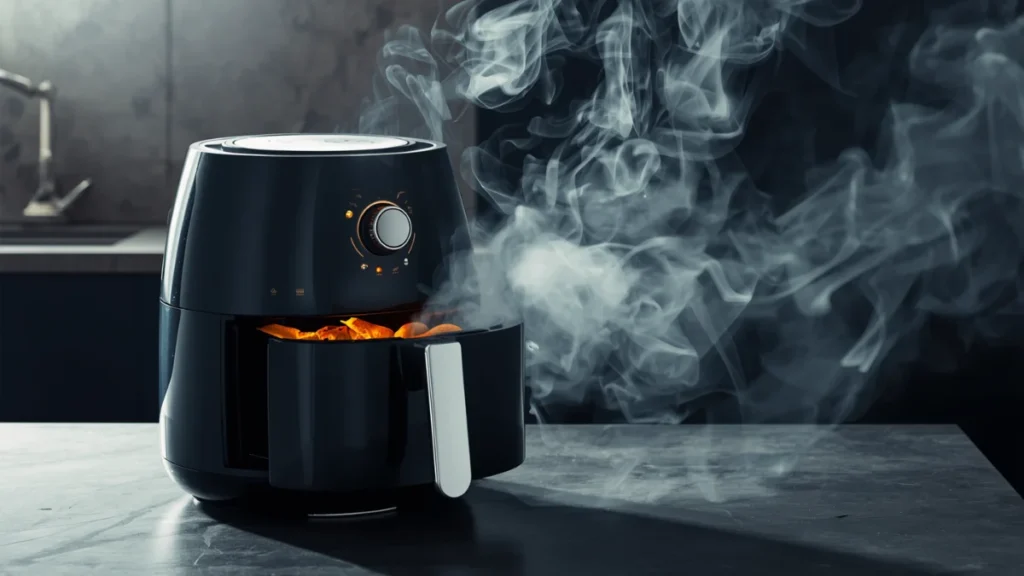
If smoke starts during cooking, turn off and unplug the air fryer if it is safe to do so. Keep the basket closed until the smoke clears. Never pour water into a hot air fryer or use it near an open flame.
Source: alibaba.com
Why does an air fryer smoke?
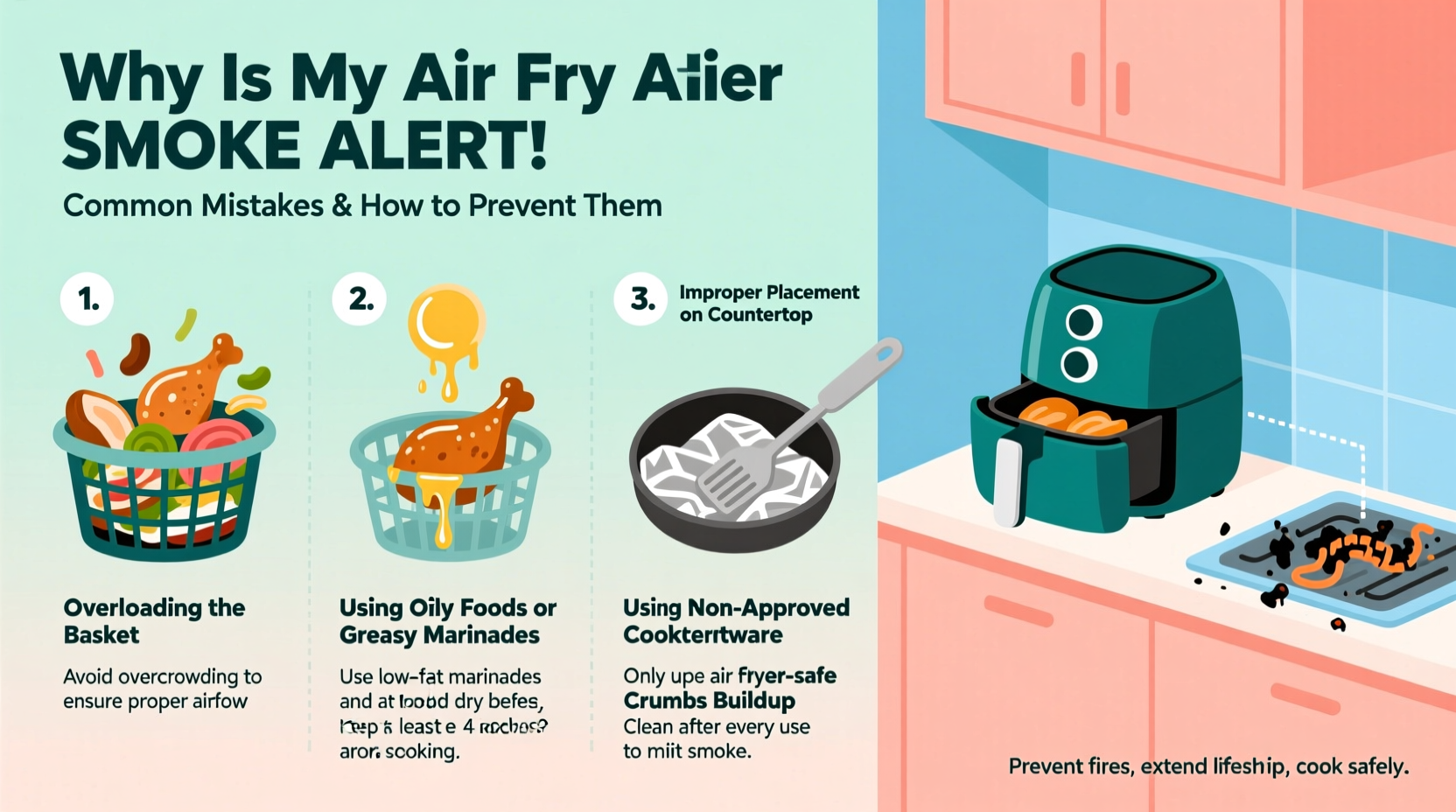
An air fryer smokes when food fat or oil gets too hot. The heating coil sits above the cooking chamber, so grease can splatter upward and burn on the coil. Small crumbs can do the same.
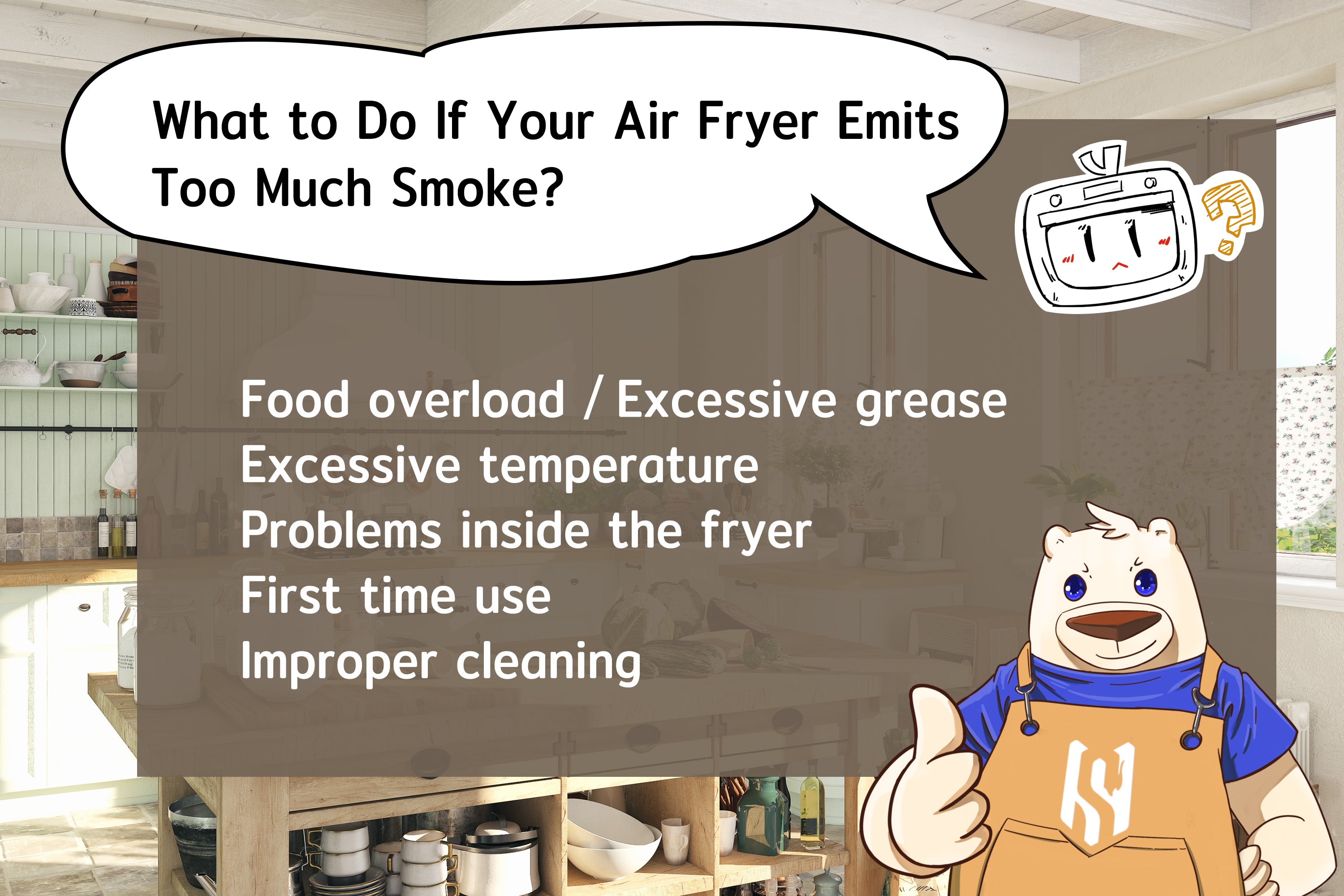
Common causes include:
- Bacon, sausage, burgers, wings, or other fatty foods
- Too much oil on the food
- Oil left in the basket or drawer
- Old crumbs under the basket
- A dirty heating element
- Food packed too tightly
- A cooking temperature that is too high
- Wet marinades that drip onto hot parts
A little white vapor is not always smoke. Water in food turns into steam. True smoke is darker, smells burnt, and may make your eyes sting.
The type of food matters. Lean vegetables may create little smoke, while fatty meat can release a large amount of grease. A clean air fryer may still smoke when cooking food with a high fat content.

Source: alibaba.com
10 natural ways to prevent air fryer smoke
The best approach is simple: control the grease, remove loose food bits, and keep the heating area clean.
1. Use only a light coat of oil
Air fryers need much less oil than deep fryers. A thin coating is often enough to help food brown and crisp.
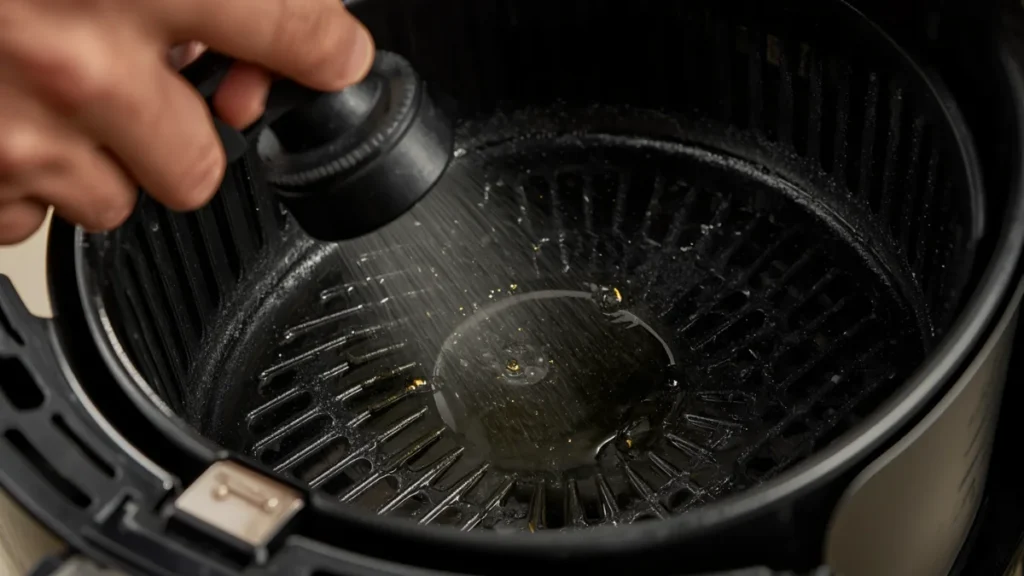
Use a brush or oil mister made for cooking. Avoid pouring oil directly into the basket. Excess oil can collect below the basket and splatter onto the heating element.
For frozen foods, check the package first. Many frozen fries, chicken products, and snacks already contain oil. Adding more may increase smoke without improving the result.
2. Pat wet food dry
Moisture can cause splatter. Before cooking chicken, fish, vegetables, or marinated foods, pat the surface dry with a clean paper towel.
This does not mean the food should be dry inside. It only removes extra liquid from the outside. Thick sauces and wet marinades are more likely to drip and burn, so use a light layer.
Add sticky sauces near the end of cooking when possible. This gives the sauce less time to run onto the hot parts.
3. Do not overcrowd the basket
Leave space around the food. Air must move through the basket for even cooking.
An overloaded basket can cause food to release more moisture and grease at once. It may also force food against the sides, where oil can drip into the drawer.
Cook in batches when needed. A second small batch often creates less smoke than one crowded batch.
4. Remove crumbs after each use
Loose crumbs can burn during the next cooking cycle. This is common after making breaded chicken, onion rings, fish sticks, or toast-like foods.
After the air fryer cools:
- Remove the basket and tray.
- Shake out crumbs.
- Wipe the drawer.
- Check beneath the tray.
- Look for food stuck near the heating area.
Do not reach into the air fryer while it is hot. Do not use metal tools that can scratch the coating or damage the heating coil.
5. Clean the heating element
a dirty heating element is one of the most common reasons an air fryer smokes during normal cooking.
Unplug the air fryer and let it cool fully. Turn it upside down only if the manufacturer allows this. Wipe the cool heating area with a damp cloth or soft sponge. A soft toothbrush can help remove dry crumbs.
Do not soak the main appliance. Keep water away from electrical parts. Do not spray cleaner into the cooking chamber unless the manual says it is safe.
For stuck grease, use a small amount of mild dish soap on a damp cloth. Wipe again with clean water, then dry the area before use.
6. Trim excess fat from meat
Fatty meat can smoke even in a clean air fryer. Trim loose fat from bacon, pork, chicken skin, burgers, and sausage when practical.
You do not need to remove all fat. The goal is to reduce large pools of grease. Cut very fatty foods into smaller portions and check them during cooking.
For foods that release a lot of grease, stop once during cooking and carefully drain the drawer if your model allows it. Use heat-safe tools and protect your hands from burns.
7. Lower the temperature when food is smoking
A high setting can burn grease before the food is done. If smoke appears, lower the temperature and check the food.
For example, if a recipe uses 400°F, try 375°F if your food is smoking. Cooking may take longer, so use the food’s color and internal temperature to judge doneness.
Do not lower the heat so much that meat stays unsafe. Use a food thermometer for poultry, meat, and fish. The U.S. Department of Agriculture recommends checking internal temperatures rather than relying on color alone.
8. Use a small amount of water only when the manual allows it
Some air fryer manufacturers allow a small amount of water in the lower drawer when cooking very fatty food. The water can reduce grease smoke as fat drips down.
This is not safe for every air fryer. Check the manual for your exact model before trying it. Never pour water into the basket, onto the heating element, or into a hot appliance unless the manufacturer clearly permits the method.
If the manual does not mention water, skip this step. Use lower heat, smaller portions, and more frequent cleaning instead.
9. Use the right liner
Parchment liners can help catch crumbs and grease, but they must be made for air fryer use. Follow the package directions.
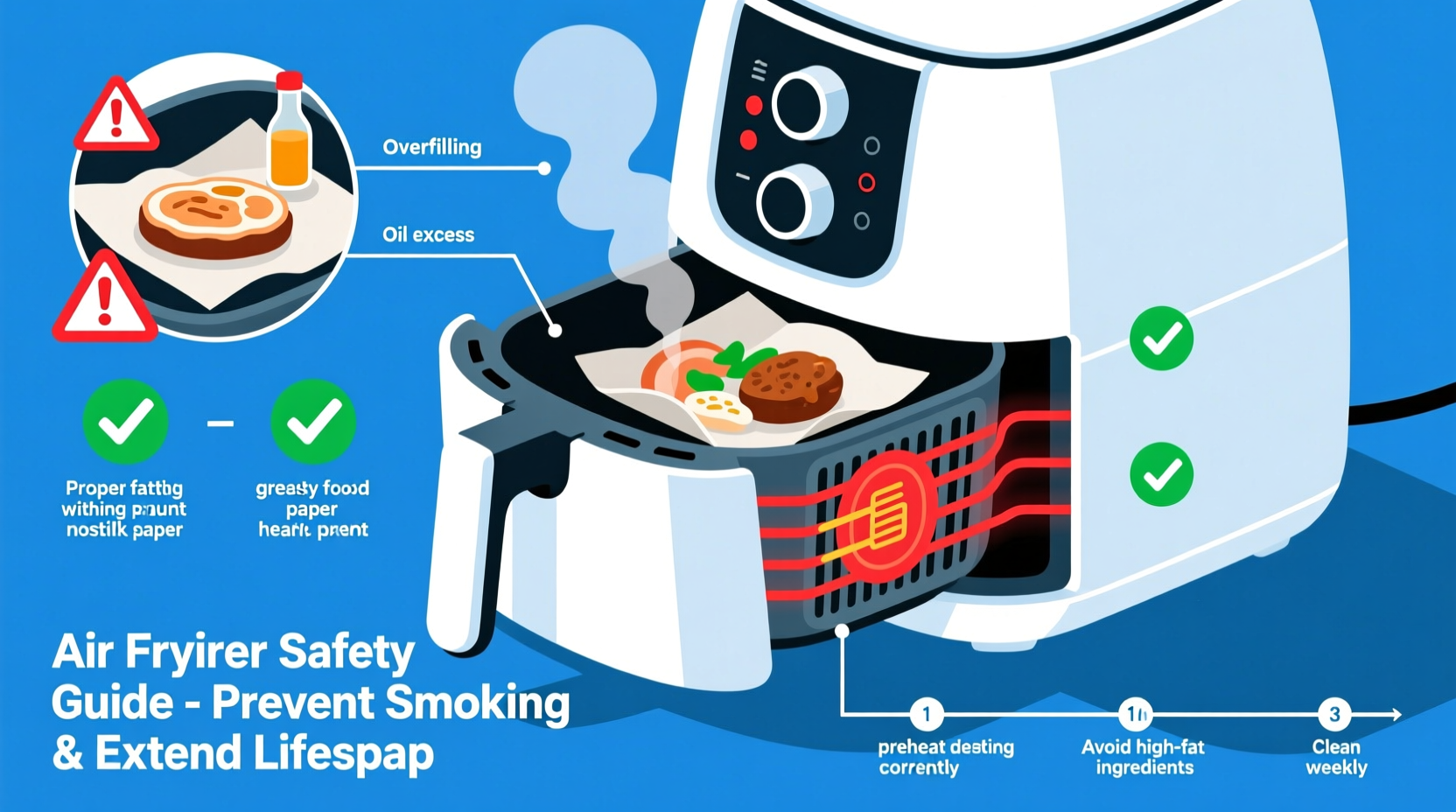
Never place loose parchment in an empty preheating basket. The fan may lift it into the heating element. Food should hold the liner down, and the liner should not block all airflow.
Do not use wax paper. It is not a heat-safe substitute for parchment. Avoid liners that extend above the basket or touch the coil.
10. Give the air fryer space
Place the air fryer on a stable, heat-safe surface with open space around it. Do not push it under cabinets while it is running unless the manual says the setup is safe.
Good airflow helps heat leave the appliance. It also reduces the chance that smoke will collect around cabinets, walls, or nearby items.
Source: alibaba.com
How to stop air fryer smoke while cooking
If smoke starts, use this order. It limits risk and helps you find the cause.
- Press stop or turn off the air fryer.
- Unplug it if you can do so safely.
- Keep the basket and drawer closed.
- Move people away from the smoke.
- Open a window or turn on the range hood.
- Wait until the air fryer cools.
- Check for grease, crumbs, melted plastic, or a damaged part.
Do not carry a hot, smoking air fryer across the kitchen. Do not spray water into it. Do not fan the smoke toward your face.
If you see flames, keep the drawer closed if possible. Turn off the appliance and call 911 if the fire does not stop quickly or spreads. Never use water on a grease fire. A properly rated kitchen fire extinguisher may help, but use it only if you can do so safely and have a clear exit.
After the appliance cools, inspect the food and the cooking chamber. If you smell burning plastic or see damaged wiring, stop using the air fryer.

Source: easyeverydayrecipes.com
A simple cleaning routine that prevents smoke
Clean the air fryer after every greasy or crumb-heavy meal. A deeper clean once a week may help if you use it often.
After each use
- Unplug the appliance.
- Let it cool.
- Wash the removable basket and tray according to the manual.
- Wipe grease from the drawer.
- Remove crumbs from the cooking chamber.
- Dry all parts before putting them back.
Each week
- Inspect the heating element.
- Wipe away thin grease film.
- Check the fan opening for crumbs.
- Look for peeling coating or loose parts.
- Clean around the basket rails and drawer edges.
Many removable parts are dishwasher safe, but this varies by model. The owner’s manual is the best source for cleaning instructions.
Avoid steel wool, harsh scouring powder, and metal scrapers. These can damage nonstick surfaces and create places where food residue collects.
Do not run the air fryer empty with cleaning products inside. Residue from a cleaner can create fumes or affect food.

Source: alibaba.com
Foods most likely to make an air fryer smoke
Some foods need extra care because they release more grease or leave more residue.
| Food | Why it may smoke | Natural prevention |
|---|---|---|
| Bacon | Releases a large amount of fat | Use smaller batches and drain grease |
| Sausage | Fat can pool in the drawer | Trim excess fat and lower the heat |
| Chicken wings | Skin releases hot grease | Pat dry and avoid crowding |
| Burgers | Fat drips quickly | Use leaner ground meat and check often |
| Frozen fries | Loose crumbs and oil may burn | Shake out crumbs and follow package directions |
| Breaded foods | Dry coating can shed crumbs | Use a suitable liner and clean after cooking |
| Marinated meat | Wet sauce can splatter | Pat dry and add sauce near the end |
| Cheese | Melted cheese can burn on the coil | Use a contained dish or air fryer-safe pan |
This table gives general guidance, not a replacement for the instructions for your air fryer. Cooking time and temperature can vary by food size, basket design, and appliance power.
Source: kitchenapex.com
What not to put in an air fryer to stop smoke
Do not add baking soda, flour, salt, essential oils, or cleaning chemicals to the cooking chamber. These materials can spread through the appliance, burn, damage parts, or contaminate food.
Do not place ice in the basket. Do not cover the heating element with foil. Aluminum foil may be safe in some models when used as directed, but loose foil can block airflow or touch the heating coil.
Do not use plastic containers unless they are clearly labeled for the temperature and cooking method. A container that is microwave safe may not be safe in an air fryer.
Do not pour oil into the bottom of the air fryer as you would in a deep fryer. An air fryer is designed to circulate hot air, not to hold a deep pool of cooking oil.
Source: kitchenapex.com
How to tell whether the air fryer is unsafe
Stop using the air fryer and contact the manufacturer if you notice:
- Smoke during low-fat cooking after a full cleaning
- A burning plastic or electrical smell
- Sparks
- Melting plastic
- A damaged power cord
- A loose heating coil
- Repeated overheating
- Error messages that keep returning
- Smoke coming from the cord or plug
A small amount of smoke from a greasy meal may have a simple cause. Smoke from the plug, control panel, or wiring is different. It may indicate an electrical fault.
Do not open the appliance housing yourself. Small kitchen appliances can contain electrical parts that remain dangerous when unplugged. Use the manufacturer’s support service or a qualified repair professional.
If the appliance has been recalled, stop using it. In the United States, check the U.S. Consumer Product Safety Commission recall database.
A quick decision guide
Use this guide to match the symptom with the likely cause.
Smoke during bacon or wings:
The food may be releasing more grease than the drawer can manage. Lower the temperature, use a smaller batch, and drain grease when safe.
Smoke during frozen foods:
Loose crumbs or leftover grease may be burning. Clean beneath the tray and reduce the cooking temperature.
Smoke after cleaning:
A cleaner or damp residue may remain. Unplug the unit, let it cool, wipe it with clean water, and dry it fully.
Smoke from a clean air fryer during vegetables:
Check for old grease on the heating element, a damaged coating, or a mechanical problem.
Smoke from the plug or cord:
Stop using the air fryer. Do not test it again.
Source: hysa.store
Does water stop air fryer smoke?
Water may reduce smoke from very fatty food in some air fryer models, but it is not a universal fix. Some manufacturers permit water in the lower drawer, while others do not.
Only use this method when the manual for your model specifically allows it. Keep water away from the heating element, controls, fan, and electrical parts.
For most users, cleaning, smaller portions, less oil, and lower heat are safer first steps.
Can I put foil or parchment paper in an air fryer?
Parchment or foil may be allowed, but the rules depend on the air fryer and the food. The material must not touch the heating element or block normal airflow.
Use air fryer parchment with holes when appropriate. Keep it under food so it cannot lift into the coil. Never use wax paper.
Read the manual before using foil. Some models warn against it, while others allow limited use.
Why does my air fryer smoke when cooking chicken?
Chicken skin contains fat that can drip into the hot drawer. Marinades can also cause splatter.
Pat the chicken dry, trim loose skin and fat, avoid crowding, and use a moderate temperature. If the chicken is very fatty, check the drawer during cooking and drain it only after the appliance is off and safe to handle.
Is air fryer smoke harmful?
Brief smoke from burnt food can irritate the eyes and lungs. Move away from the smoke and improve ventilation.
Repeated smoke may also signal a dirty appliance, burned grease, damaged wiring, or a failing part. If smoke continues after cleaning and changing the food, stop using the air fryer and seek manufacturer support.
People with asthma or other breathing problems should leave the area when smoke appears and follow their medical action plan.
How often should I clean an air fryer?
Clean the basket, tray, and drawer after each use. Clean the heating area when you see grease or crumbs.
If you cook fatty meat often, inspect the heating element every few uses. A clean appliance is less likely to smoke and is easier to inspect for damage.
Final takeaway
To prevent air fryer smoke naturally, use less oil, pat food dry, avoid crowding, trim excess fat, remove crumbs, and clean the heating element. Lower the heat when greasy food starts to smoke, and use water only if the manual for your exact model allows it.
Start with a full cool-down and cleaning. Then cook a small, low-fat batch. If the air fryer still smokes or smells like burning plastic, stop using it and contact the manufacturer.