

To clean an air fryer heating element, unplug the machine, let it cool fully, remove the basket and tray, then wipe the element with a soft, damp cloth or soft brush. Do not pour water into the air fryer, soak the heating unit, or use harsh oven cleaner. Dry every part before using the appliance again.
This guide applies to common air fryers used in U.S. homes. The exact location of the heating element and the cleaning steps may vary by brand and model, so check your owner’s manual before removing any part.

Source: airfryingfaqs.com
What Is the Air Fryer Heating Element?
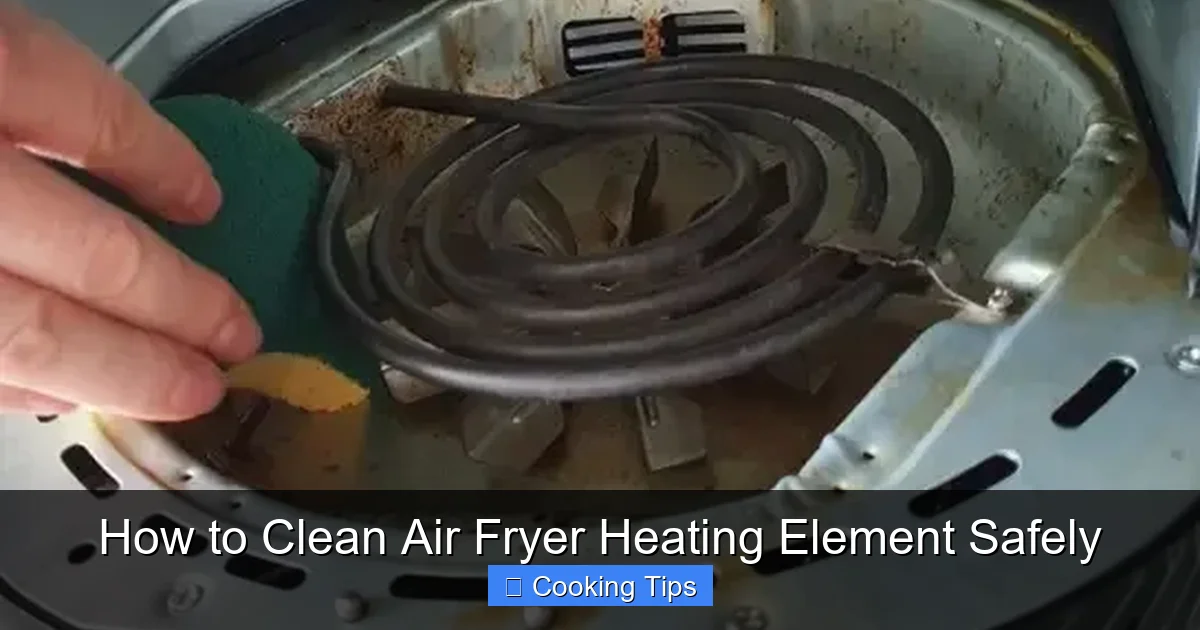
The heating element is the metal coil or heating tube inside the upper part of the air fryer. A fan moves hot air from this area around the food. Grease, crumbs, and smoke from cooking can collect on or near the element over time.
A dirty heating element may cause:
- Smoke during cooking
- A burnt or stale odor
- Uneven cooking
- Greasy residue on the upper interior
- Crumbs that fall onto the element
- Longer cooking times
- A possible fire risk if heavy grease keeps building up
A small amount of dark color on the element does not always mean it is damaged. Some discoloration can occur with normal use. The key concern is loose food, thick grease, flaking material, or signs of electrical damage.
Most air fryer heating elements are not designed to be removed by the user. Clean around the element while it remains in place unless the manufacturer gives specific removal instructions.

Source: kitchenarylab.com
What You Need Before Cleaning
Gather these supplies before you begin:
- A soft microfiber cloth
- A soft-bristled brush or clean, dry toothbrush
- Warm water
- A small amount of mild dish soap
- A nonabrasive sponge
- A dry towel
- A flashlight, if the upper interior is hard to see
Avoid steel wool, metal brushes, scouring powder, abrasive pads, bleach, ammonia, and oven cleaner. These products can damage the heating coil, protective coating, plastic parts, or electrical components.
Do not use a knife, fork, screwdriver, or other sharp tool to scrape the element. A sharp tool can bend the coil, scratch the housing, or damage insulation.
Before you clean, make sure the air fryer is:
- Unplugged from the wall.
- Fully cool.
- Empty.
- Away from the sink or other water source.
Never clean a hot heating element. Grease can stay hot after cooking, and a damp cloth can create steam or cause burns.

Source: airfryingfaqs.com
How to Clean an Air Fryer Heating Element
Follow these steps for routine grease and crumb removal.
1. Unplug and cool the air fryer
Remove the plug from the electrical outlet. Let the air fryer cool completely before moving it or turning it upside down.
Do not rely only on the display being off. Some appliances can retain heat after the cooking cycle ends.
2. Remove the basket, tray, and pan
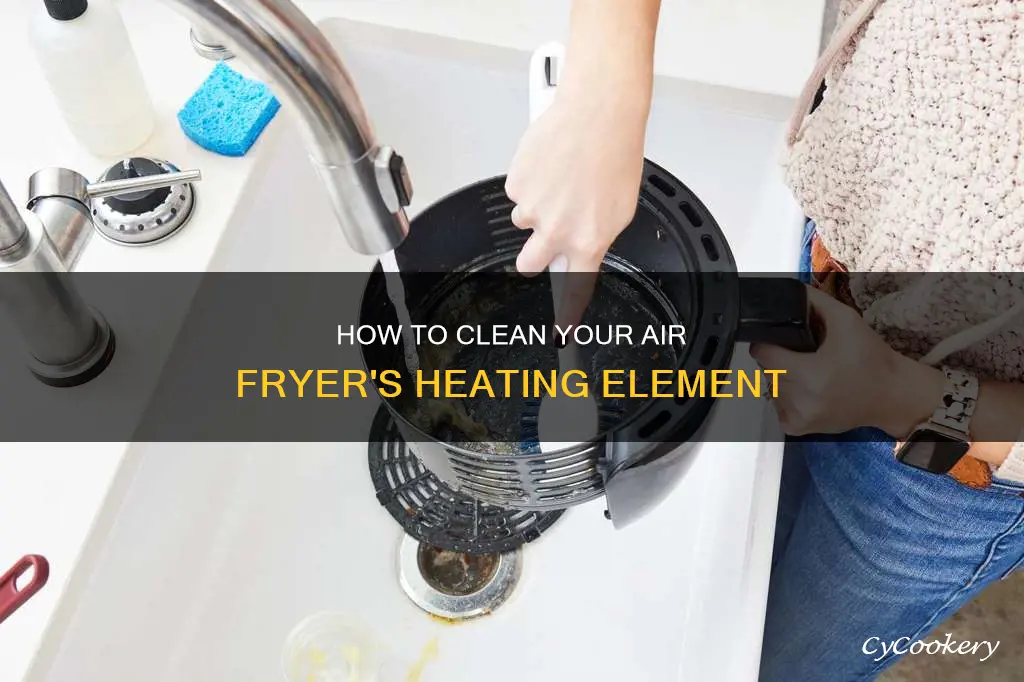
Take out all removable parts. Wash them according to the owner’s manual.
Many baskets and trays can be cleaned with warm water, mild dish soap, and a soft sponge. Some are dishwasher-safe, but the manual is the best source for that detail.
Set the clean parts aside to dry. Do not put them back into the air fryer while they are wet.
3. Inspect the upper interior
look above the cooking chamber. Use a flashlight if needed.
Check for:
- Loose crumbs
- Sticky grease
- Burnt food
- Peeling coating
- Bent metal
- Frayed wires
- Cracks
- Melted plastic
If you see exposed wires, melted parts, sparks, or major damage, stop cleaning and do not use the air fryer. Contact the manufacturer or a qualified appliance repair service.
4. Brush away loose crumbs
Hold the air fryer so loose crumbs can fall out of the cooking chamber. Use a soft, dry brush to sweep crumbs from around the heating element.
Work gently. Do not press hard on the coil or fan cover.
If the model cannot be safely tilted, brush the crumbs toward the opening and remove them with a dry cloth. Never push debris deeper into the fan or electrical area.
5. Wipe the heating element
Dampen a microfiber cloth with warm water. Wring it out well so it is damp, not wet.
Add a tiny amount of mild dish soap only if grease remains. Wipe the heating element and nearby metal surfaces with light strokes.
Keep water away from:
- The fan motor
- Electrical connections
- The control panel
- Vent openings
- The power cord
- Any area that the manual says must stay dry
Do not spray cleaner directly into the air fryer. Spray or pour cleaning liquid onto a cloth instead.
6. Loosen stubborn grease
For stuck grease, place a warm, damp cloth against the residue for a short time. This softens the grease without flooding the appliance.
Then wipe gently with the cloth or use a soft toothbrush. Repeat as needed.
Do not scrape hard residue with metal. If grease will not come off without force, leave it in place and ask the manufacturer about approved cleaning methods. Damaging the element is worse than leaving a small stain.
7. Clean the interior ceiling and walls
Wipe the ceiling, side walls, and fan guard with a damp cloth. These areas often hold grease that can drip back onto the heating element during the next cooking cycle.
Use a second clean, damp cloth to remove soap residue. Then dry the surfaces with a towel.
8. Dry the appliance completely
Leave the air fryer open until all cleaned surfaces are fully dry. Do not reconnect it while moisture remains inside.
Do not use a hair dryer or heat gun to speed up drying. Forced heat can damage plastic, wiring, or electronic parts.
9. Reassemble and test carefully
Put the dry basket and tray back into place. Plug in the air fryer and run it empty for a few minutes in a well-ventilated area, but only if the manual allows empty operation.
A brief smell from loosened grease may occur. Turn the appliance off and unplug it if you see smoke, sparks, or a strong burning-plastic smell.

Source: candiesui.com
How to Remove Heavy Grease Without Damaging the Element
Heavy grease needs patience rather than stronger chemicals. Start with a dry brush, then use a warm, damp cloth. Repeat the process several times instead of trying to remove all the grease in one pass.
A safe order is:
- Brush away dry crumbs.
- Wipe with a damp cloth.
- Hold a warm cloth on the grease for a short time.
- Brush softly.
- Wipe away loosened residue.
- Dry the area fully.
Do not use baking soda paste on the heating element unless the manufacturer approves it. Baking soda can leave powder behind, and thick paste may enter small gaps around the element or fan guard.
Do not pour boiling water into the cooking chamber. Sudden heat and moisture can damage parts and create a burn hazard.
If the element has thick, hardened grease that does not loosen with mild cleaning, contact the brand’s support team. Some models have removable upper panels, while others do not. Removing screws without instructions may void the warranty or expose live electrical parts.
Source: cookrm.com
How Often Should You Clean the Heating Element?
Clean the heating element when you see crumbs or grease, or when the air fryer begins to smoke or smell during normal cooking.
A practical schedule is:
| Cleaning task | Suggested timing |
|---|---|
| Wipe the basket and tray | After each use |
| Wipe visible grease inside the cooking chamber | Every few uses |
| Inspect the heating element | Weekly if used often |
| Deep-clean the upper interior | When residue or smoke appears |
| Check the manual’s maintenance instructions | Before first cleaning and when problems occur |
The best schedule depends on what you cook. Bacon, sausage, wings, and foods with oily marinades can send more grease toward the upper heating area than dry foods such as vegetables or frozen fries.
Cleaning after greasy meals helps prevent buildup. It also makes smoke easier to diagnose because old residue is less likely to burn during the next cooking cycle.

Source: airfryingfaqs.com
What to Do If the Air Fryer Smokes After Cleaning
A small amount of smoke may come from leftover grease or soap residue. Turn the air fryer off, unplug it, and let it cool. Inspect the element and interior again after cooling.
Smoke can also come from:
- Grease trapped above the heating element
- Food stuck to the fan guard
- A dirty basket or tray
- Excess oil on the food
- A damaged heating element
- Melted plastic
- Electrical failure
Do not keep running the air fryer to “burn off” heavy grease. That can increase smoke and fire risk.
Stop using the appliance if smoke continues after careful cleaning, or if you notice sparks, a burning electrical smell, melted parts, unusual buzzing, or repeated overheating. Contact the manufacturer or a qualified repair professional. Do not open the electrical housing unless you are trained and the manufacturer specifically permits that repair.

Source: pinchofnom.com
Common Mistakes to Avoid
Do not immerse the air fryer body
The main unit contains electrical parts. It should not be placed in water or filled with water for cleaning.
Do not spray cleaner into the appliance
Liquid can travel through vents and reach the fan, control board, or wiring. Apply a mild cleaner to a cloth instead.
Do not clean while the element is hot
A hot coil can burn skin and heat damp cloths quickly. Always wait until the appliance is cool and unplugged.
Do not use abrasive tools
Metal scrapers and rough pads can damage the element or its protective surface.
Do not block ventilation openings
After cleaning, make sure vents are free of grease and debris. Do not cover the air fryer while it is operating.
Do not ignore damaged parts
A bent coil, exposed wire, melted plastic part, or repeated spark is not a normal cleaning issue. It needs inspection or replacement.

Source: repairious.com
Can You Use Water or Vinegar to Clean the Heating Element?
Use only a small amount of water on a well-wrung cloth. Do not pour water into the air fryer or soak the heating element.
Some people use diluted vinegar to cut grease, but the owner’s manual should control. Vinegar can leave an odor, and it may not be suitable for every coating or material. Never mix vinegar with bleach or other cleaners.
For most routine cleaning, warm water and a small amount of mild dish soap are the safer starting point. The goal is to remove residue without introducing excess liquid or harsh chemicals.
Source: cycookery.com
When Should You Replace the Air Fryer Instead of Cleaning It?
Cleaning may not solve the problem if the appliance has electrical or heat damage.
Consider stopping use and seeking service when you find:
- A cracked heating element
- A loose or broken coil
- Exposed wiring
- Melted plastic near the heating area
- A damaged power cord or plug
- Sparks or flames
- Smoke that returns after cleaning
- A strong electrical or plastic odor
- A fan that stops or makes a grinding sound
Do not attempt to repair a sealed appliance with household tools. The heating system uses electricity and high temperatures. A qualified technician or the manufacturer can tell you whether repair is safe and worthwhile.

Source: repairious.com
Frequently Asked Questions
Can I flip my air fryer upside down to clean the heating element?
Only if the owner’s manual allows it and the appliance is unplugged, cool, and empty. Some models can be tilted safely, while others may place stress on the control panel, fan, or housing. If you are unsure, keep the air fryer upright.
Can I use oven cleaner on an air fryer heating element?
No. Oven cleaner may be too harsh for the heating element, interior coating, plastic, and electrical parts. Use a damp cloth and mild dish soap unless the manufacturer gives different instructions.
Why does my air fryer smell after cleaning?
The smell may come from leftover grease, soap residue, or moisture. Let the air fryer dry fully, wipe it again with a clean damp cloth, and inspect it for trapped food. A burning-plastic or electrical smell requires immediate shutdown and inspection.
How do I clean crumbs from above the heating element?
Unplug and cool the air fryer first. Use a soft, dry brush to move crumbs toward the opening. Avoid compressed air, sharp tools, and anything that could push crumbs into the fan or electrical area.
Can I remove the heating element for cleaning?
Usually, you should not remove it unless the manufacturer provides instructions for that model. The element may connect to wiring inside the appliance. Ask the manufacturer before removing screws or panels.
Key Takeaways
- Unplug the air fryer and let it cool before cleaning.
- Use a soft brush for crumbs and a barely damp cloth for grease.
- Keep water, sprays, and harsh cleaners away from electrical parts.
- Never scrape the heating coil with metal tools.
- Dry the appliance completely before reconnecting it.
- Stop using the air fryer if you see sparks, exposed wires, melted plastic, or repeated smoke.
Conclusion
The safest way to clean an air fryer heating element is to use gentle, low-moisture cleaning. Brush away crumbs, wipe grease with a damp microfiber cloth, and let the appliance dry fully before use.
If residue will not loosen without force, or if the air fryer shows signs of electrical or heat damage, do not keep cleaning it yourself. Check the manual or contact the manufacturer for model-specific help.