

A stained thermal stainless steel coffee carafe usually needs only warm water, dish soap, baking soda, and time. For fresh coffee stains, wash the carafe with soap first. For dark, baked-on residue, soak it with baking soda and hot water, then scrub with a soft bottle brush. Always check the carafe’s care guide before using a dishwasher, bleach, or strong cleaners.
Introduction
Coffee oils and tannins can leave brown marks inside a stainless steel thermal carafe. Hard-water minerals may add a white or gray film. These stains can look permanent, but most sit on the surface rather than damage the stainless steel.
This guide applies to thermal coffee carafes used in homes and offices across the United States. It covers common stainless steel vacuum carafes from brands such as Zojirushi, Stanley, Thermos, and Mr. Coffee. The safest method is gentle cleaning that protects the inner lining, lid, gasket, and vacuum insulation.
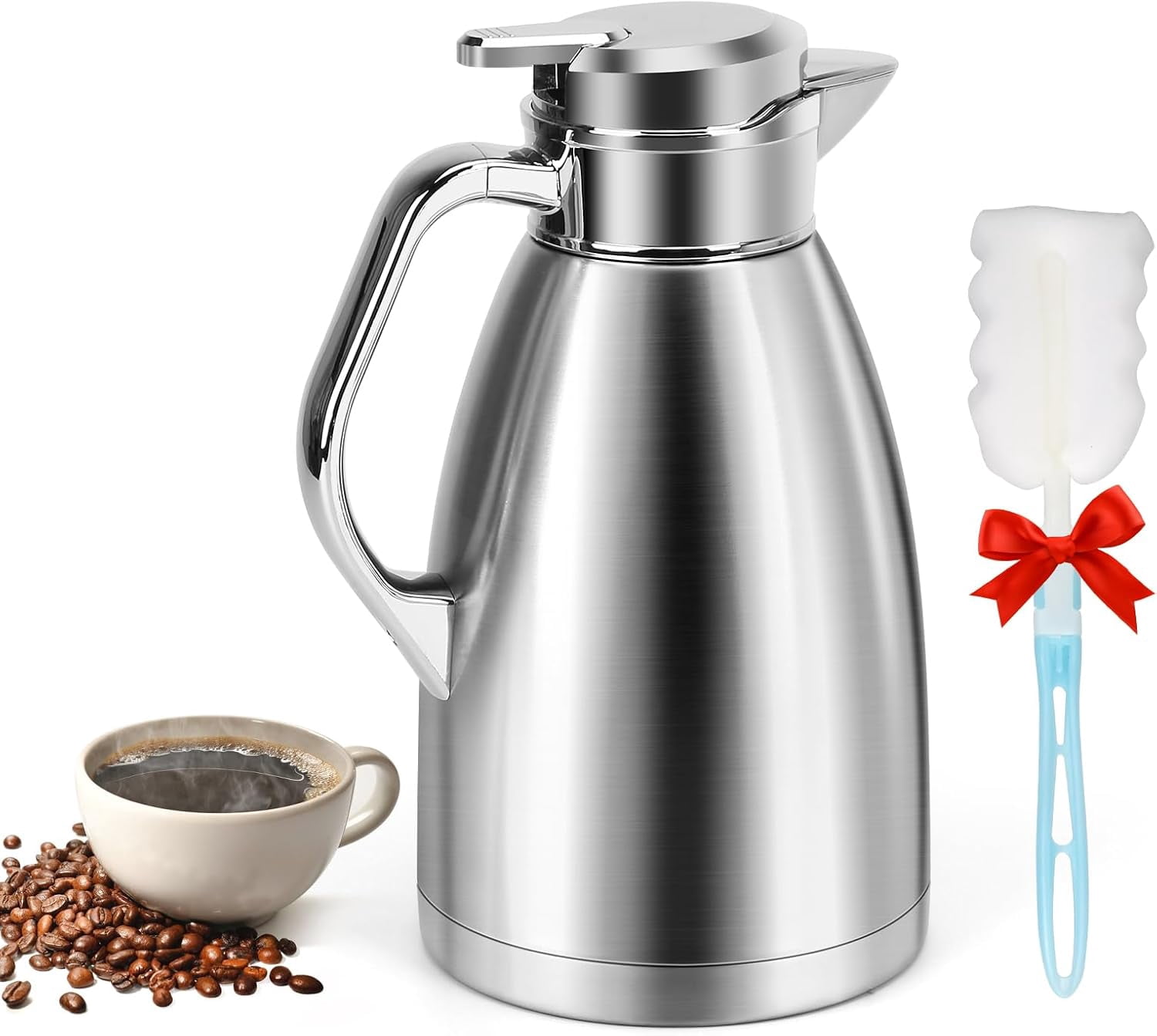
Source: walmart.com
What You Need Before Cleaning
Gather these items before you start:
- Liquid dish soap
- Baking soda
- Warm or hot tap water
- A soft bottle brush or carafe brush
- A clean microfiber cloth
- A soft sponge
- A small bowl
- Optional: a denture-cleaning tablet
- Optional: white vinegar for mineral scale
Do not use steel wool, wire brushes, scouring powder, or rough scrub pads. They can scratch the stainless steel surface. Scratches may hold coffee oils and make future stains harder to remove.
You may also need a narrow brush for the lid, pour spout, valve, and silicone gasket. Coffee residue often hides in these parts even when the inside of the carafe looks clean.
The Best Method for a Stained Stainless Steel Coffee Carafe
Use this basic method first. It is gentle, inexpensive, and works for most coffee stains.
Step 1: Empty and rinse the carafe
Pour out any remaining coffee. Rinse the carafe with warm water to loosen loose grounds and residue.
Do not pour boiling water into a cold carafe. Sudden temperature changes can stress glass-lined parts or damage some plastic components. Use hot tap water unless the manufacturer gives different instructions.
Step 2: Add dish soap and baking soda
Put 1 teaspoon of liquid dish soap and 1 to 2 tablespoons of baking soda into the carafe.
Baking soda is a mild alkaline cleaner. It helps lift coffee oils and dark residue without the harsh action of a strong abrasive. It is not the same as baking powder.
Step 3: Fill with hot water
Fill the carafe with hot tap water. Leave a little space at the top so the water does not spill when you brush the inside.
Place the lid on loosely, if the design allows it. Do not seal and shake a container filled with very hot liquid. Pressure can build, and hot water may spray when the lid opens.
Step 4: Soak for 30 minutes
Let the mixture sit for at least 30 minutes. For thick or old stains, leave it for 2 to 4 hours.
A longer soak often works better than hard scrubbing. The soap loosens oil, while the baking soda helps break up the stain.
Step 5: Brush the inside
use a soft bottle brush to clean the base, side walls, shoulder, and opening. Move the brush in small circles.
Pay special attention to the bottom of the carafe. Coffee sediment often dries there first. Do not force a brush through a narrow opening if it may become stuck.
Step 6: Rinse until clear
Rinse the carafe several times with clean water. Check the water for foam, grit, or coffee smell.
If the surface looks clean but still smells like coffee, fill the carafe with warm water and let it sit for 10 minutes. Rinse again.
Step 7: Dry it upside down
Leave the carafe open and upside down on a drying rack. Dry the lid and gasket separately.
Do not store the carafe with the lid tightly closed. Trapped moisture can cause stale odors and may encourage mold growth in the lid assembly.

Source: amazon.com
How to Remove Very Dark or Baked-On Coffee Stains
Old stains may need a stronger soak, but start with the gentle method above.
Option 1: Use a denture-cleaning tablet
A standard denture-cleaning tablet can help loosen old coffee residue. Use it only if the carafe manufacturer does not prohibit tablet cleaners.
- Rinse the carafe.
- Add one tablet.
- Fill the carafe with warm water.
- Leave it open while the tablet works.
- Wait for the time listed on the tablet package.
- Empty and rinse the carafe several times.
- Brush any remaining film with a soft brush.
Never mix a denture tablet with vinegar, bleach, ammonia, or another cleaner. Chemical mixtures can create irritating vapors or unwanted reactions.
Option 2: Make a baking soda paste
For a stain near the opening, mix baking soda with a small amount of water to make a soft paste. Apply it with a sponge or soft cloth.
Rub lightly. Do not press hard or use the dry powder as a heavy scrub. Rinse well when the stain lifts.
This method is useful for the outside rim, lid, and pour spout. For the deep interior, a soak is safer and more effective than trying to reach the spot with your hand.
Option 3: Use a commercial stainless steel cleaner
A cleaner made for stainless steel may help with exterior marks. Follow its label and keep it away from the drinking path unless the label clearly says it is safe for food-contact surfaces.
Rinse the carafe fully after use. Do not use a polish that leaves an oily film inside the carafe.

Source: amazon.com
How to Remove White Mineral Deposits
White spots or a chalky film usually come from hard-water minerals, not coffee. Vinegar can help dissolve mineral scale, but it should be used with care.
Mix one part white vinegar with three parts warm water. Fill the carafe and let the solution sit for 15 to 30 minutes. Empty it, wash the carafe with dish soap, and rinse several times.
Do not leave vinegar in the carafe overnight unless the manufacturer specifically allows it. Acid can affect some metal finishes, seals, or internal parts after long exposure.
Never mix vinegar with bleach or any cleaner that contains bleach. This can release chlorine gas.
If the carafe has a glass liner, painted coating, or special interior finish, follow the manufacturer’s instructions instead. Some products warn against acidic cleaners.

Source: amazon.com
How to Clean the Lid, Spout, and Rubber Gasket
A clean carafe can still smell bad when coffee residue remains in the lid. Take apart only the pieces that the manufacturer says are removable.
Wash each part with warm water and dish soap. Use a small soft brush or cotton swab to clean:
- The pour opening
- The lid threads
- The valve
- The underside of the lid
- The silicone gasket
- Any sliding button or seal
Look for trapped coffee oils, fine grounds, and sticky residue. Rinse each piece under running water.
Let the gasket and lid air-dry completely before reassembly. If the gasket is cracked, loose, swollen, or permanently stained with odor, replace it with the correct part for that carafe. A poor seal can reduce heat retention and cause leaks.
Do not pry out a gasket with a knife or metal tool. A damaged seal may not sit correctly after cleaning.
Source: walmart.com
Which Cleaning Method Should You Use?
Use the table below to choose the least aggressive method that fits the problem.
| Problem | First method to try | Soak time | Main caution |
|---|---|---|---|
| Fresh coffee film | Dish soap and soft brush | 5–10 minutes | Rinse well |
| Brown coffee stains | Baking soda, soap, and hot water | 30 minutes to 4 hours | Do not use a harsh scrubber |
| Heavy old residue | Denture-cleaning tablet | Follow package label | Never mix cleaners |
| White mineral scale | Diluted white vinegar | 15–30 minutes | Do not leave for long periods |
| Coffee odor in lid | Remove and wash lid parts | 10–15 minutes | Dry the gasket fully |
| Exterior fingerprints | Dish soap or stainless cleaner | As directed | Keep polish out of the interior |
The main trade-off is strength versus surface protection. A long soak is usually safer than stronger chemicals or harder scrubbing.

Source: amazon.ca
What Not to Use on a Thermal Coffee Carafe
Avoid these common cleaning mistakes:
Chlorine bleach
Bleach may corrode stainless steel and can damage seals. It also becomes dangerous when mixed with vinegar, ammonia, or acidic cleaners.
Steel wool and wire brushes
These tools can scratch stainless steel. They may also leave behind tiny metal particles that later rust.
Oven cleaner
Oven cleaner is too harsh for most carafes. Residue can remain in seams, lids, and seals.
Abrasive powders
Some scouring powders can dull or scratch the interior. If you use a powdered cleaner, confirm that the product is made for stainless steel and food-contact items.
Dishwasher cleaning without checking the manual
Some thermal carafes have dishwasher-safe parts, but others do not. Heat, detergent, and water pressure may damage the vacuum seal, finish, lid, or gasket.
Brand guidance varies. For example, manufacturers such as Thermos, Zojirushi, and Stanley provide model-specific care instructions. Check the guide for your exact carafe rather than assuming that all stainless steel products have the same limits.

Source: amazon.com
How to Tell Whether the Carafe Is Clean
A cleaned carafe should pass four simple checks:
- No visible brown film: Hold it under a bright kitchen light.
- No greasy feel: Run a clean finger over the rim and interior opening.
- No sour or stale odor: Smell the carafe after it dries.
- No cleaner taste: Fill it with fresh water, let it sit briefly, and taste the water only after thorough rinsing.
A faint gray mark may be a scratch or permanent discoloration rather than removable dirt. If the stain does not change after two gentle cleaning cycles, stop using stronger abrasives.
Staining alone does not always mean the carafe is unsafe. However, replace the carafe if the interior is flaking, cracked, severely corroded, or shedding coating material.

Source: amazon.ca
How to Prevent Future Coffee Stains
Prevention takes less time than removing a dark, old stain.
- Empty leftover coffee soon after use.
- Rinse the carafe after every use.
- Wash it with dish soap at least once a day when used daily.
- Clean the lid and gasket often.
- Do not leave coffee sitting in the carafe overnight.
- Dry the carafe with the lid off.
- Use a soft brush once a week.
- Descale it when white mineral deposits appear.
- Avoid storing coffee in the carafe for long periods.
Coffee oils build up in thin layers. A quick daily rinse removes loose residue, while regular soap cleaning stops that residue from hardening.

Source: amazon.com
Troubleshooting: When the Stain Does Not Come Out
If the first treatment fails, identify the type of mark before using a stronger cleaner.
The stain is brown or black
Repeat the baking soda soak and use a soft bottle brush. Old coffee oils may need several treatments.
The stain is white and chalky
Try diluted vinegar for 15 to 30 minutes, then wash and rinse. This points to mineral scale rather than coffee residue.
The stain feels rough
The surface may have mineral buildup or scratches. Do not use steel wool to smooth it. Scratches cannot be safely removed with household cleaning.
The smell remains
Clean the lid, valve, and gasket separately. Odor often stays in silicone parts even after the main carafe is clean.
The carafe leaks or no longer stays hot
Cleaning will not repair a damaged vacuum seal. Inspect the lid and gasket first. If they look sound but the carafe loses heat quickly, the internal vacuum may have failed. Replacement is usually more practical than repair.
The inside coating is peeling
Stop using the carafe for drinks and contact the manufacturer. Do not scrape or polish the coating.

Source: amazon.com
Key Takeaways
- Start with dish soap, baking soda, hot water, and a soft bottle brush.
- Soak old stains instead of scrubbing hard.
- Use diluted vinegar only for mineral deposits, and rinse well.
- Never mix vinegar, bleach, ammonia, or other cleaners.
- Avoid steel wool, wire brushes, oven cleaner, and unapproved dishwasher cycles.
- Clean the lid, valve, and gasket as carefully as the carafe body.
- Replace the carafe if its lining is peeling, cracked, or badly corroded.
Frequently Asked Questions
Can I use baking soda to clean a stainless steel coffee carafe?
Yes. Baking soda is a mild cleaner that can help loosen coffee oils and brown residue. Mix it with dish soap and hot water, soak the carafe, and use a soft brush. Rinse thoroughly.
Can I use vinegar to clean a thermal coffee carafe?
You can use diluted white vinegar for mineral deposits if the manufacturer allows it. Use a short soak, then wash with dish soap and rinse several times. Do not mix vinegar with bleach or leave it in the carafe for long periods.
How often should I clean a stainless steel thermal carafe?
Rinse it after every use and wash it with dish soap daily when used regularly. Clean the lid and gasket at least weekly. Descale it whenever white mineral deposits appear.
Why does my clean coffee carafe still smell?
The odor may be trapped in the lid, valve, or silicone gasket. Take apart the removable pieces, wash them with dish soap, rinse them well, and let them dry fully before reassembly.
Can I put a thermal stainless steel carafe in the dishwasher?
Only if the manual says the exact model is dishwasher-safe. Some parts may be safe for the dishwasher while the full carafe is not. High heat and strong detergent can damage seals, finishes, or vacuum insulation.
How do I remove coffee stains without scratching stainless steel?
Use a baking soda soak and a soft bottle brush. Avoid steel wool, wire brushes, rough scouring pads, and aggressive dry scrubbing. A longer soak is safer than more pressure.
Conclusion
The safest way to clean a stained thermal stainless steel coffee carafe is to work from mild to strong. Begin with dish soap, baking soda, hot water, and a soft brush. Use a denture tablet for stubborn residue or diluted vinegar for mineral scale only when the manufacturer permits it.
Rinse well, dry the carafe open, and clean the lid and gasket separately. If stains remain after gentle cleaning, check whether they are scratches, mineral scale, or damage to the interior coating before using a harsher product.