

The best pan for frying fish is a heavy, flat, 10–12-inch nonstick or cast-iron.
You can smell the butter foaming. The fillet is ready, but your old pan betrays you. The skin sticks. The flesh tears. Dinner turns to a scramble. I’ve been there. I learned that the right pan makes fish night easy and fun. The best pan for frying fish gives steady heat, a slick surface, and just enough room to flip without fear. In this guide, I’ll break down what actually works at the stove, and I’ll review five standout pans I’ve tested and trust for crisp skin, juicy centers, and stress-free cleanup.
SENSARTE 12-inch Nonstick Skillet with Lid

This 12-inch SENSARTE skillet hits the sweet spot for fish. It has space for two fillets. The stone-derived nonstick helps fragile fish release clean. Heat spreads well across the flat base. The helper handle and see-through lid add real-world ease on busy nights.
I like this pan for weeknight salmon, cod, or tilapia. It handles medium heat with a calm, even sizzle. It’s PFOA/PFOS-free, which many buyers want today. It also works on induction, gas, and electric. If you want the best pan for frying fish without fuss, this is a strong start.
Pros:
- Roomy 12-inch surface fits two fish fillets
- Reliable nonstick release for delicate skin-on fish
- Even heat helps prevent hot spots and tearing
- Helper handle and lid improve control and moisture
- Induction-compatible and dishwasher-friendly
Cons:
- Nonstick coatings need gentle tools and care
- Not ideal for high-heat searing like cast iron
- Heavier than budget nonstick fry pans
My Recommendation
If you want a forgiving, family-size skillet, this is it. The nonstick surface makes flipping easy. The lid locks in steam for thicker cuts. It’s the best pan for frying fish for home cooks who prize clean release and low stress over high-heat browning.
| Best for | Why |
|---|---|
| Weeknight salmon and cod | Nonstick and even heat keep fish intact |
| One-pan meals | Deep sides and lid hold sauce and sides |
| Mixed stovetops | Works on induction, gas, and electric |
Outset Cast Iron Fish Grill Pan

The Outset cast iron fish pan is shaped for the job. It’s long and slightly narrow, which suits whole trout or branzino. Cast iron holds heat like a champ. That steady heat helps build a crisp crust and helps fish cook more evenly.
I love this for outdoor cooks. It shines on the grill or over a campfire. Indoors, it sears beautifully on gas or electric. You’ll need oil and patience during seasoning. But if you crave restaurant-level browning, this can be your best pan for frying fish.
Pros:
- Cast iron retains and spreads heat very well
- Fish-shaped design fits whole fish and fillets
- Oven- and grill-safe for indoor and outdoor cooking
- Builds natural nonstick with seasoning
- Rugged, long-lasting value
Cons:
- Heavier than aluminum or standard nonstick pans
- Needs seasoning and careful drying to prevent rust
- Long shape can be bulky to store
My Recommendation
Pick this if you want deep browning and grill versatility. It’s a classic, durable tool for cooks who enjoy cast iron care. If your idea of the best pan for frying fish includes char, crust, and campfire charm, this one delivers.
| Best for | Why |
|---|---|
| Whole trout or branzino | Elongated shape fits the fish |
| Outdoor grilling | Cast iron thrives on grills and high heat |
| Crust lovers | Superior sear and heat retention |
CAROTE 8-inch Granite Nonstick Skillet

This compact 8-inch CAROTE skillet is perfect for one fillet. The granite-look nonstick is slick and easy to clean. It heats fast and stays light in the hand. It’s a handy pan when you’re cooking a solo dinner or a quick lunch.
Thin fillets like tilapia or catfish do very well here. Keep the heat to medium. Add a bit of oil to help with browning. If you want the best pan for frying fish for small portions, this pan punches above its price.
Pros:
- Great size for single servings
- Quick heat-up and easy handling
- Slick nonstick for tear-free flips
- Budget-friendly entry to quality nonstick
- Simple cleanup with soft sponge
Cons:
- Too small for two fillets or whole fish
- Not for very high heat searing
- Nonstick needs gentle utensils
My Recommendation
Choose this for solo cooks and small kitchens. It slides fish free with almost no effort. If the best pan for frying fish to you means “fast, light, and easy,” this little skillet is a smart buy.
| Best for | Why |
|---|---|
| Single fillets | 8-inch size fits one piece perfectly |
| Quick lunches | Heats fast and cleans fast |
| Budget shoppers | Strong value for everyday nonstick |
Qelunaro 14×8 Cast Iron Fish Pan

The Qelunaro cast iron fish pan gives you a 14 x 8 inch surface. That’s enough room for a large fillet or a small whole fish. Cast iron’s heat-holding power shines with thicker cuts like swordfish or halibut. With proper seasoning, it builds a semi-nonstick patina.
I like this one for stove-to-oven cooking. Sear on the stove. Finish in the oven. The oval shape suits the curve of a fillet. If you’re seeking the best pan for frying fish with a steak-like sear, this is a top pick.
Pros:
- Generous oval surface for large fillets
- Superb heat retention for even cooking
- Oven-safe for finishing thick cuts
- Seasoning improves with use
- Durable, long-term investment
Cons:
- Heavy and needs two hands when full
- Requires care to prevent rust
- Long preheat time versus aluminum
My Recommendation
Go with this if you love thick, meaty fish and a deep sear. It’s a cast iron workhorse that rewards a little care. For cooks who want the best pan for frying fish and roasting in the same vessel, this is ideal.
| Best for | Why |
|---|---|
| Thick fillets | Cast iron keeps heat stable |
| Stove-to-oven meals | Oven-safe design for finishing |
| Seasoned skillet fans | Patina improves release over time |
SENSARTE 10-inch Deep Skillet with Lid
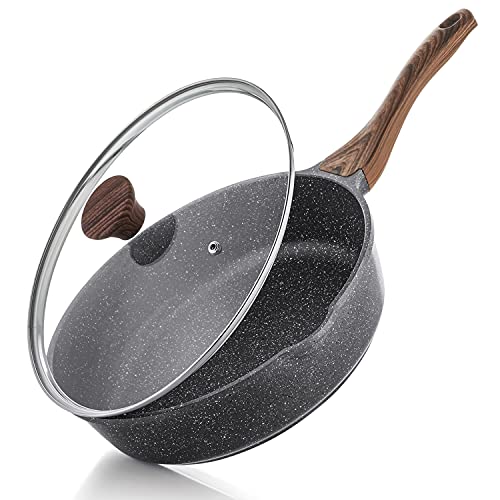
The 10-inch SENSARTE deep skillet gives you height and control. The stone-derived nonstick helps with delicate fish. The lid is a win for simmering sauces. The stay-cool handle keeps hands safe when you need a careful tilt and baste.
I reach for this when I’m poaching or braising fish. It’s also good for frying in a little more oil. The smaller size suits one or two pieces. If your best pan for frying fish also needs to handle stews or chowders, this is a multi-tool.
Pros:
- Deep sides reduce splatter and hold sauces
- Nonstick release for easy flips
- Lid expands your cooking options
- Stay-cool handle adds safety
- Induction-compatible versatility
Cons:
- 10-inch size may feel snug for larger fillets
- Nonstick limits extreme heat searing
- Lid knob can trap steam; vent carefully
My Recommendation
If you like saucy fish dishes and gentle heat, choose this. It’s compact, calm, and kind to fragile fillets. For many home cooks, it’s the best pan for frying fish and finishing with a quick pan sauce.
| Best for | Why |
|---|---|
| Poaching and braising | Deep sides and lid control moisture |
| Small kitchens | Compact with multi-use range |
| Delicate fillets | Nonstick keeps fish from tearing |
How to choose the best pan for frying fish
Fish is delicate. The best pan for frying fish needs even heat, a smooth surface, and enough room to turn. Here’s how I pick winners that work on real stoves with real fillets.
Size and shape
A 10–12 inch round pan fits most homes. It handles two standard fillets without crowding. For whole fish, an oval or elongated fish pan makes life easier. Space prevents steaming. Crowding kills crisp skin.
Material basics
- Cast iron: Top heat retention. Best for sear and crust. Heavy and needs seasoning.
- Nonstick aluminum: Light, quick, and forgiving. Great for thin fillets. Keep heat moderate.
- Clad stainless: Durable and versatile. Needs skill and oil for nonstick behavior.
If you want a no-drama flip, nonstick is the simplest path. If you want a steak-like sear, cast iron often wins. Many homes use both.
Heat distribution and retention
Flat, thick bases heat evenly. That matters for even browning. Thin pans form hot spots and tear fish. Cast iron stays hot during the flip. Nonstick heats fast but loses heat faster. The best pan for frying fish keeps a steady sizzle across the surface.
Coatings and safety
Modern reputable nonstick pans are PFOA-free. That aligns with current industry standards in the US. Use medium heat, add a little oil, and avoid metal tools. A careful hand gives nonstick a long life.
Handles, lids, and extras
Helper handles on large pans prevent spills. Lids matter for thick fillets and sauces. Pour spouts are a bonus for pan sauce control. Induction compatibility is nice if your cooktop needs it.
Budget and durability
Nonstick gives top ease at a fair price, but coatings wear. Cast iron costs a bit more up front but lasts decades with care. If you cook fish twice a week, invest in a sturdy option. Your results will show it.
How to fry fish without sticking
Sticking happens when heat, moisture, and protein collide the wrong way. Here’s my simple routine that works across pan types.
Preheat the pan
Give the pan time. Cast iron needs 3–5 minutes on medium. Nonstick needs less, about 1–2 minutes. A drop of water should dance, not sit flat. Consistent heat is key to the best pan for frying fish results.
Dry the fish well
Pat the fish dry. Wet skin steams and bonds to the pan. A dry surface browns. Salt just before the pan to avoid drawing out water too early.
Use the right fat
Neutral oils with a higher smoke point work well. Avocado, refined olive, or canola are good. Add butter late for flavor. Butter alone burns fast.
Let it release
Place the fish and don’t move it. When a crust forms, it will release. If it sticks, give it another 30–60 seconds. Then slide in a thin spatula and flip in one calm motion.
Finish gentle
Most fish is done at 125–135°F internal for moist results. Rest for a minute. The carryover heat completes the job. This routine, plus the best pan for frying fish, gives you tender fillets with crisp skin.
Care and maintenance tips
Care keeps your pans working like new and protects flavor.
For nonstick
- Use silicone or wood tools to protect the coating.
- Hand wash with a soft sponge; skip harsh scrubbers.
- Avoid aerosol sprays; they can gum the surface.
- Cook at medium to medium-high. Save high heat for cast iron.
For cast iron
- Preheat gently to avoid warping stress.
- After cooking, wipe clean and dry fully.
- Add a thin coat of oil while warm to protect seasoning.
- Store dry; avoid soaking.
Treat your gear well and it treats your fish well. The best pan for frying fish grows better with use, not worse.
Common mistakes that ruin fish
These errors show up over and over. They have easy fixes.
- Pan too cool: Fish steams and sticks. Preheat more.
- Pan too hot: Coating scorches before the center cooks. Drop the heat.
- Crowding: Moisture builds. Cook in batches or use a larger pan.
- Moving it early: Let the crust form before flipping.
- Skipping the pat-dry: Water is the enemy of crisp skin.
When you dial in heat and patience, any of these picks can be the best pan for frying fish in your kitchen.
Real-world pairings: fish types and pan matches
I match fish to pan for better texture and flavor.
- Salmon, skin-on: Nonstick for easy release, cast iron for extra crust.
- Tilapia, catfish: Nonstick shines. Keep heat moderate.
- Halibut, swordfish: Cast iron or clad stainless for strong sear and finish in oven.
- Whole trout: Fish-shaped cast iron fits and browns head to tail.
There isn’t one “only” best pan for frying fish. There’s the best pan for your method and your fish today. That’s how I shop and cook with confidence.
Buying checklist you can save
- Size: 10–12 inches for two fillets; oval for whole fish
- Material: Nonstick for ease, cast iron for sear
- Base: Flat, heavy, and even heating
- Compatibility: Induction, oven-safe if you need it
- Comfort: Solid handle, helper handle on big pans
- Maintenance: Honest about seasoning or gentle care
- Value: Buy once, cry once—or start smart and upgrade
Follow this list and you’ll land the best pan for frying fish for your style and stove.
FAQs Of best pan for frying fish
What size pan is best for two fish fillets?
A 10–12 inch skillet works best. It gives room to flip without crowding. That helps crisp skin.
Should I use nonstick or cast iron for fish?
Nonstick is the easiest for delicate fish. Cast iron gives the best sear. Many cooks use both.
How do I stop fish from sticking?
Preheat the pan, pat the fish dry, and add oil. Place the fish and let it release before flipping.
Can I use high heat on nonstick?
Use medium to medium-high only. Save high heat for cast iron or stainless. It protects the coating.
Is a lid useful when frying fish?
Yes, for thick cuts or saucy dishes. A lid traps heat and moisture. Use it to finish gently.
Final Verdict: Which Should You Buy?
The SENSARTE 12-inch Nonstick Skillet with Lid is the best pan for frying fish for most homes. It’s roomy, even-heating, and forgiving. The lid and helper handle make daily cooking simple and safe.
If you love a deep sear, add a cast iron fish pan to your lineup. With one nonstick and one cast iron, you’ll always have the best pan for frying fish for any recipe or cut.