

Chicken parmigiana is rich, crisp, and full of bold tomato and cheese flavor. The best sides add freshness, color, or a light crunch without making the meal feel too heavy.
For a classic American dinner, serve chicken parmigiana with spaghetti and marinara, a green salad, roasted vegetables, garlic bread, or a simple vegetable side. The right choice depends on whether you want a cozy restaurant-style plate or a lighter meal.
The Best Overall Sides for Chicken Parmigiana
The best pairings balance three main traits:
- Richness: Chicken, breading, cheese, and sauce make the main dish filling.
- Texture: Crisp chicken pairs well with soft pasta or tender vegetables.
- Freshness: Greens, lemon, and light dressings keep the meal from feeling too heavy.
Here are the top choices at a glance:
| Side dish | Best for | Why it works |
|---|---|---|
| Spaghetti with marinara | A classic Italian-American meal | Uses extra sauce and adds comfort |
| Green salad | A lighter dinner | Adds crunch and fresh flavor |
| Garlic bread | A hearty meal | Soaks up sauce and adds crisp texture |
| Roasted broccoli | A simple family dinner | Adds color, fiber, and mild sweetness |
| Pasta salad | A warm-weather meal | Feels fresh and can be served cold |
| Polenta | A cozy dinner | Soft, savory, and easy to flavor |
| Steamed green beans | A balanced plate | Light and quick to prepare |
| Caesar salad | A restaurant-style meal | Creamy, crisp, and familiar |
A good rule is to choose one starch and one vegetable. For example, pair spaghetti with roasted broccoli, or garlic bread with a large green salad.

Source: Bing
Classic Pasta Sides
Pasta is the most familiar side for chicken parmigiana. It works best when the pasta has enough sauce to stay moist but not so much that the plate becomes overly heavy.
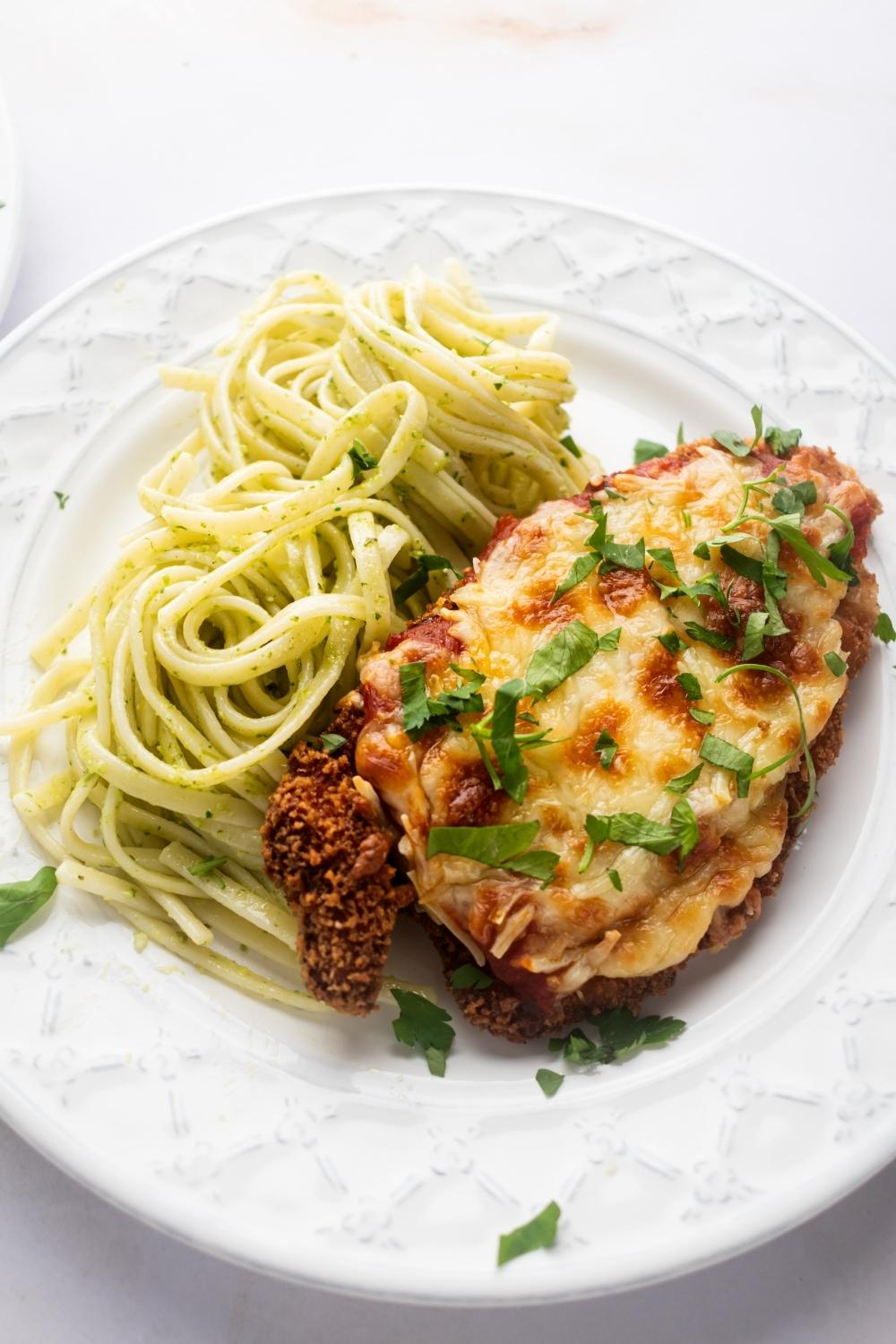
Spaghetti with marinara
Spaghetti with marinara is the classic choice. Spoon some of the extra tomato sauce from the chicken over the pasta, or serve the pasta with a separate portion of marinara.
For the best texture:
- Cook the spaghetti until tender but still slightly firm.
- Drain it without rinsing.
- Toss it with warm marinara and a small amount of olive oil.
- Add basil or parsley just before serving.
This pairing works well because the pasta is simple. It lets the crispy chicken and melted cheese remain the focus.
Angel hair pasta
Angel hair cooks quickly and feels lighter than thick pasta. It pairs well with chicken parmigiana when you want a delicate side.
Use less sauce than you would with spaghetti. A light coating of marinara, olive oil, or fresh tomato sauce is enough.
Penne with marinara
Penne is a useful choice for families because it is easy to serve and holds sauce in its tubes. It also works well for leftovers.
Try adding one of these simple touches:
- Chopped basil
- Grated Parmesan
- Red pepper flakes
- Sautéed spinach
- Roasted cherry tomatoes
Baked pasta
Baked ziti or another cheese-based pasta can make the meal very filling. Choose it when you are serving a crowd or planning a comfort-food dinner.
Because both dishes contain cheese and tomato sauce, add a fresh salad or green vegetable. Without a lighter side, the meal may taste too rich.

Source: Bing
Fresh Salads That Balance the Meal
A salad gives chicken parmigiana a cool, crisp contrast. Choose a sharp or bright dressing instead of a very heavy one if the chicken has a lot of cheese.
Simple Italian salad
A simple Italian salad usually includes:
- Romaine or mixed greens
- Tomato
- Cucumber
- Red onion
- Pepperoncini
- Parmesan
- Red wine vinaigrette
The vinegar in the dressing cuts through the rich breading and cheese. Add the dressing just before serving so the greens stay crisp.
Caesar salad
Caesar salad is a popular restaurant-style pairing. Its crunchy romaine, toasted croutons, and savory dressing match the crisp chicken coating.
Keep the portion moderate. Caesar dressing, Parmesan, and croutons can make the meal rich when combined with chicken parmigiana.
Arugula salad with lemon
Arugula adds a peppery bite that works well with sweet tomato sauce. Toss it with lemon juice, olive oil, black pepper, and a small amount of shaved Parmesan.
This is one of the lighter choices for a weeknight meal.
Caprese salad
Caprese salad uses tomato, fresh mozzarella, basil, and olive oil. It matches the Italian-American flavors in the main dish without adding another cooked side.
Use ripe tomatoes and serve the salad cool or at room temperature. A small amount of balsamic glaze can add sweetness, but it is not required.
Source: Bing
Vegetable Sides for Chicken Parmigiana
Vegetables add color and help balance a plate built around breaded chicken, cheese, and pasta. Roasting brings out natural sweetness, while steaming keeps the meal light.
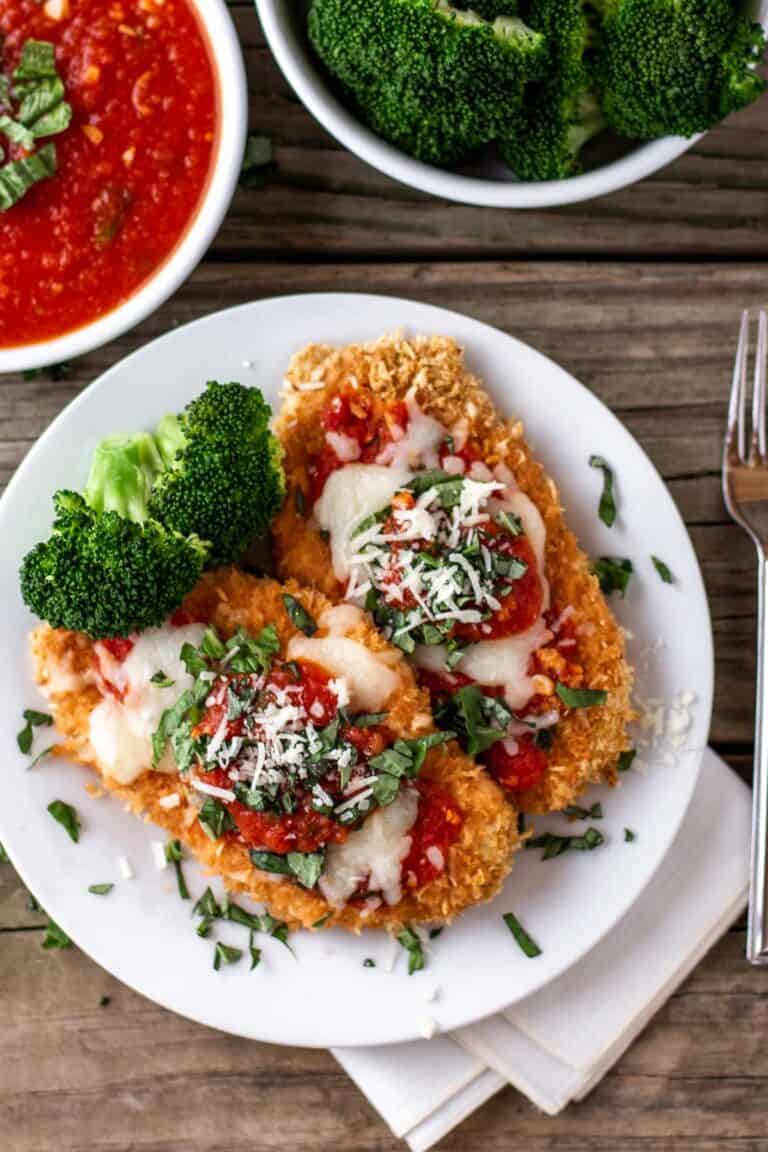
Roasted broccoli
Roasted broccoli is one of the best all-purpose sides. Toss broccoli florets with olive oil, salt, and pepper, then roast until the edges are browned.
Finish it with:
- Lemon zest
- Garlic
- Red pepper flakes
- Grated Parmesan
- A small splash of lemon juice
The browned edges provide a nice contrast to the soft cheese and tomato sauce.
Green beans
Green beans are quick, light, and easy to season. Steam or sauté them until tender but still bright green.
Good toppings include:
- Lemon and black pepper
- Toasted almonds
- Garlic and olive oil
- A small amount of butter
- Parmesan
Green beans are especially useful when the chicken is served with pasta and garlic bread.
Roasted asparagus
Asparagus pairs well with lemon-based flavors. Roast it until the tips are lightly browned, then add lemon juice before serving.
Thin asparagus cooks fast. Thicker stalks may need more time. Avoid overcooking, since soft asparagus can make the whole plate feel heavy.
Sautéed spinach
Spinach cooks in only a few minutes. Sauté it with olive oil and garlic, then season with salt and pepper.
Use a large pan because raw spinach shrinks as it cooks. A small squeeze of lemon can brighten the flavor.
Zucchini
Zucchini has a mild flavor that does not compete with the tomato sauce. Grill, roast, or sauté it with Italian herbs.
For better texture, avoid crowding the pan. Crowded zucchini steams instead of browning.

Source: Bing
Bread and Potato Sides
Bread and potatoes make chicken parmigiana more filling. Choose one of them when you are not also serving a large portion of pasta.
Garlic bread
Garlic bread is ideal for soaking up marinara sauce. Use a crusty Italian loaf, baguette, or sourdough.
For a simple version:
- Mix softened butter with minced garlic and parsley.
- Spread it over sliced bread.
- Bake until the edges are crisp.
- Add Parmesan if desired.
If the chicken already has a thick breaded coating, serve smaller pieces of garlic bread.
Garlic knots
Garlic knots are soft, chewy, and easy to share. They fit well with a casual family meal or game-day spread.
Serve them with warm marinara for dipping. Since they are already rich, add a salad or steamed vegetable to the plate.
Creamy polenta
Soft polenta gives the meal a warm, comforting base. It can replace pasta and works especially well with extra marinara.
Keep the polenta simple with Parmesan, black pepper, or herbs. Avoid adding too much cream if the chicken has a large amount of melted cheese.
Roasted potatoes
Crisp roasted potatoes add a different texture from pasta. Season them with garlic, rosemary, olive oil, salt, and pepper.
Choose roasted potatoes when you want a hearty dinner without another tomato-based dish.
Mashed potatoes
Mashed potatoes are not a traditional Italian-American pairing, but they can work for a comfort-food meal. Their mild flavor absorbs tomato sauce well.
Serve a smaller portion and add a green vegetable for contrast.
Source: Bing
Lighter and Low-Carb Pairings
You do not need pasta or bread to make a satisfying chicken parmigiana meal. Lighter sides work well when the chicken portion is large or the coating contains a lot of cheese.
Spaghetti squash
Spaghetti squash gives you long, noodle-like strands with a mild flavor. Toss it with a small amount of marinara, olive oil, or fresh herbs.
It will not have the same texture as wheat pasta, but it can make the plate feel lighter.
Zucchini noodles
Zucchini noodles cook quickly and pair well with marinara. Sauté them for only a short time so they do not release too much water.
Pat the noodles dry before cooking. This helps prevent a watery sauce.
Cauliflower mash
Cauliflower mash offers a soft, mild side without the starch of potatoes. Add roasted garlic, olive oil, or Parmesan for more flavor.
This option works best with a crisp salad or roasted vegetable because the chicken and mash are both soft.
Large green salad
A large salad can stand in for both a vegetable and a starch when you want a lighter meal. Add chickpeas, white beans, or a small amount of whole-grain bread if you need more staying power.
For food balance, the USDA MyPlate model encourages including vegetables and making at least some grains whole when grains are part of the meal. Chicken parmigiana itself supplies protein, while the side dishes can add vegetables and grains.

Source: Bing
Side Dishes for Different Occasions
The best side depends on the type of meal you are planning.
For a classic Sunday dinner
Serve:
- Chicken parmigiana
- Spaghetti with marinara
- Italian salad
- Garlic bread
This is a full, traditional American Italian-style meal. Keep the salad large and the garlic bread portion modest.
For a quick weeknight dinner
Serve:
- Chicken parmigiana
- Steamed green beans
- Small roasted potatoes
These sides require little prep and do not add another large serving of pasta.
For a summer meal
Serve:
- Chicken parmigiana
- Tomato and cucumber salad
- Grilled zucchini
- Crusty bread
Cool, crisp vegetables make the meal feel less heavy in warm weather.
For a family gathering
Serve:
- Baked chicken parmigiana
- Penne or baked ziti
- Caesar salad
- Garlic knots
- Roasted broccoli
Set the pasta and salad on the side so guests can choose their portions.
For a date-night dinner at home
Serve:
- Chicken parmigiana
- Angel hair with light marinara
- Arugula and lemon salad
- Roasted asparagus
This menu has a mix of rich, crisp, fresh, and bright flavors without too many heavy dishes.

Source: Bing
How Much to Serve
Portions depend on the size of the chicken cutlet and the number of sides. As a simple starting point, plan for:
- Chicken: One cutlet per person
- Cooked pasta: About 1 to 1½ cups per person as a main side
- Green salad: About 1½ to 2 cups per person
- Roasted vegetables: About ½ to 1 cup per person
- Garlic bread: One to two small pieces per person
These are planning estimates, not strict nutrition rules. A large restaurant-style chicken cutlet may need less pasta. A small homemade cutlet may need more.
If you serve both pasta and bread, reduce the portion of each. This keeps the plate balanced and leaves room for vegetables.
Source: Bing
What to Avoid Serving With Chicken Parmigiana
Some sides can make the meal feel overly rich or repetitive.
Avoid too many cheese-heavy dishes
Chicken parmigiana already contains cheese. Serving it with baked mac and cheese, cheesy potatoes, and cheesy bread may overwhelm the meal.
Choose one extra cheese-based side at most.
Avoid several tomato-based dishes
Marinara on the chicken and pasta is fine. Adding tomato soup, tomato salad, and more tomato sauce can make the meal taste one-note.
Use greens, lemon, or roasted vegetables to add contrast.
Avoid soft sides only
Chicken parmigiana has a crisp coating, but the cheese and sauce are soft. If every side is soft, the plate may lack texture.
Add one crisp item, such as salad, toasted bread, or roasted vegetables with browned edges.
Avoid dressing the salad too early
A dressed salad can wilt while the chicken cooks. Dress it just before serving.

Source: Bing
Food Safety and Storage Tips
Chicken parmigiana should be cooked to a safe internal temperature of 165°F, measured with a food thermometer in the thickest part of the chicken. The USDA lists 165°F as the safe minimum internal temperature for poultry.
Keep hot food hot and cold food cold during serving. Refrigerate leftovers within 2 hours, or within 1 hour when the surrounding temperature is above 90°F, according to USDA guidance.
Store chicken and sides in shallow containers. Eat refrigerated leftovers within 3 to 4 days for best safety and quality. Reheat leftovers until they reach 165°F.
To keep the coating crisp, reheat chicken parmigiana in an oven or air fryer rather than the microwave. The microwave is faster, but it can soften the breading.

Source: Bing
A Simple Three-Part Plate Formula
Use this formula when you are unsure what to serve:
- Choose one comfort side: Pasta, bread, polenta, or potatoes.
- Add one vegetable: Broccoli, green beans, asparagus, spinach, or zucchini.
- Add freshness if needed: Salad, lemon, fresh herbs, or fruit.
For example:
- Spaghetti + roasted broccoli + Italian salad
- Garlic bread + green beans + arugula salad
- Polenta + sautéed spinach + lemon
- Roasted potatoes + asparagus + cucumber salad
This approach keeps the meal varied without requiring many recipes.
Source: Bing
Key Takeaways
- The best classic side for chicken parmigiana is spaghetti with marinara.
- Add a green salad or vegetable to balance the rich chicken and cheese.
- Garlic bread, polenta, potatoes, and baked pasta make the meal more filling.
- Use lemon, vinegar, fresh herbs, or crisp greens to cut through the richness.
- For a lighter meal, choose salad, green beans, roasted vegetables, spaghetti squash, or zucchini noodles.
- Cook chicken to 165°F and refrigerate leftovers within the USDA time limits.
Frequently Asked Questions
What is traditionally served with chicken parmigiana?
Spaghetti with marinara is the most common traditional American pairing. Many restaurants also serve a green salad, garlic bread, or steamed vegetables.
Is chicken parmigiana served with pasta?
Yes. Spaghetti is the classic choice, but penne, linguine, angel hair, and other pasta shapes also work. Use a moderate amount of sauce so the pasta does not overpower the chicken.
What vegetables go well with chicken parmigiana?
Broccoli, green beans, asparagus, spinach, zucchini, and roasted peppers all pair well with chicken parmigiana. Roasting or sautéing adds more flavor than boiling.
What can I serve with chicken parmigiana instead of pasta?
Try a large green salad, roasted vegetables, polenta, roasted potatoes, spaghetti squash, zucchini noodles, or cauliflower mash.
Can I serve chicken parmigiana with mashed potatoes?
Yes. Mashed potatoes create a hearty comfort-food meal and pair well with the tomato sauce. Add a green vegetable or salad to bring freshness and texture.
What wine goes with chicken parmigiana?
A medium-bodied red such as Chianti, Sangiovese, or a lighter Cabernet Sauvignon can match the tomato sauce. For white wine, try a dry Pinot Grigio or Sauvignon Blanc if you prefer a fresher style.
Final Recommendation
For the most balanced plate, serve chicken parmigiana with spaghetti marinara, a crisp Italian salad, and roasted broccoli. The pasta adds comfort, the salad adds freshness, and the broccoli adds color and texture. If you want a lighter meal, replace the pasta with green beans or a large salad.