

Pair seaweed snacks with rice, avocado, eggs, tuna, kimchi, cheese, and creamy dips.
Seaweed snacks are salty, crisp, and full of umami. That makes them perfect partners for many foods you already love. In this guide, I’ll show you what to eat with seaweed snacks for quick bites, balanced meals, and fun party platters. I test these pairings in my own kitchen and back them with sound nutrition tips, so you can build snacks that taste great and make sense for your goals.

Why seaweed snacks work with so many foods
Seaweed snacks deliver crunch, salt, and deep savory notes. That umami boosts mild foods like rice, eggs, tofu, and veggies. It also balances bold flavors like kimchi, pickles, and spicy mayo.
They are light but flavorful, so they pair well with both rich and lean foods. The iodine and minerals in seaweed can support your diet, while the fiber helps you feel full. If you are asking what to eat with seaweed snacks, think contrast: creamy with crisp, fresh with salty, mild with bold.
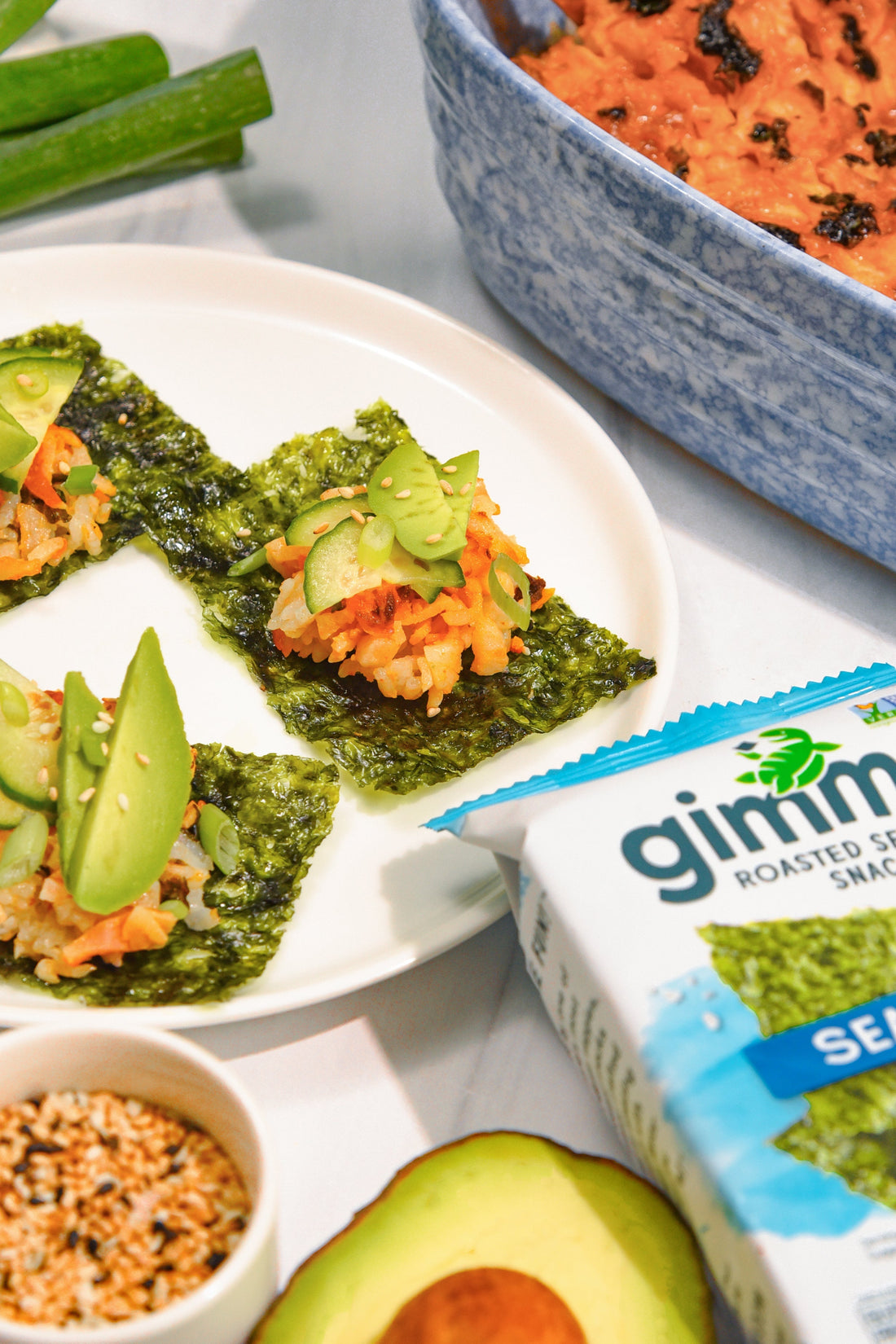
How to choose what to eat with seaweed snacks
Use these simple rules when you plan what to eat with seaweed snacks.
- Add creaminess to balance crunch. Try avocado, soft tofu, or cream cheese.
- Add protein for staying power. Use eggs, canned fish, chicken, edamame, or cottage cheese.
- Balance salt and acid. Kimchi, cucumbers, citrus, and pickles lift the flavor.
- Mind texture. Pair crisp seaweed with soft rice or tender salmon for a nice bite.
- Watch sodium. Seaweed snacks can be salty. Add fresh veggies to even it out.
I often build a small tray with a protein, a creamy element, a crunchy veg, and a sauce. It keeps choices simple and tasty.
Can I eat seaweed snacks on an empty stomach?
Yes. They are light and easy to digest. If you want more energy, add rice, eggs, or yogurt for balance.
Are seaweed snacks good for weight loss?
They can help because they are low in calories and high in flavor. Add protein and veggies to feel full and steady your energy.
How many sheets should I eat?
A common serving is about 5 to 10 small sheets. If you are salt sensitive, stick to the lower end and add more fresh veggies.
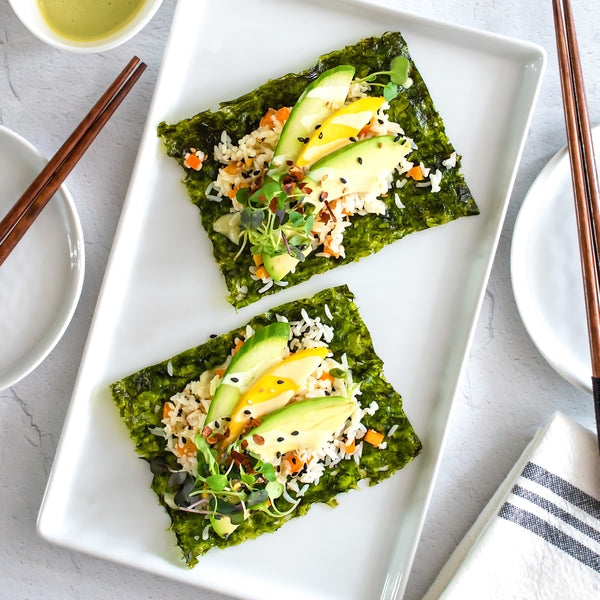
Classic pairings from Asian kitchens
Traditional plates offer many ideas for what to eat with seaweed snacks.
- Rice and sesame oil. Add a pinch of salt and roll it up for a fast kimbap vibe.
- Tuna mayo. Mix tuna with mayo and a touch of soy. Spoon onto a sheet with cucumber.
- Kimchi and egg. Fry or soft boil an egg. Add a bit of kimchi and wrap.
- Tofu and scallions. Use soft tofu cubes with soy and sesame seeds.
- Miso soup and rice. Sip the soup and use seaweed sheets to scoop warm rice.
- Salmon and avocado. A simple hand roll without the fuss.
These classics work because they balance fat, acid, and umami. You get layers of taste in each bite.
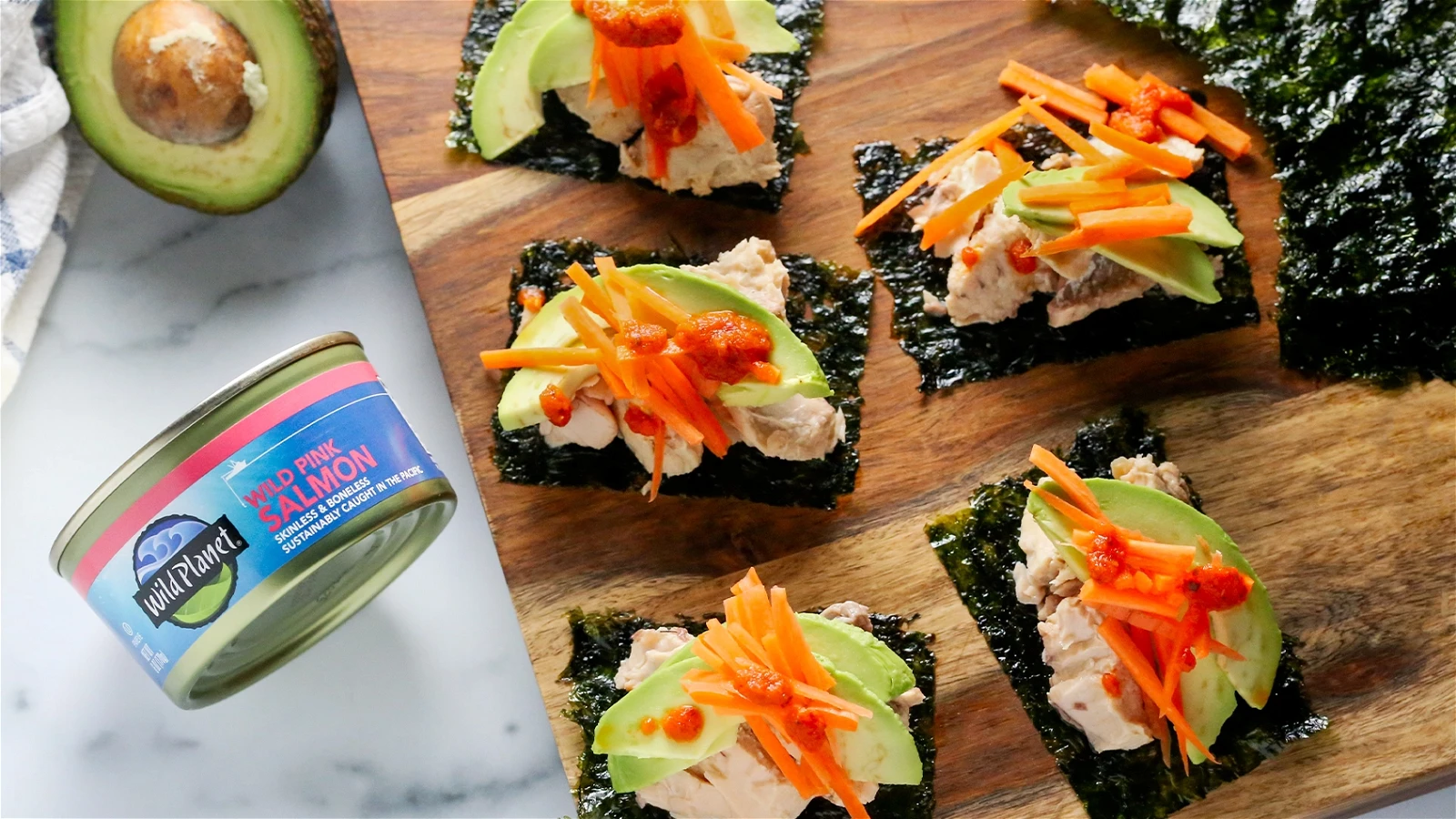
High-protein and meal prep combos
If you train or need a steady lunch, here is what to eat with seaweed snacks to boost protein.
- Canned tuna or salmon with Greek yogurt, lemon, and dill.
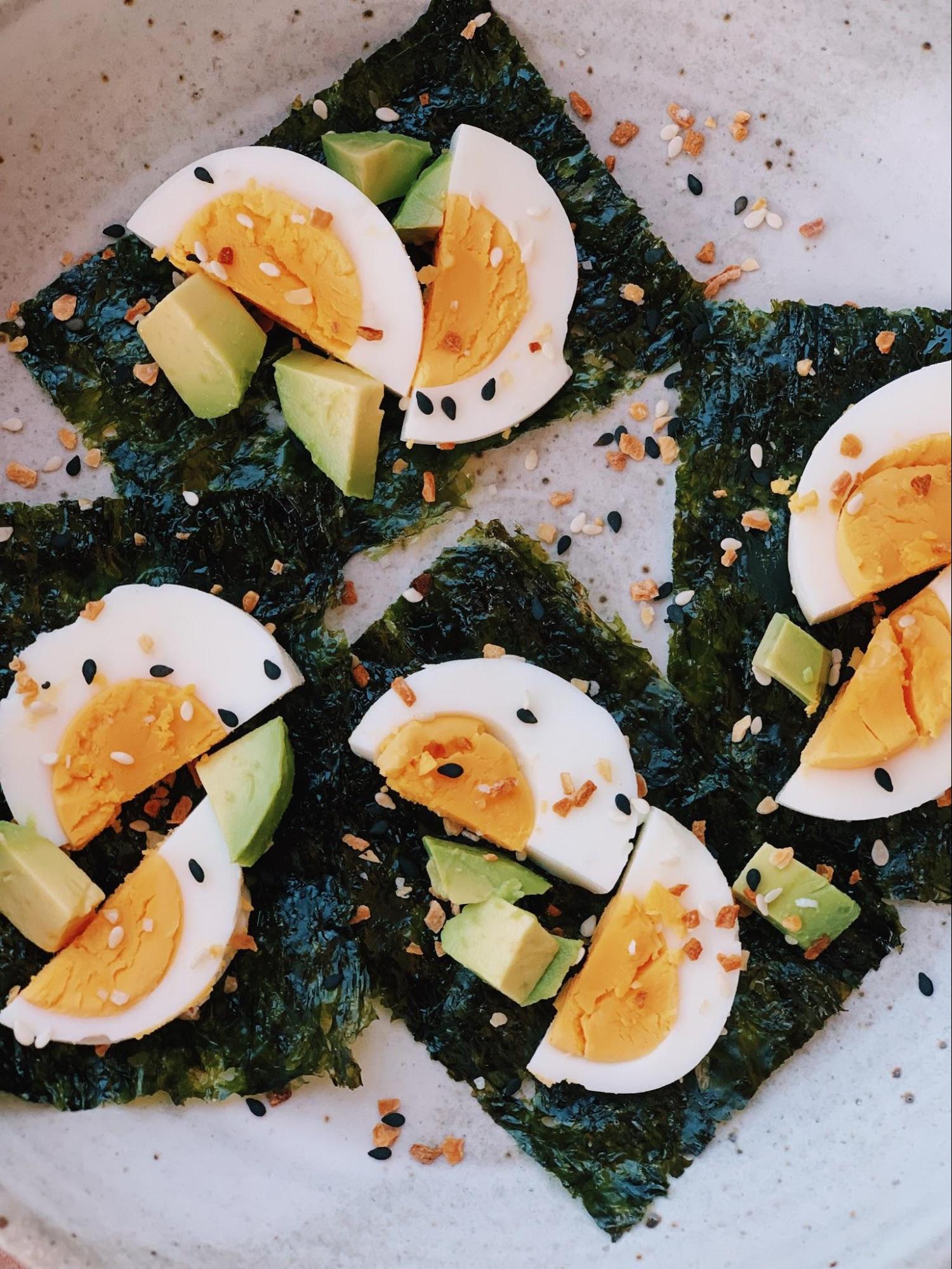
- Soft boiled eggs with chili crisp and scallions.
- Rotisserie chicken tossed with sesame oil and rice vinegar.
- Cottage cheese with cucumber and everything bagel seasoning.
- Edamame with a touch of sea salt and lime.
I pack a small bento: a tub of protein, sliced veg, a dip, and a stack of seaweed. It feels like sushi, without the work.

Low-carb, keto, and light snack ideas
You can keep carbs low and still enjoy what to eat with seaweed snacks.
- Avocado slices with furikake and lime.
- Smoked salmon with cream cheese and capers.
- Cucumber batons with spicy mayo.
- Sardines with lemon zest and olive oil.
- Pickled radish or pickles for snap and acid.
- Guacamole for a creamy, fiber-rich scoop.
These combos hit crunch, fat, and acid, which is key for satiety on low-carb plans.
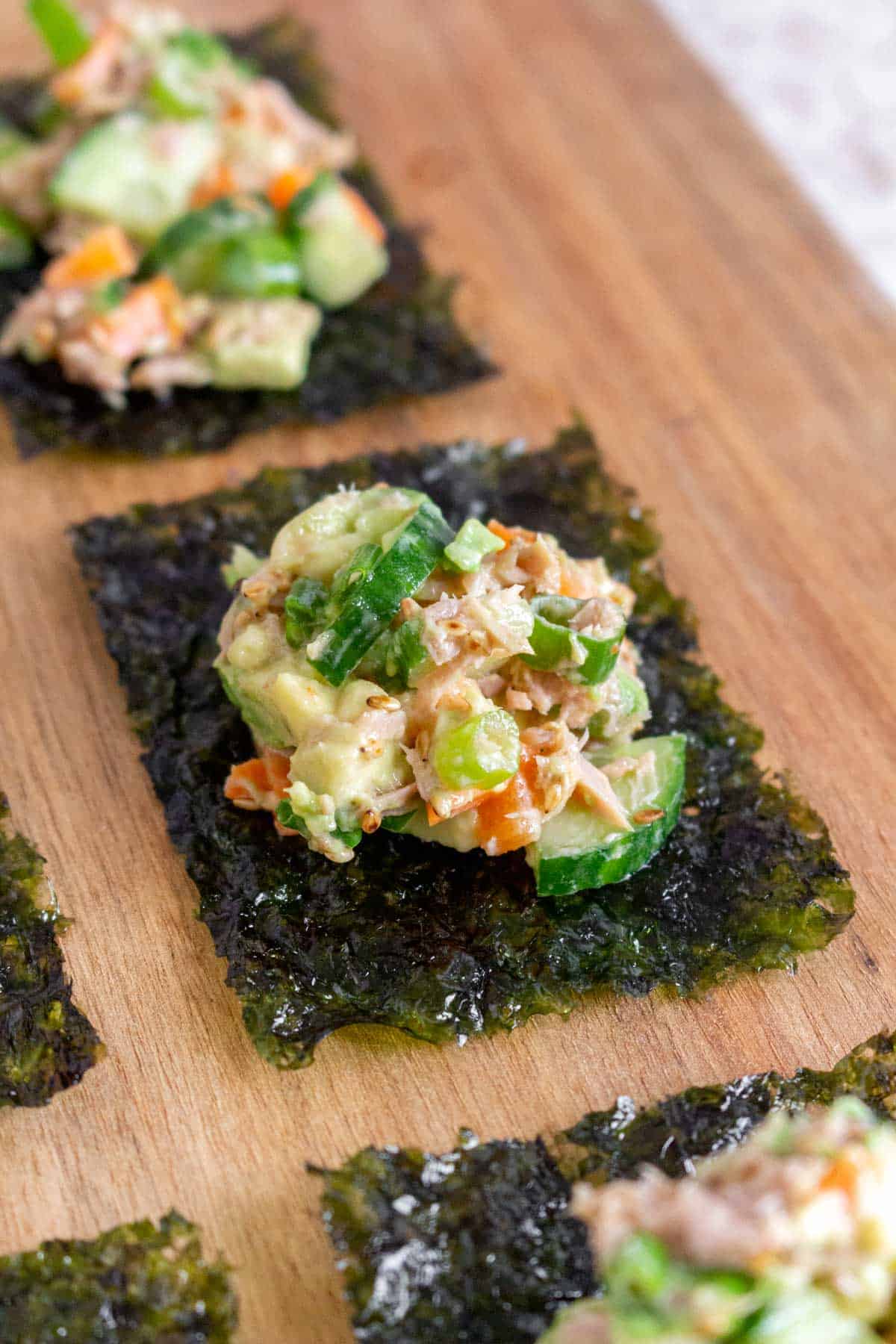
Vegan and vegetarian pairings
Plant-based eaters have many choices for what to eat with seaweed snacks.
- Hummus with roasted red peppers.
- Silken tofu with soy, ginger, and scallions.
- Tempeh strips glazed with tamari and maple.
- Avocado mash with lime and cilantro.
- Roasted sweet potato rounds with miso tahini.
- Sprouts and cucumbers with sesame seeds.
Note: Seaweed is rich in iodine. If you have thyroid concerns, moderate intake and talk with your clinician.
Dips and sauces that shine
Sauces can turn a snack into a craveable meal. When you plan what to eat with seaweed snacks, keep these on hand.
- Sriracha mayo. Creamy heat that loves eggs and tuna.
- Miso tahini. Nutty, salty, and great with roasted veg.
- Gochujang yogurt. Tangy and sweet-spicy for tofu or chicken.
- Wasabi soy dip. Sharp and salty for salmon or cucumbers.
- Guacamole or avocado crema. Rich and bright, perfect with crunchy veg.
I batch one sauce per week so snacks stay fresh and fun.

10 quick snack formulas using what to eat with seaweed snacks
Use these fast builds when hunger hits.
- Seaweed + avocado + lime + chili flakes.
- Seaweed + tuna yogurt salad + cucumber.
- Seaweed + soft egg + kimchi.
- Seaweed + cottage cheese + tomatoes + pepper.
- Seaweed + smoked salmon + cream cheese + capers.
- Seaweed + hummus + roasted peppers.
- Seaweed + tofu cubes + scallions + soy.
- Seaweed + chicken + sesame oil + pickled onions.
- Seaweed + guacamole + sliced radish.
- Seaweed + sardines + lemon zest.
Pro tip: Set up a “snack roll bar.” Lay out protein, creamy, crunchy, and saucy parts. That makes what to eat with seaweed snacks feel easy and fun.
Drinks that match the vibe
The right drink can frame what to eat with seaweed snacks.
- Green tea or genmaicha for a toasty, clean finish.
- Barley tea or iced oolong for a nutty note.
- Sparkling water with lemon to cut salt.
- Kombucha for tang and light sweetness.
- Light lager, sake, or soju for a casual night snack.
These drinks refresh your palate and keep each bite crisp.
Nutrition, benefits, and limits
Seaweed offers iodine, minerals, and fiber. It can support thyroid health if you need iodine. It also adds umami without heavy calories.
Be mindful of sodium. Some brands use extra salt or sugar. If you have thyroid issues or high blood pressure, pick low-sodium options and limit portions. Studies show seaweeds can hold trace metals. Choose trusted brands and vary your seaweed types to reduce risk.
A simple rule: enjoy what to eat with seaweed snacks a few times per week, with lots of fresh veggies and lean protein.
Storage and buying tips
Keep seaweed sealed and dry. Use the desiccant pack and an airtight jar. If sheets get soft, re-crisp in a warm oven for 1 to 2 minutes.
Scan labels. Look for seaweed, salt, and simple oils. I like avocado or olive oil over seed blends for a cleaner taste. Sample a few brands to find the roast and salt level you enjoy. That makes what to eat with seaweed snacks more consistent and fun.
Frequently Asked Questions of what to eat with seaweed snacks
What is the best protein to eat with seaweed snacks?
Canned tuna, salmon, eggs, tofu, and cottage cheese are great. They add fullness and balance salt and crunch.
Can kids eat seaweed snacks?
Yes, in small portions. Pair with fruit, rice, or yogurt to keep sodium in check.
Are seaweed snacks gluten-free?
Plain roasted seaweed is usually gluten-free. Check labels on flavored packs, as soy sauce or seasonings can add gluten.
Do seaweed snacks go with cheese?
Yes. Cream cheese, mozzarella, or mild cheddar work well. The fat softens the salt and brings out umami.
How do I make a fast seaweed snack plate?
Add a protein, a creamy element, a crunchy veg, and one sauce. Stack or roll bites as you eat.
Conclusion
Seaweed snacks are a flavor booster you can keep on hand. Mix creamy, crunchy, and fresh parts to build bites that hit all the notes. Start with one protein, one veg, and one sauce, and you will know exactly what to eat with seaweed snacks any day of the week.
Try one combo today and share your favorite pairing. Want more guides like this? Subscribe and drop a comment with your go-to seaweed snack mix.