

For most coffee drinkers in the United States, paper filters are best for a clean, light cup with less sediment, while reusable mesh filters are best for lower waste and lower long-term cost. The better choice depends on what matters most to you: taste, cleanup, convenience, cost, or waste.
A paper filter is simple. Use it once, then throw it away or compost it if local rules allow. A mesh filter can last for years, but it needs careful rinsing and regular cleaning. Mesh also lets more coffee oils and fine particles pass into the cup.
This guide compares reusable mesh coffee filters and paper filters for drip coffee makers, pour-over brewers, and similar methods used in American homes.

Source: storage.googleapis.com
Quick comparison: mesh coffee filters vs. paper filters
The table below shows the main trade-offs. Actual results can change with the filter shape, grind size, coffee dose, and brewing method.
| Feature | Reusable mesh filter | Paper filter |
|---|---|---|
| Waste | Very low after purchase | One filter per brew |
| Upfront cost | Usually higher | Usually low |
| Long-term cost | Often lower if kept in good shape | Ongoing filter cost |
| Coffee oils | More pass into the cup | Most are trapped |
| Fine sediment | More may pass through | Less reaches the cup |
| Flavor | Fuller and heavier | Cleaner and brighter |
| Cleanup | Rinse and wash the filter | Remove and discard |
| Risk of clogging | Can clog with oils and fine grounds | Can slow or clog with very fine grounds |
| Convenience | No need to restock filters | Fast and easy after brewing |
| Best for | Low waste and full body | Clean cups and easy cleanup |
The short answer: choose paper if you want the cleanest cup and the least maintenance. Choose mesh if you want to reduce disposable waste and enjoy a richer body.
How each coffee filter works
A coffee filter controls which parts of the brewed coffee reach your cup. It holds back used grounds while allowing water and dissolved coffee compounds to pass through.
Paper filters
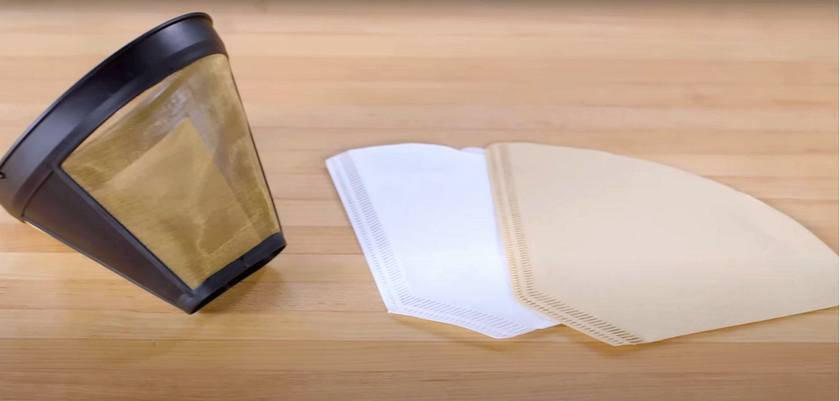
Paper has a tight, tangled structure. It catches most coffee grounds and much of the fine dust created during grinding. It also holds back many coffee oils.
This produces a cup that often tastes:
- Cleaner
- Lighter
- Brighter
- Less oily
- More consistent from brew to brew
Paper filters come in bleached white and natural brown forms. Bleached paper is usually pale white. Natural paper may add a mild paper taste if it is not rinsed first.
Reusable mesh filters
Mesh filters use a fine screen made from materials such as stainless steel or food-grade plastic. The openings are larger than the spaces in paper fibers.
Water flows through the mesh. Coffee oils and small particles can flow through, too. This can make the coffee feel thicker and more full-bodied.
A mesh filter does not create “unfiltered” coffee in the same way as a French press. It still holds back most of the larger grounds. However, it usually allows more fine sediment into the cup than paper does.
Source: brew-drip-coffee.com
Taste and texture: which filter makes better coffee?
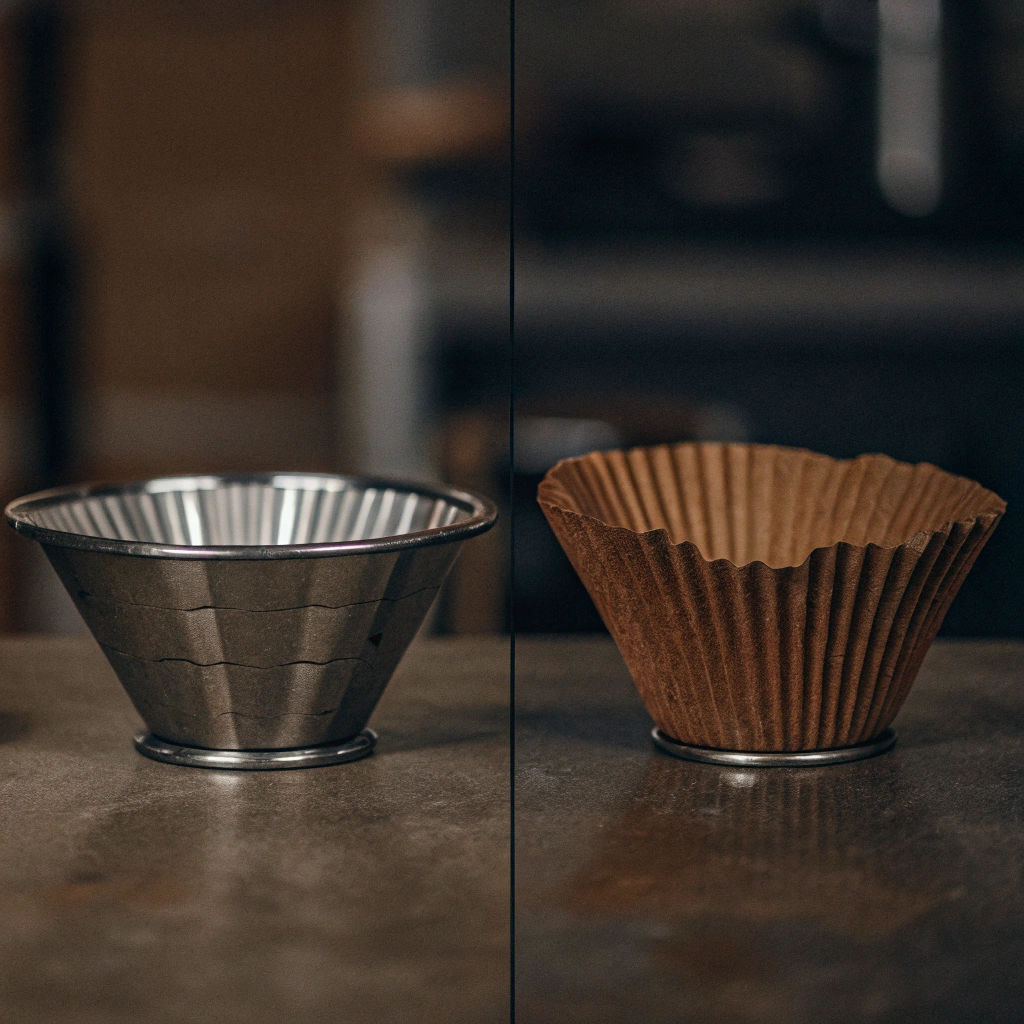
Neither filter makes better coffee for every drinker. The main difference is clarity versus body.
Paper filters remove more oils and fine particles. This gives coffee a crisp taste and a smooth-looking surface. Light-roast coffees may show more of their floral, fruit, and citrus notes with paper.
Mesh filters let more oils through. The result can taste rich and round. Dark roasts may feel heavier and more intense. Some people also prefer the small amount of sediment that settles at the bottom of the cup.
Choose paper when you prefer:
- A clean and clear cup
- Light or medium roasts
- Bright, fruit-forward flavors
- Less grit
- A brew that is easy to repeat
Choose mesh when you prefer:
- A fuller mouthfeel
- Dark or medium-dark roasts
- More coffee oils
- A heavier body
- A small amount of sediment
The filter is only one part of the result. Grind size, water temperature, brew time, coffee freshness, and the coffee-to-water ratio may have a larger effect.
A practical example
Suppose you brew 30 grams of coffee with 500 grams of water.
With paper, the cup may taste clear and light. With mesh, the same coffee may taste heavier and may leave a thin layer of fine particles in the cup.
If the mesh brew tastes muddy, use a slightly coarser grind. If the paper brew tastes thin, try a finer grind or a little more coffee. Change one variable at a time.
Source: coffeemachinetools.com
Health and coffee oils: what the evidence supports
Paper filters remove more coffee oils than mesh filters. Some of these oils include cafestol and kahweol, compounds known as coffee diterpenes.
Research has found that unfiltered coffee can raise blood cholesterol more than filtered coffee. Paper-filtered coffee generally contains much less of these compounds than coffee made by methods that do not use a paper filter.
This does not mean that mesh-filtered coffee is unsafe for everyone. It means the filter can change the amount of coffee oil in the drink.
People who have high cholesterol, heart disease, or a treatment plan that includes dietary limits should ask a health professional which coffee type fits their needs. Do not change prescribed care based on a filter comparison.
A paper filter also does not remove all substances from coffee. It mainly changes the amount of oils and particles that reach the cup.
For background, see:
- European Food Safety Authority information on caffeine
- A peer-reviewed review of coffee diterpenes and cholesterol
- Harvard T.H. Chan School of Public Health information on coffee
Source: meshperformance.org
Cost and waste: which filter is cheaper?
A reusable mesh filter can cost less over time, but the answer depends on how often you brew and how long the filter lasts.
A simple break-even calculation
Use this formula:
Break-even brews = mesh filter price ÷ paper filter price per brew
For example, assume:
- Mesh filter price: $15
- Paper filter price: $0.08 each
The break-even point is:
$15 ÷ $0.08 = 187.5 brews
You would need about 188 brews to match the purchase price. This does not include water, soap, replacement parts, or your time.
If you brew once each day, that is about six months. If you brew only twice a week, it takes much longer.
Paper filters create more daily waste. Yet the total environmental effect is not decided by filter waste alone. It also includes:
- How the filter is made
- How the mesh filter is made
- How long the mesh filter lasts
- How much water and energy cleaning requires
- Whether used grounds are composted
- Local waste and compost rules
A paper filter may be compostable in some systems, but local programs differ. Some accept paper coffee filters and grounds. Others do not. Check your city, county, or compost provider before putting them in a collection bin.
A reusable filter is not automatically better in every situation. Its main benefit grows when you use it often and keep it in service for a long time.
Source: purehqfilters.com
Cleanup and maintenance
Paper filters are easier to clean up. Lift out the filter, empty it, and rinse the brew basket if needed.
Mesh filters need more care because oils and fine grounds can stay trapped in the screen. A quick rinse after brewing helps prevent buildup.
How to clean a reusable mesh coffee filter
- Let the filter cool enough to handle safely.
- Empty the grounds into the trash or compost.
- Rinse the filter from the clean side toward the dirty side.
- Use a soft brush if grounds remain in the mesh.
- Wash it with mild dish soap when it feels oily.
- Rinse well so no soap remains.
- Let it dry fully before storing it.
Do not knock the filter hard against a sink or trash can. Repeated impacts can bend the frame or damage the screen.
Some filters are dishwasher-safe. Check the maker’s instructions before using a dishwasher. High heat and strong detergent may damage certain plastic parts, coatings, or adhesives.
Deep cleaning
If the filter smells stale or looks oily, soak it in warm water with a suitable cleaning product. Follow the product directions. Rinse it very well afterward.
Avoid mixing cleaning chemicals. Never mix bleach with vinegar, ammonia, or other household cleaners.
Replace the filter if the mesh is torn, the frame is cracked, the coating is peeling, or the filter no longer fits the brewer. A damaged filter may allow grounds into the brew basket or fail to sit securely.

Source: pinterest.com
Brewing tips for better results
A mesh filter often needs a small adjustment. Do not use the exact same grind and expect the same cup as paper.
For a reusable mesh filter
- Start with a medium grind.
- Use fresh coffee and clean water.
- Do not pack the grounds down.
- Rinse the filter after every brew.
- Use a coarser grind if the cup tastes muddy.
- Use a finer grind only if the coffee tastes weak and watery.
- Clean the filter when flow slows or the coffee tastes stale.
For a paper filter
- Match the filter shape to the brewer.
- Rinse paper filters when you notice a paper taste.
- Preheating the brewer and cup can help keep coffee hot.
- Use the grind size recommended for the brewer.
- Avoid grinding too fine, since this can slow the flow.
- Use a fresh filter for each brew.
If your coffee tastes bitter
Possible causes include:
- Water that is too hot
- A grind that is too fine
- A brew time that is too long
- Too much coffee
- Old coffee oils in a mesh filter
Try a slightly coarser grind first. If you use mesh, clean the filter before changing several other settings.
If your coffee tastes weak
Possible causes include:
- A grind that is too coarse
- Too little coffee
- Too much water
- A brew time that is too short
- Uneven water flow
Use a little more coffee or grind slightly finer. Make one change, then taste the next brew.
Source: coffeecherish.com
Which filter should you choose?
Use this decision guide.
Choose a reusable mesh filter if:
- You brew coffee often.
- You want to cut down on disposable filters.
- You like a rich, heavy cup.
- You do not mind rinsing and cleaning the filter.
- You want to avoid keeping paper filters in stock.
- You accept some fine sediment.
Choose paper filters if:
- You want the cleanest cup.
- You prefer bright and delicate flavors.
- You want the fastest cleanup.
- You want to reduce coffee oils and fine particles.
- You brew for guests with different taste preferences.
- You do not want to clean a filter each day.
Use both if your needs change
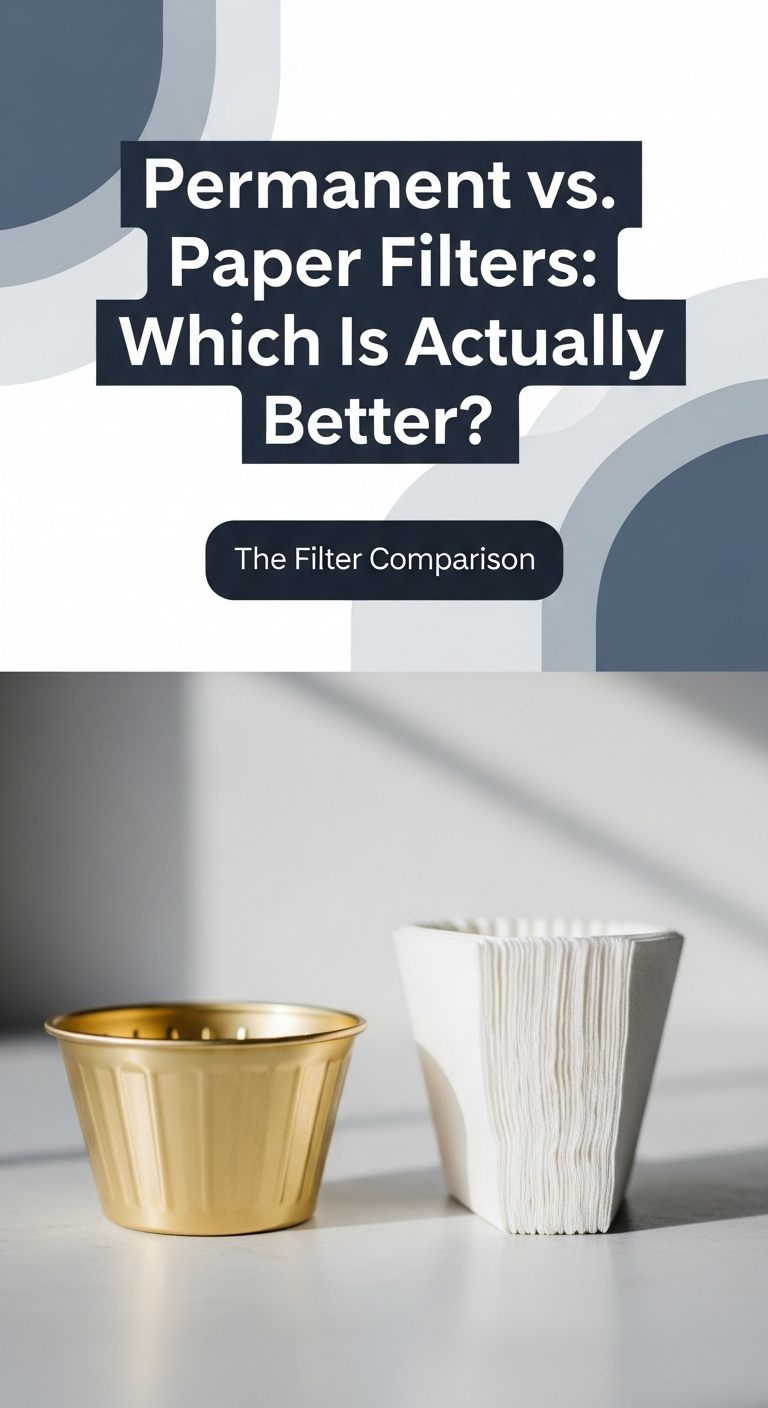
Many coffee drinkers keep both options. Mesh works well for a full morning cup. Paper works well when you want a clear pour-over or easy cleanup.
You can also use a paper filter inside some mesh baskets, but check the brewer’s instructions first. Adding layers may slow the flow and cause the basket to overflow.
Source: coffeexplore.com
Common mistakes to avoid
Buying the wrong size
A filter may fit the basket but sit too low, too high, or unevenly. Check the brewer model and basket size before buying.
Treating “stainless steel” as proof of quality
Stainless steel describes a material, not the full design. Look at the mesh, frame, seams, handle, and fit. A poorly made filter can bend or clog.
Leaving wet grounds in the mesh
Wet grounds can grow mold and create stale odors. Empty and rinse the filter soon after brewing.
Relying on taste alone to judge cleanliness
A mesh filter may look clean while oils remain in the screen. If water drains slowly, the filter smells old, or coffee tastes rancid, clean it more deeply.
Pouring grounds down the sink
Coffee grounds can collect in pipes. Put used grounds in the trash or an approved compost stream instead.
Ignoring the brewer’s instructions
Some brewers require a specific filter shape or warn against certain reusable baskets. Follow the manual, especially for automatic machines with overflow protection.
Expecting one filter to suit every coffee
A filter that works well for a dark roast may not show the best qualities of a light roast. Taste, grind, and brew method all matter.

Source: storage.googleapis.com
Frequently asked questions
Are reusable mesh coffee filters safe?
A reusable mesh filter made for coffee brewing is generally intended for food contact when used as directed. Check the product materials and instructions. Do not use a filter with a damaged coating, cracked plastic, loose parts, or rust that affects the brewing surface.
Do paper filters remove caffeine?
Paper filters do not remove all caffeine. The caffeine level depends more on the coffee type, dose, grind, water, and brew time. Paper mainly reduces oils and fine particles.
Do mesh filters make stronger coffee?
Mesh filters can make coffee taste stronger because more oils and fine particles reach the cup. They do not automatically increase the amount of dissolved caffeine. A stronger taste and more caffeine are not the same thing.
Can you use a reusable mesh filter in any coffee maker?
No. Fit and shape matter. Check the brewer manual and the filter maker’s compatibility list. A filter that does not sit correctly can cause slow flow, overflow, or grounds in the finished coffee.
Should you rinse a paper coffee filter?
Rinsing can reduce a paper taste and warm the brewer. It is most useful with natural brown filters or when the paper flavor is noticeable. Do not rinse so much that the filter shifts or collapses.
Key takeaways
- Paper filters make cleaner coffee with less sediment and fewer coffee oils.
- Mesh filters create more body and produce less disposable waste.
- Paper is easier to use and clean.
- Mesh can cost less over time when used often and maintained well.
- People managing cholesterol should ask a health professional whether filtered coffee is a better fit.
- The best choice depends on taste, cleanup, cost, waste, and brewer compatibility.
Final recommendation
Choose a paper filter if your top goals are clean flavor, easy cleanup, and lower coffee-oil content. Choose a reusable mesh filter if you value low waste, long-term use, and a fuller cup.
If you are unsure, try both with the same coffee, water amount, and brew time. Compare the taste, sediment, cleanup, and daily effort. That simple test will show which filter fits your routine best.