

The best pan is a heavy, rimmed roasting pan with a sturdy rack.
You bought a beautiful prime rib. Now you need the right pan to do it justice. I’ve seen roasts ruined by thin, warped pans and soggy racks. Fat pools. Edges burn. Meat steams instead of browning. The fix is simple. Use a rigid, high-sided roasting pan with a rack that lifts meat above drippings. That setup gives steady heat and better air flow. It keeps the bottom from boiling in fat. It also makes gravy a breeze. In this guide, I’ll show you the best pan to cook prime rib in oven for every need, oven, and budget.
12×16 Large Roasting Pan + Flat Rack (Nonstick)

This 12×16 nonstick roaster with a flat rack checks the big boxes. It is large, rigid, and easy to handle. The pan walls help control splatter and hold aromatics. The flat rack lifts the roast and allows steady air flow. That is key for even browning and a tender center. It is the kind of design I grab when I want a no-fuss roast.
I like the foldable rack handles. They make it easier to lift a heavy prime rib without squeezing tongs under the meat. The nonstick surface helps with cleanup. Pan gravy releases with less scraping. Heat spreads well across the base. That means fewer hot spots and fewer dark patches under the roast.
Pros:
- Generous 12×16 size fits bone-in prime rib up to 10–12 pounds
- Flat rack promotes airflow for even heat and browning
- Foldable handles make lifting safer and simpler
- Nonstick interior helps with deglazing and cleanup
- High sides manage splatter and hold veggies or broth
- Sturdy build resists flex and warping in hot ovens
Cons:
- Flat rack does not cradle the roast like a V-rack
- Nonstick needs nylon or wood tools to avoid scratches
- Large size can be bulky for small ovens
My Recommendation
If you want simple, stable roasting for big holiday cuts, this is a strong pick. The size and rack design make it easy to nail a rosy center with crisp edges. It is also forgiving if you are new to roasting. For many home cooks, this is the best pan to cook prime rib in oven without stress.
| Best for | Why |
|---|---|
| Large family roasts | 12×16 space handles big prime ribs with room to spare |
| Easy cleanup | Nonstick helps drippings release for gravy and cleaning |
| Even browning | Flat rack supports airflow and steady heat across the meat |
16.75×13 Porcelain Broiler Pan + Rack (Speckled)

This speckled porcelain broiler pan is a different tool with a smart twist. It has a slotted top and a solid bottom. Fat drains down and away from the meat. Heat moves fast around the roast for crisp edges. The porcelain coating is tough and resists staining. It can handle heat up to 550°F, which is great for a final sear.
While it is not a deep roaster, it shines for airflow and fat control. I like it for smaller rib roasts or a reverse-sear plan. Start low on a rack. Then shift to this broiler pan for a high heat finish. That gives a bold crust with clean fat drainage. Cleanup is also easy thanks to the slick porcelain surface.
Pros:
- Broiler-safe up to 550°F for strong crusts
- Slotted top drains fat into the base pan
- Porcelain coating resists stains and is easy to clean
- Solid build with good heat circulation
- Great for finishing prime rib after a slow roast
- Doubles as a fish or steak broiler pan
Cons:
- Shallow depth is not ideal for large amounts of broth or veg
- Size limits very large bone-in roasts
- Not a classic deep roasting pan with high walls
My Recommendation
Pick this if you love a bold crust and low-mess fat drainage. It works best for modest prime ribs or as a high-heat finisher. If you reverse sear often, this can be the best pan to cook prime rib in oven for your style. It delivers airflow, drainage, and a clean, crisp result.
| Best for | Why |
|---|---|
| High-heat finishing | Porcelain pan handles up to 550°F for a deep crust |
| Lower fat cooking | Slotted top drains fat away from the roast |
| Easy cleanup | Porcelain resists sticking and wipes clean |
11×15 Roasting Pan + V-Rack (Nonstick)
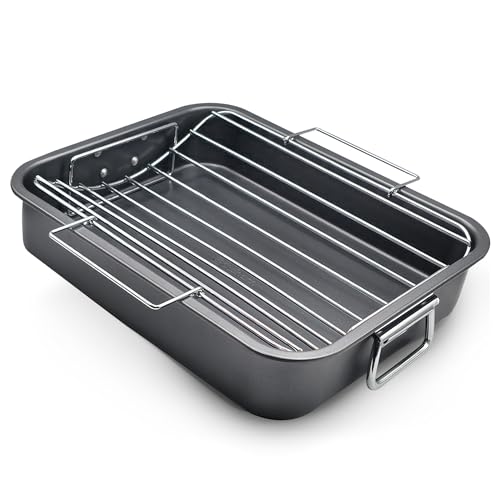
The V-rack is a star for prime rib. It cradles the roast and exposes more surface to air. That helps browning and keeps the bottom from stewing. This 11×15 set hits a sweet spot for most home ovens. The pan is nonstick, which helps with pan sauces and scrubbing. Foldable handles on the rack make lifting safe and swift.
I often reach for a V-rack when I want uniform doneness edge to edge. Fat renders and falls into the pan. Aromatics sit below and perfume the meat. The size is great for a 4–8 pound rib roast. If you like neat slices and a solid crust, this setup makes that job easier.
Pros:
- V-rack cradles roast for even cook and better crust
- 11×15 size fits most ovens and mid-size roasts
- Nonstick pan helps release fond for gravy
- Foldable rack handles improve control when lifting
- High sides manage juices and reduce splatter
- Balanced weight reduces flex and warping
Cons:
- Too small for very large holiday roasts
- Nonstick needs gentle tools and care
- V-rack can mark very soft fat caps if over-tightened
My Recommendation
I suggest this one if you want the classic prime rib look and feel. The V-rack design is forgiving and promotes an even cook. For small to medium roasts, it can be the best pan to cook prime rib in oven with very steady results. It also stores well and cleans up fast.
| Best for | Why |
|---|---|
| Medium rib roasts | 11×15 size fits 4–8 lb cuts with space for airflow |
| Even, gentle roasting | V-rack lifts and cradles for uniform heat |
| Easy sauce making | Nonstick base releases fond with less scraping |
Cook Pro 4-Piece Lasagna & Roasting Pan
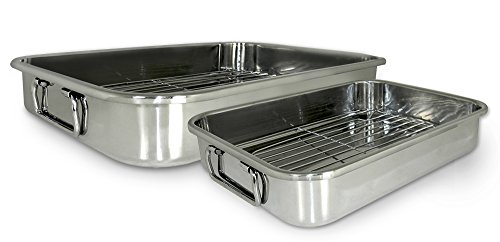
This Cook Pro set pulls double duty. It is a lasagna pan that also roasts well. You get a pan and racks that slot in as needed. That helps if your kitchen is tight on space. The steel build stands up to daily use. It is simple, tough, and easy to stack and store.
For prime rib, the depth and rack options make sense. You can roast a smaller rib roast and still have space for root veg. The open design allows good airflow and even browning. Cleanup is simple with hot water and a scrub. It is not fancy, but it gets the job done with less fuss and less storage space.
Pros:
- All-in-one set saves space in small kitchens
- Good depth for veg and broth under the roast
- Rack options support airflow and fat drainage
- Durable steel handles daily cooking tasks
- Multi-use: lasagna, casseroles, and roasts
- Great value if you want one pan for many jobs
Cons:
- Not as specialized as a premium V-rack roaster
- May be tight for very large rib roasts
- Finish can show wear with harsh scrub pads
My Recommendation
Choose this if you want one pan that can do many things. It is a strong pick for small homes, first apartments, or backup holiday gear. For compact roasts, it can still be the best pan to cook prime rib in oven without overspending. You also get daily use for pasta bakes and sides.
| Best for | Why |
|---|---|
| Small kitchens | One set covers roasting and baking in less space |
| Budget buyers | Good performance at a friendly price point |
| Weeknight flexibility | Handles lasagna, casseroles, and roasts with ease |
12×16 Large Roasting Pan + V-Rack (Nonstick)
This is the big sibling with the V-rack upgrade. The 12×16 size supports large holiday prime ribs. The V-rack holds the roast steady and exposes more surface to hot air. That boosts browning. The nonstick pan helps with deglazing and scrubbing. The foldable rack handles are a nice safety touch.
I use a large V-rack roaster when I want event-level results. It gives room for onions, carrots, and herbs under the roast. Drippings collect in a wide base. That makes a rich jus with less effort. The walls are high enough to manage splatter. The base is stiff enough to avoid bending under heavy loads.
Pros:
- Roomy 12×16 layout suits large bone-in prime ribs
- V-rack improves airflow and gives a deep, even crust
- Nonstick pan simplifies gravy making and cleanup
- Sturdy build resists flex, even with big roasts
- High sides keep juices contained and ovens cleaner
- Foldable handles offer safer lifting with gloves
Cons:
- Large footprint needs shelf space and big ovens
- Nonstick limits use of metal utensils
- Heavier to lift when loaded
My Recommendation
If you often cook for a crowd, this is a prime pick. The V-rack and big base help you get pro-level results at home. For many big cuts, this is the best pan to cook prime rib in oven because it handles size, heat, and cleanup well. It is built for holidays and big weekend meals.
| Best for | Why |
|---|---|
| Large holiday roasts | 12×16 space and V-rack handle size and weight |
| Deep, even browning | V-rack exposes more surface to hot air |
| Rich pan sauces | Wide base collects drippings for deglazing |
11×15 Roasting Pan + Flat Rack (Nonstick)

Think of this as the nimble, everyday roaster. It is 11×15 with a flat rack. It fits most ovens and slides onto a rack with less juggling. The nonstick interior keeps stuck-on bits from turning into a chore. The rack lifts the roast and lets the hot air do its work. You still get a nice crust without splatter overload.
I like this size for two to four people. It is easy to store. It is also handy for chickens, pork loins, and sheet-pan dinners. For prime rib, it suits a 4–6 pound roast. You can tuck in a few onions and garlic heads under the rack. That adds aroma and flavor to your jus.
Pros:
- Compact 11×15 size fits most standard ovens
- Flat rack supports even airflow and easy lifting
- Nonstick surface speeds cleanup
- High sides help with splatter and broth
- Versatile for smaller roasts and weeknight meals
- Lighter weight than big holiday roasters
Cons:
- Not ideal for very large rib roasts
- Flat rack lacks the cradle support of a V-rack
- Nonstick surface needs gentle care
My Recommendation
Get this if you cook smaller roasts and want a pan you will use often. It covers prime rib for a small group and pulls double duty all week. For many homes, this is the best pan to cook prime rib in oven without taking over the cabinet. It is practical and reliable.
| Best for | Why |
|---|---|
| Small households | 11×15 fits smaller roasts and stores easily |
| Frequent use | Lighter and simpler for weeknight meals |
| Clean finishes | Nonstick and rack help reduce stuck-on bits |
How I Judge the Best Pan to Cook Prime Rib in Oven
I judge pans by results first. I look at how well they brown. I check how even the color is across the roast. I also track cleanup time. A good pan should not fight you before or after dinner.
Here is what matters most to me:
- Size: A prime rib needs space. Air should move around the sides.
- Stiff base: A rigid pan means stable heat and safe lifting.
- Rack design: A rack lifts the meat. V-racks cradle. Flat racks are flexible.
- Wall height: High sides hold broth and reduce splatter.
- Surface: Nonstick helps with cleanup. Bare steel browns fast. Porcelain is tough.
- Handles: Foldable or fixed handles save fingers and improve control.
Food science backs these points. Dry heat drives a better crust. Airflow matters. A rack stops the bottom from steaming in fat. A wide base gives more fond. That fond turns into great gravy. These traits define the best pan to cook prime rib in oven.
Pro Tips for Prime Rib Success
Use these tips with any of the pans above. They raise your odds of a juicy center and a crisp crust.
- Salt early. Salt the roast 24–48 hours ahead. Let it sit in the fridge, uncovered. Dry surfaces brown better.
- Let it come to room temp. Take it out 1–2 hours before cooking.
- Use a rack. Lift the roast. Do not let it sit in its drippings.
- Start low, finish hot. Cook at 225–275°F to target temp. Then blast at 475–500°F for a short crust.
- Use a probe. Aim for 120–125°F for rare. 130–135°F for medium-rare. Pull early. It will rise as it rests.
- Rest at least 20–30 minutes. Juices settle. Slices stay moist.
- Deglaze the pan. Use broth or wine. Scrape the fond. Reduce to a glossy jus.
With the right method and the right gear, any of these can be the best pan to cook prime rib in oven for your home, taste, and schedule.
FAQs Of best pan to cook prime rib in oven
What size pan do I need for prime rib?
A 12×16 pan fits large bone-in roasts. An 11×15 pan fits 4–8 pound roasts. Leave at least an inch of space around the meat for airflow.
Is a V-rack better than a flat rack?
Both work. A V-rack cradles the roast and boosts even browning. A flat rack is flexible and easier to load. Pick based on your roast size and comfort.
Should I add water or broth to the pan?
Add a cup of broth under the rack if you want a softer environment and easier gravy. Do not submerge the meat. Keep the roast lifted on the rack.
Can I cook prime rib without a rack?
You can, but it is not ideal. The bottom can steam and turn pale. If needed, set the roast on onion halves or carrots to lift it.
What material is best for browning?
Heavy steel or aluminum-core pans brown well. Porcelain and nonstick help with cleanup. The key is a rigid base and proper airflow.
Final Verdict: Which Should You Buy?
For big holidays, the 12×16 Large Roasting Pan + V-Rack is my top pick. It handles size, airflow, and gravy like a pro. It is the best pan to cook prime rib in oven for most large families.
For smaller roasts, grab the 11×15 Roasting Pan + V-Rack. If you love high-heat finishes, the porcelain broiler pan is a great add-on.
Why the Right Roasting Pan Matters
A prime rib is not cheap. The right pan protects that investment. It keeps heat steady and air moving. That means more even doneness. It also means better color and texture. The rack and walls work like a frame for your roast. They guide fat and keep the base clean.
With the best pan to cook prime rib in oven, you also make better sauce. Fond forms on the base. It releases with a splash of broth or wine. You get a glossy jus in minutes. That is where much of the flavor lives. Good gear makes it easy.
Choosing the Best Size and Rack Type
Size is first. If the roast touches the sides, heat does not move right. A 12×16 pan handles big roasts and lots of veg. An 11×15 pan is perfect for mid-size cuts. Leave space on all sides.
Rack type is next. A V-rack cradles and exposes more surface. It helps with browning and even cooking. A flat rack is flexible and stable. It can be better for odd shapes. Both can be the best pan to cook prime rib in oven, based on your roast and your method.
Care and Maintenance Tips
Let your pan cool before washing. Hot water on a hot pan can warp it. Use nylon tools on nonstick. Avoid harsh pads that scratch surfaces. For stuck-on bits, soak with hot water and a little baking soda.
Store racks dry. Wipe the corners and folds. A dry rack lasts longer and resists rust. Keep your set ready. The best pan to cook prime rib in oven should serve you for years with simple care.
Simple Prime Rib Timing Guide
Every oven is different. Use a probe for safety. But here’s a simple plan that pairs with any pan.
- Preheat to 250°F. Place roast on rack in the center.
- Cook to 118–120°F for rare or 128–130°F for medium-rare.
- Rest 20–30 minutes. Raise oven to 500°F.
- Return roast for 6–10 minutes to set the crust.
- Rest 10 minutes. Slice and serve with pan jus.
This plan uses steady heat and a short blast to finish. It works with any of the picks above. With the best pan to cook prime rib in oven, your crust will sing and your center will glow.
Common Mistakes to Avoid
- Using a cookie sheet with no sides. Fat can spill, and heat does not hold steady.
- Letting the roast sit in its juices. Always use a rack or veg bed.
- Skipping the rest. Juice will run. Meat will dry.
- Guessing doneness. Use a probe for accuracy.
- Overcrowding the pan. Leave space for airflow and even color.
A good pan and a simple plan fix most of these issues. That is why choosing the best pan to cook prime rib in oven matters so much. It sets you up to win.
My Hands-On Notes on Heat and Browning
Prime rib loves gentle heat. High heat at the start can burn the edges before the center warms. A sturdy pan spreads heat. A rack ventilates the bottom. The result is a steady climb to your target temp. Then a short, hot blast seals the deal.
I find that a V-rack adds an edge for very even browning on larger roasts. Flat racks are a touch easier to load and clean. Both work. The key is a firm base that does not flex. That makes the best pan to cook prime rib in oven feel like part of the oven itself.
Pan Gravy in Three Simple Steps
Here is my crash course for a rich pan sauce after roasting.
- Skim fat. Leave a thin layer for flavor. Keep the good bits.
- Deglaze with broth or wine. Scrape the fond with a wooden spoon.
- Reduce to a glossy coat. Finish with a knob of butter and black pepper.
Nonstick helps when scraping. Porcelain resists stuck-on sugar. A wide 12×16 base gives more fond. That is another point for picking the best pan to cook prime rib in oven for your style.
Final Buying Tips
Match the pan to your oven and your guest list. If you host big meals, go 12×16 with a V-rack. If you cook for four, an 11×15 pan is easier to store and clean. If you crave a bold crust, add a broiler pan to your kit.
Pick sturdy handles. Ensure the rack fits tight but removes easily. Choose a surface you can maintain. These details sound small. They add up to the best pan to cook prime rib in oven for your kitchen and your skill set.