

The best paella pan is 15–16″ carbon steel from Garcima for authentic socarrat.
You plan a sunny Sunday cookout. Friends bring shrimp, saffron, and smiles. But your skillet is too small, and the rice steams instead of toasting. I’ve been there. The right pan turns mush into magic. With the best paella pan, heat spreads fast, rice cooks in one even layer, and you get that prized crispy socarrat. This guide breaks down the top pans in 2026, what size to buy, and which works on gas, induction, grill, or oven. If you want bold flavor, easy cleanup, and repeatable results, you’re in the right place.

Garcima 13 1/2-inch Pata Negra…
Professional grade carbon steel is extra thick and durable and conducts heat well; Requires a bit of maintenance after washing Can be used on a gas or charcoal grill, on…

Garcima 16-Inch Pata Negra Restaurant…
Authentic paella pan; Made in Spain Serves 4 to 6. Top rim-to-rim dimensions: 16.25 inches. With handles: 20.25 inches Included with pan is manual for use and care, plus a…

GreenPan x Bobby Flay 15”…
THE ULTIMATE PAELLA PAN: Crafted for big gatherings, this 15” carbon steel paella pan is your go-to for golden, crispy-bottomed paella, roasted vegetables, sizzling seafood, and more. PREMIUM CARBON STEEL:…
Garcima 13.5″ Pata Negra Paella Pan (34 cm)

This compact restaurant-grade pan is built in Spain for daily use. The Pata Negra line uses thicker carbon steel than standard pans. That means steadier heat, better browning, and less warping. At 34 cm (about 13.5 inches), it cooks for two to four people with ease.
The dimpled surface helps oil spread and aids even heating. It thrives on gas, a grill, or a paella burner. It can go in the oven too. You will need to season it and keep it dry, like any true carbon steel pan.
Pros:
- Thicker restaurant-grade steel for steady heat
- Ideal size for couples or small families
- Dimpled base encourages even rice and socarrat
- Riveted handles feel strong and secure
- Great on gas stoves, grills, and ovens
Cons:
- Not ideal for induction without an adapter
- Requires seasoning and careful drying
- Too small for larger parties
My Recommendation
If you cook for two to four, this is a sweet spot. It heats fast and delivers reliable socarrat in a tight footprint. It is a great choice for those who want the best paella pan feel without a huge pan to store. It’s also forgiving for first-timers due to its thicker build.
Choose this if you cook on gas or a grill and value durability. Season it once, maintain a light coat of oil after washing, and it will serve for years. It offers high value and steady stock from a trusted maker in Spain.
| Best for | Why |
|---|---|
| Couples and small households | Right-sized surface for 2–4 servings |
| Authentic socarrat seekers | Thicker steel and dimpled base for crisp rice |
| Gas or grill cooking | Handles high heat and open flame well |
Garcima 16″ Pata Negra Paella Pan (40 cm)
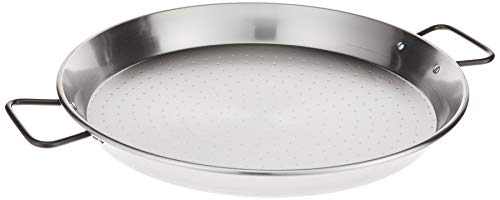
Want a little more room? The 40 cm Pata Negra hits the classic home size. It handles four to six servings without crowding rice. That extra width helps water evaporate evenly and makes socarrat easier to get right.
Like the smaller Pata Negra, it uses thicker carbon steel. It is rugged, responsive, and built for heat. Use it on gas, a wide grill, or a paella ring burner. Season it and keep it oiled after washing to prevent rust.
Pros:
- Ideal family size for 4–6 portions
- Restaurant-grade thickness resists warping
- Even heating for rice and proteins
- Sturdy, easy-to-grab loop handles
- Oven and grill compatible
Cons:
- Needs a wide burner or grill space
- Not a match for most induction cooktops
- Requires seasoning and oiling
My Recommendation
This is my go-to pick for most home cooks who ask for the best paella pan. It balances size, heat control, and ease. The 16-inch width keeps rice in one layer, which is key for texture. It also doubles as a killer pan for searing shrimp, chorizo, or vegetables.
Pick it if you host friends and want repeatable results. It rewards attention and gives that golden crust. For value and durability in 2026, it is hard to beat from a trusted Spanish brand.
| Best for | Why |
|---|---|
| Most home kitchens | Classic 16″ size suits 4–6 servings |
| Crisp socarrat finish | Thick steel and surface dimples |
| Frequent paella nights | Rugged build for regular use |
GreenPan x Bobby Flay 15″ Carbon Steel Paella Pan

This 15-inch pan blends classic carbon steel with kitchen-friendly perks. It arrives pre-seasoned, so you can cook right away. The flat bottom gives strong contact on most stoves. It is listed as induction compatible, which is rare for a paella-style pan.
It handles high heat in the oven and on the stove. It is PFAS-free and has no synthetic nonstick. That means you build seasoning over time, like pro chefs do. It is a smart bridge between pure tradition and modern convenience.
Pros:
- Pre-seasoned, so it’s ready to use
- Flat bottom helps on induction and electric
- PFAS-free with no synthetic coating
- Lighter than cast iron but still sturdy
- Oven safe for finishing and roasting
Cons:
- Handles can get very hot—use covers
- Seasoning may smoke on first use
- Hand-wash and dry to avoid rust
My Recommendation
If you want the best paella pan for an induction cooktop, start here. The flat bottom plays nice with modern ranges. You still get that fast heat, while the pre-seasoning saves time. It works well for rice dishes, searing, and even weeknight meals.
Choose it if you want easy upkeep and wide compatibility. It is a solid value from a trusted cookware brand. Great for cooks who love carbon steel but want less fuss on day one.
| Best for | Why |
|---|---|
| Induction home cooks | Flat bottom improves contact and heating |
| Beginners to carbon steel | Arrives pre-seasoned to reduce learning curve |
| Weeknight versatility | Good for paella, searing, and roasting |
20″ Carbon Steel Paella Pan (50 cm)

This 50 cm, 20-inch pan is a party-maker. It holds rice in a wide, thin layer for true Valencian style. With a large surface, steam escapes fast and flavors concentrate. You can cook for eight to twelve people outside with a paella burner or big grill.
Carbon steel gives you great heat response and a beautiful crust. You must season and dry it after use. It will not sit flat on most home stoves, so plan for outdoor heat. For events and holidays, it shines.
Pros:
- Huge surface for parties and events
- Great evaporation and flavor concentration
- Authentic socarrat across a broad area
- Rugged build for high-heat outdoor use
- Oven and grill friendly
Cons:
- Too big for most indoor stoves
- Needs space to store
- Seasoning care required
My Recommendation
If you cook for a crowd, this is the best paella pan size. It is built for outdoor burners and long, slow evaporation. You get deep flavor and that golden bottom crust. It turns gatherings into a show.
Pick it for block parties, big families, and holidays. Be sure you have the right burner or grill space. The value is high if you host often and want a centerpiece meal.
| Best for | Why |
|---|---|
| Large gatherings | Feeds 8–12 people in one batch |
| Outdoor cooking | Works perfectly with paella ring burners |
| Show-stopping socarrat | Wide base for even caramelization |
Garcima 15″ Carbon Steel Paella Pan (38 cm)

This classic 38 cm pan delivers Spanish tradition at a friendly price. It is lighter than the Pata Negra line, so it heats up fast. That quick response helps you dial in timing for rice and stock. It is a strong pick for 3–5 hearty servings.
It needs seasoning and care like all carbon steel. Expect a bit more flex due to thinner steel. It is perfect for gas stoves, smaller grills, and oven finishing. For many, it’s the first step toward mastering paella.
Pros:
- Great value for authentic results
- Heats fast and responds quickly
- Comfortable size for weeknight paella
- Good for gas, grill, and oven
- Trusted Spanish maker
Cons:
- Thinner than Pata Negra; needs careful heat management
- Not ideal on induction
- Requires seasoning and drying
My Recommendation
On a budget but want the best paella pan feel? This one hits the mark. It teaches you heat control and rewards patience. It is also light enough for daily use, which helps you practice more.
Choose it if you want to learn without over-spending. You can upgrade later to a thicker pan if needed. Meanwhile, you’ll cook wonderful rice dishes with honest texture.
| Best for | Why |
|---|---|
| Budget-minded cooks | Authentic carbon steel at a lower cost |
| Mid-size families | Comfortable 3–5 serving capacity |
| Learning heat control | Faster response shows when to adjust |
Paelluxe 16″ Tri-Ply Stainless Steel Paella Pan
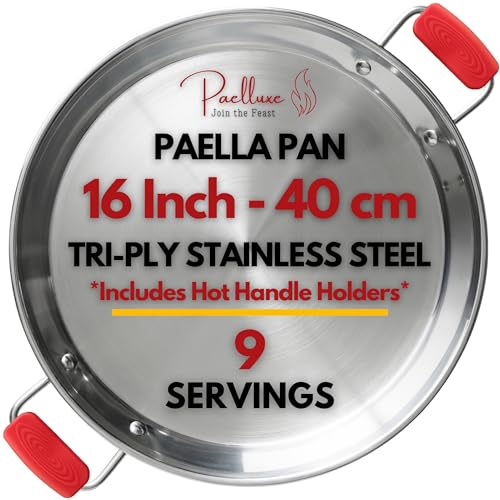
Hate rust and seasoning? This tri-ply stainless pan is for you. It sandwiches an aluminum core between stainless layers for even heat. No seasoning needed, and it is induction and oven safe. It includes heat-resistant handle covers for comfort.
Tri-ply spreads heat well and resists hot spots. Stainless is non-reactive, so tomato and seafood flavors stay clean. It still needs preheat and oil for best release. For those who want easy care and modern looks, it is a top pick.
Pros:
- Rust-free and no seasoning required
- Induction, gas, and oven compatible
- Even heating with aluminum core
- Great for tomato and seafood acidity
- Handle covers add safety
Cons:
- Food may stick if not preheated or oiled well
- Heavier than basic carbon steel
- Less traditional patina and flavor build
My Recommendation
If you want low maintenance and broad compatibility, this could be the best paella pan for you. It works on induction and looks sharp on the table. It is perfect for cooks who do not want to worry about rust or seasoning. It also doubles as a multi-use roasting and searing pan.
Choose it for modern kitchens and busy lives. You get clean flavors and easy cleanup. Inventory is steady, and it is well-suited to weeknight paella in 2026.
| Best for | Why |
|---|---|
| Low-maintenance cooking | No seasoning or rust worries |
| Induction users | Tri-ply base works on modern ranges |
| Tomato-heavy paellas | Non-reactive stainless keeps flavors pure |
How to Choose the Best Paella Pan (2026 Buying Guide)
-
Size and servings:
- 13–14 inches (33–36 cm): 2–4 servings
- 15 inches (38 cm): 3–5 servings
- 16 inches (40 cm): 4–6 servings
- 18 inches (46 cm): 6–8 servings
- 20 inches (50 cm): 8–12 servings, best outdoors
I like enough room so rice sits in a thin, even layer. That is a big key to the best paella pan choice. If rice stacks thick, it steams. Thin rice crisps.
-
Material:
- Carbon steel: The traditional, best paella pan material. It heats fast, forms fond, and builds seasoning. Needs oiling and can rust. Best flavor and control.
- Tri-ply stainless: Even heat, no rust, and induction friendly. Less “lived-in” patina. Needs proper preheat to reduce sticking.
- Enameled steel: Easy to clean and no seasoning needed. But enamel can chip and it runs heavier. Heat spread can be less even than tri-ply.
- Cast iron: Great retention but very heavy and slow to respond. Harder to keep rice thin and even. Not my first pick for paella.
- Nonstick: Coatings can break down at high heat. Most are not safe above moderate temps. I avoid nonstick for true paella.
-
Thickness:
The best paella pan balances mass and speed. Thicker pans like Pata Negra are stable and resist hot spots. Thinner pans heat faster but need care to avoid scorching. I suggest thicker steel for beginners. It forgives small mistakes. -
Heat source:
- Gas: Best control. Use a wide burner or straddle two burners.
- Paella ring burner: Ideal for big pans outdoors. Even, circular heat.
- Grill: Works great. Close the lid for even top heat when needed.
- Oven: Good for finishing. Not for the entire cook if you want deep socarrat.
- Induction: Choose flat-bottom or tri-ply stainless. Most traditional pans are slightly convex and do not sit flat. For induction, the GreenPan x Bobby Flay or Paelluxe tri-ply are strong choices.
-
Shape matters:
The best paella pan is wide and shallow with splayed sides. That helps evaporation and stirring. Dimples in traditional pans spread oil and add a little strength. -
Handles:
Riveted steel handles stay strong. They get hot, so have mitts or silicone covers ready. The Paelluxe includes handle covers, which help. -
Finish and care:
Carbon steel darkens over time. That patina helps release food. Clean with hot water, a soft brush, and as little soap as you can. Dry on low heat and rub with a thin coat of oil. That is how the best paella pan lasts decades.
How I Test Paella Pans
- Socarrat fidelity: I test how easily a pan sets a crisp base without burning. Even heat is key.
- Evaporation rate: A good pan evaporates stock steadily across the surface.
- Heat response: I look for fast sear and smooth transitions when lowering heat.
- Compatibility checks: Gas, grill, oven, and (when listed) induction contact.
- Maintenance: How fast it rusts if neglected. How the seasoning builds over a few cooks.
Over the years, I have owned and tested dozens of pans. I cross-check claims with maker specs and general cookware standards. In 2026, carbon steel still wins for tradition and taste. But tri-ply has come far for ease and evenness. So the best paella pan for you depends on heat source and how much care you want to give the pan.
How to Season a Carbon Steel Paella Pan (Fast and Simple)
- Wash new pan with warm water and a touch of soap. Dry fully.
- Heat the pan on low. Wipe a thin layer of high-smoke oil (grapeseed, canola).
- Let it shimmer, not smoke hard. Wipe off excess with a paper towel.
- Repeat 2–3 times, then cook a test batch: potatoes or onions help polymerize the oil.
- After each use, wash gently, dry on heat, and oil lightly. That is how you build a slick, bronze patina.
Tip: If rust appears, scrub gently with steel wool, rinse, dry, and re-season. Carbon steel forgives and comes back strong.
How to Get Perfect Socarrat Every Time
- Use the right rice: Bomba or Calasparra are great. Short-grain absorbs liquid and stays firm.
- Measure stock: Start with a 3:1 liquid-to-rice ratio by volume for Bomba. Adjust based on rice brand and pan evaporation.
- Spread rice thin: One even layer is vital. No mounds.
- Do not stir after the first few minutes: Let the bed set. Stirring releases starch and kills texture.
- Control heat: Strong boil early, then drop to a gentle simmer. When liquid is almost gone, raise heat for 60–90 seconds to set the crust. Listen for gentle crackle, not smoke.
- Rest: Pull off heat and rest five to eight minutes. Rice relaxes and absorbs final flavor.
Common Mistakes with Paella
- Pan too small: Rice piles up. It steams and turns soft.
- Too much stirring: You will get risotto, not paella.
- Low heat at the end: No crisp base forms. The best paella pan still needs that finishing blast.
- Wrong rice: Long-grain rice stays loose. Stick with Spanish short-grain.
Best Size Guide for Your Stove
- Standard 30-inch range with single wide burner: 13–15 inches is safe.
- 36-inch range with dual or bridge burners: 16–18 inches works well.
- Outdoor burner or wide grill: 18–20 inches shines.
- Induction hob with 9–12 inch ring: Choose a flat-bottom 11–15 inch pan or an induction-friendly tri-ply.
Storage and Care Tips
- Hang the pan on a pot rack to protect the seasoning.
- Slip a paper towel between nested pans to avoid scratches.
- Lightly oil the surface before long storage.
- For stainless tri-ply, soak stuck bits, boil water in the pan, then use a nylon scrubber. Bar keeper’s friend can restore shine.
Why Carbon Steel Still Wins in 2026
Carbon steel gives that dry, even heat you need for paella. It browns proteins fast. It evaporates liquid evenly. It also trains your cooking sense. After a few uses, it becomes more nonstick. That is why the best paella pan for purists remains carbon steel.
But stainless tri-ply has a place. If you cook on induction, want low upkeep, or do many acidic tomato dishes, stainless may be smarter for you. The best paella pan is the one you will use often and care for well.
Budget vs. Premium: Where to Spend
- Spend on size and thickness first. A right-sized, thicker pan beats any fancy add-on.
- Carbon steel is affordable even at higher grades like Pata Negra. That makes it easy to choose quality without overspending.
- Tri-ply costs more but saves time on care. If that means you cook paella more often, it could be worth it.
Accessories That Help
- Paella ring burner: Even heat for 16–20 inch pans outdoors.
- Long spoon or spatula: Reach across the pan without burning your hand.
- Heatproof gloves or mitts: Handles get very hot on all paella pans.
- Lid or foil: Useful for resting or finishing without drying out the top.
Sustainability Notes
Well-kept carbon steel can last decades. That cuts waste and cost over time. Stainless tri-ply is also durable. Choosing a pan that you will keep and love is a smart kitchen investment.
SEO Tips to Remember When Shopping
If you search for the best paella pan, include your heat source and size. For example, “best paella pan induction 15 inch” or “best paella pan 16 inch gas.” That filters to models that fit your kitchen. It also helps you avoid buying a pan that is too big for your stove.
Final Sizing Cheat Sheet
- 13.5 inch: Date night, small kitchens, focused heat.
- 15–16 inch: Best all-around home size. Most control. Easiest to learn.
- 20 inch: Big events outdoors. Needs a ring burner or large grill.
The Bottom Line on Materials
- If you want heritage flavor and a living finish, choose carbon steel. It is still the best paella pan for that classic crust.
- If you want easy care and induction-ready performance, choose tri-ply stainless. It is the best paella pan for convenience and modern ranges.
Honed Advice After Hundreds of Batches
I have burned rice. I have under-salted stock. I have used pans that were too small. Each miss teaches you. Once you find the right size and material for your stove, mistakes fade. The best paella pan becomes a tool you trust, like a sharp chef’s knife. And paella nights become a rhythm you look forward to.
H2O, Salt, and Stock Wisdom
- Salt your stock like the sea. Rice is bland until it drinks flavor.
- Good stock is the base of great paella. Chicken, seafood, or mixed—keep it warm nearby.
- Add saffron early so it blooms. It perfumes the rice, not just colors it.
Protein Placement
- Sear proteins first for fond. Remove, cook rice, then nestle proteins back in. That keeps textures right. The best paella pan surface helps you build flavor this way.
Tuning Heat With Your Pan
- Hear the sizzle. See the steam. Smell the toasting. Carbon steel talks to you. That is why the best paella pan feels like an instrument, not just a tool.
FAQs Of best paella pan
What size paella pan should I buy first?
Most homes do best with 15–16 inches. It serves 4–6 and keeps rice in a thin layer.
Is carbon steel better than stainless for paella?
For tradition and socarrat, yes. Carbon steel heats fast and builds a seasoning that adds flavor.
Can I use a paella pan on induction?
Yes, but choose a flat-bottom or tri-ply stainless pan. Many traditional pans are slightly convex and need adapters.
How do I prevent rust on carbon steel?
Wash, dry on low heat, and wipe with thin oil. Store in a dry place. If rust forms, scrub and re-season.
Do I need a paella burner?
No, but it helps for 16–20 inch pans. Gas stoves and grills also work if heat is wide and even.
Final Verdict: Which Should You Buy?
For most home cooks, the Garcima 16″ Pata Negra is the best paella pan. It balances size, heat control, and authentic socarrat.
If you need induction, choose the GreenPan x Bobby Flay or the Paelluxe tri-ply. Hosting a crowd? Go 20″. Pick the best paella pan that fits your heat source and cooking style.
1 thought on “Best Paella Pan: Top Picks & Buying Guide 2026”